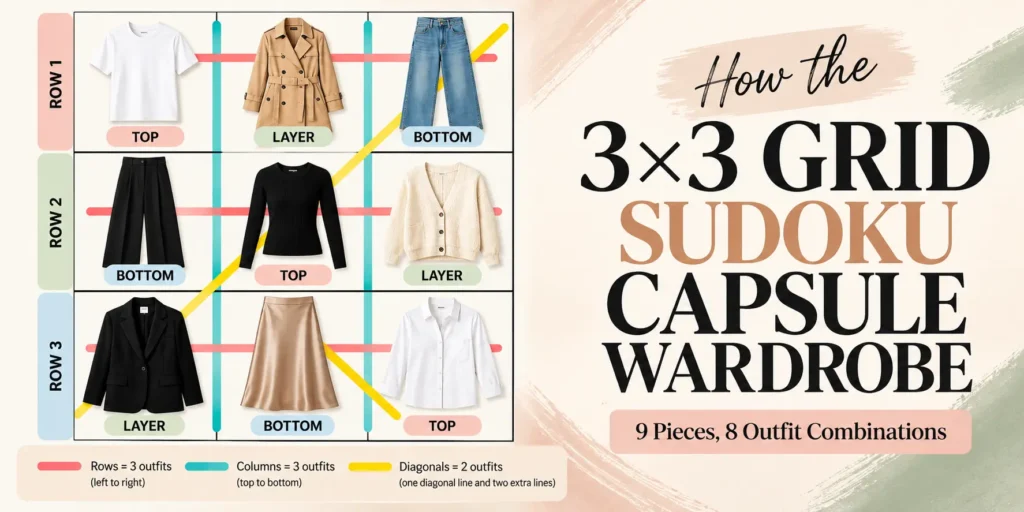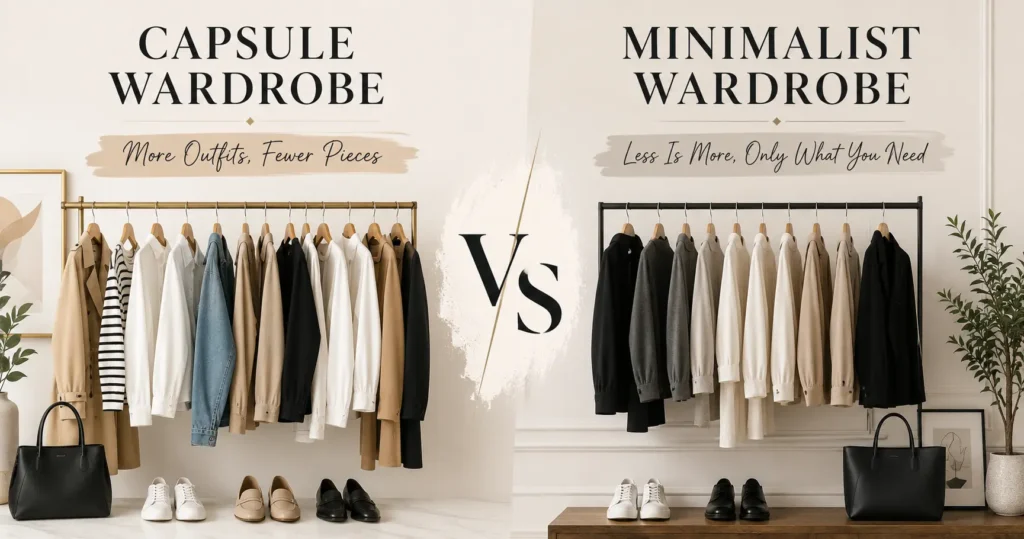
Most people think a capsule wardrobe and a minimalist wardrobe are the same thing.
At first glance, they do seem similar. Both encourage you to own fewer clothes, shop more intentionally, and keep your closet organized. That is why many people use the two terms interchangeably.
But once you start simplifying your wardrobe, the differences become clear.
I have seen people declutter half their closet in the hope of creating a minimalist wardrobe, only to realize they struggle to put outfits together. Others build a capsule wardrobe filled with versatile pieces but still wonder if they are actually following a minimalist lifestyle.
The truth is that these two wardrobe systems solve different problems.
A capsule wardrobe helps you create more outfits from fewer versatile pieces. A minimalist wardrobe helps you reduce unnecessary clothing and focus only on what you truly wear.
Understanding the difference can help you make smarter shopping decisions, build a wardrobe that fits your lifestyle, and avoid wasting money on clothes that never leave the hanger.
In this guide, you’ll learn how both wardrobe styles work, their key differences, their shared benefits, and how to decide which one is right for you.
Capsule Wardrobe vs Minimalist Wardrobe: Quick Answer
If you want the short answer, here it is.
A capsule wardrobe is designed to create as many outfit combinations as possible using a carefully planned collection of versatile clothing.
A minimalist wardrobe focuses on owning fewer clothes by keeping only the pieces you truly wear, need, and enjoy.
The biggest difference is their purpose.
A capsule wardrobe asks:
“How can these clothes work together?”
A minimalist wardrobe asks:
“Do I really need this item?”
Neither approach is better than the other.
If you enjoy outfit variety while keeping your closet organized, a capsule wardrobe is probably the better choice.
If you want fewer decisions, less shopping, and a simpler daily routine, a minimalist wardrobe may suit you better.
Many people combine both approaches to create a wardrobe that is practical, stylish, and easy to maintain.
Capsule Wardrobe vs Minimalist Wardrobe: Quick Comparison
| Feature | Capsule Wardrobe | Minimalist Wardrobe |
| Main goal | Create more outfits with fewer pieces | Own fewer clothes overall |
| Best for | People who enjoy outfit variety | People who prefer simplicity |
| Clothing amount | Small but flexible | Usually smaller and more selective |
| Style | Mix-and-match outfits | Simple, timeless outfits |
| Color palette | Neutral base with accent colors | Mostly neutral and classic colors |
| Shopping approach | Buy versatile pieces | Buy only what you truly need |
| Seasonal rotation | Common | Optional |
| Outfit variety | Higher | Lower but easier |
Although they share similar ideas, they follow different philosophies. Understanding those differences makes it much easier to choose the wardrobe system that fits your lifestyle.
What Is a Capsule Wardrobe?
A capsule wardrobe is a small collection of versatile clothing that mixes and matches easily, helping you create more outfits with fewer pieces. It focuses on wardrobe essentials, timeless styles, and a simple color palette that fits your lifestyle.
If you’re new to the concept and want to learn how it works, how many pieces you need, and how to build one step by step, check out our complete guide on What Is a Capsule Wardrobe?
What Is a Minimalist Wardrobe?
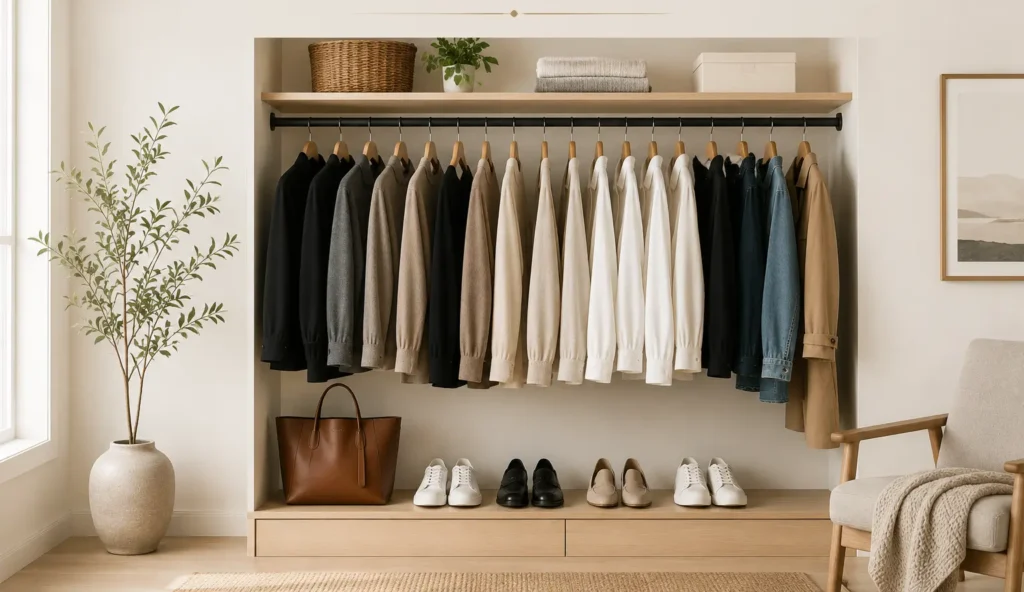
A minimalist wardrobe is a collection of clothes that includes only the pieces you wear and truly need. Instead of filling your closet with more clothing, you focus on quality, comfort, and timeless style.
Most minimalist wardrobes include everyday essentials such as T-shirts, button-down shirts, straight-leg jeans, tailored trousers, knit sweaters, a blazer, a trench coat, comfortable sneakers, loafers, and a few versatile accessories. Neutral colors like black, white, navy, beige, grey, and brown make it easier to create simple outfits.
The goal is not to own the fewest clothes possible. The goal is to remove anything that no longer serves your lifestyle and keep only the pieces that fit well, feel comfortable, and get worn regularly.
A minimalist wardrobe makes shopping more intentional, reduces clutter, and helps you get dressed with less effort every day.
Why People Choose a Minimalist Wardrobe
Many people do not switch to a minimalist wardrobe because they want fewer clothes. They do it because they want an easier daily routine.
A full closet can still feel frustrating if most of the clothes no longer fit, match your lifestyle, or work together. Instead of adding more pieces, a minimalist wardrobe encourages you to keep only the clothes you wear regularly.
Benefits of a Minimalist Wardrobe
A minimalist wardrobe offers more than a tidy closet. It can make everyday life easier.
Makes Getting Dressed Faster
With fewer but better clothing choices, you spend less time deciding what to wear each morning. Most pieces already suit your style and fit your daily routine.
Encourages Smarter Shopping
When you know what belongs in your wardrobe, you stop buying clothes simply because they are on sale or trending. Instead, you invest in pieces you will actually wear.
Creates a Clear Personal Style
Keeping only your favorite clothes helps you understand what colors, fabrics, and fits work best for you. Over time, your wardrobe feels more consistent and reflects your personal style.
Reduces Waste
Buying fewer, better-quality pieces often means wearing them for longer. That can help reduce unnecessary shopping and support a more sustainable approach to fashion.
How to Build a Minimalist Wardrobe
Building a minimalist wardrobe is not about getting rid of most of your clothes overnight. The goal is to create a closet that feels simple, organized, and easy to use every day.
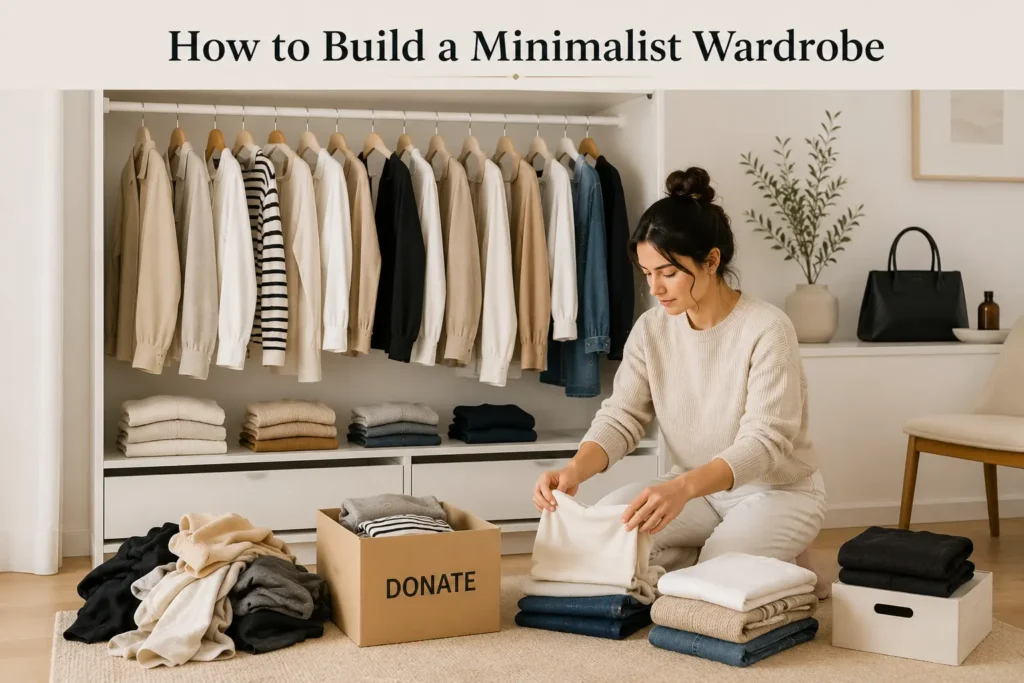
Start with the clothes you already own instead of buying a whole new wardrobe. Keep the pieces that fit well, match your lifestyle, and make you feel comfortable. Then remove the items you rarely wear or no longer enjoy.
These five steps can help you build a minimalist wardrobe that works for the long term.
Step 1: Understand Your Lifestyle
Before you start decluttering, think about how you actually spend your week.
Do you work in an office, work from home, travel often, or spend most of your time in casual clothes? Your wardrobe should reflect your daily routine instead of an ideal lifestyle.
For example, if you rarely attend formal events, you probably do not need several dressy outfits. Instead, focus on the clothes you wear most often and build your wardrobe around them.
Step 2: Declutter with a Purpose
Go through your closet one section at a time.
Remove clothes that no longer fit, feel uncomfortable, are damaged, or have not been worn for a long time. If you are unsure about an item, place it in a storage box for a few weeks. If you never reach for it, you probably do not need it.
The goal is not to own as little as possible. It is to keep only the clothes that add value to your everyday life.
Step 3: Keep Your Everyday Essentials
Once you have cleared the clutter, keep the pieces you wear regularly.
A simple minimalist wardrobe often includes wardrobe staples such as plain T-shirts, button-down shirts, straight-leg jeans, tailored trousers, knit sweaters, a blazer, comfortable sneakers, loafers, and a lightweight jacket.
Choose versatile pieces that work well together so you can create several outfits without needing a large collection of clothes.
Step 4: Buy More Intentionally
One of the biggest benefits of a minimalist wardrobe is learning to shop with purpose.
Before buying anything new, ask yourself a few simple questions:
- Do I really need this?
- Will I wear it regularly?
- Does it match the clothes I already own?
- Is it replacing something I no longer wear?
If the answer is no, it is usually better to wait. Buying fewer but better pieces helps you avoid impulse purchases and keeps your wardrobe clutter-free.
Step 5: Review Your Wardrobe Regularly
A minimalist wardrobe is not something you build once and forget.
As your lifestyle, job, or personal style changes, your wardrobe should change too. Every few months, review your closet, replace worn-out basics when necessary, and donate clothes you no longer wear.
Small updates throughout the year are much easier than starting over with a complete wardrobe makeover.
A minimalist wardrobe should make getting dressed feel easier, not more restrictive. Focus on keeping clothes that fit your lifestyle, reflect your personal style, and make you feel confident every time you open your closet.
Capsule Wardrobe vs Minimalist Wardrobe: Key Differences
Both wardrobe styles encourage you to buy less, wear your clothes more, and build a closet with purpose.
That is why many people think they are the same.
The difference is not how many clothes you own. The real difference is how you build your wardrobe and what you want it to achieve.
Here are the biggest differences.
1. Purpose
The biggest difference is the goal behind each wardrobe.
A capsule wardrobe is designed to help you create more outfit combinations with fewer clothes. Every piece should work with the rest of your wardrobe, making it easy to mix and match.
A minimalist wardrobe focuses on owning less. Instead of thinking about outfit combinations first, you remove anything you rarely wear and keep only what adds value to your daily life.
If you enjoy planning outfits and getting more wear from each item, a capsule wardrobe may suit you better.
If your priority is simplifying your closet and reducing clutter, a minimalist wardrobe is often the better choice.
2. Number of Clothing Pieces
Many people believe there is a magic number of clothes you should own.
There is not.
A capsule wardrobe usually includes a limited number of versatile pieces, but that number depends on your lifestyle, work, and climate. Some people manage with around 30 pieces each season, while others need more because they dress for different occasions.
A minimalist wardrobe does not follow a fixed number either.
Instead, you simply keep the clothes you actually wear and remove unnecessary duplicates.
The goal is not to own fewer clothes than someone else.
The goal is to own the right amount for your life.
3. Outfit Variety
This is where the two approaches become very different.
A capsule wardrobe is built for variety.
A white shirt can be paired with denim, tailored trousers, a midi skirt, or layered under a cardigan or blazer. Every item creates multiple outfit combinations.
A minimalist wardrobe usually relies on simple outfit formulas that you repeat often.
You might wear the same jeans with different neutral tops throughout the week or rotate the same blazer with two pairs of trousers.
If you enjoy creating different looks without buying more clothes, a capsule wardrobe offers more flexibility.
If you prefer simple routines and do not mind repeating outfits, a minimalist wardrobe keeps things easy.
4. Color Palette
Both wardrobes usually start with neutral colors, but they use them differently.
A capsule wardrobe often combines neutral shades like black, white, navy, beige, grey, and denim with one or two accent colors.
For example, you might add olive green, burgundy, or soft blue to give your wardrobe more personality while keeping everything easy to mix and match.
A minimalist wardrobe usually keeps the color palette even simpler.
Many people stick with classic shades because they are timeless and easy to style.
That does not mean you have to avoid color.
If you wear forest green or camel regularly, those colors can still be part of a minimalist wardrobe.
The important thing is consistency rather than following strict fashion rules.
5. Shopping Habits
A capsule wardrobe changes the way you shop.
Before buying something new, you ask questions like:
- Does this match my existing wardrobe?
- Can I wear it with several other pieces?
- Will I use it in different seasons?
- Does it fill a real gap?
A minimalist wardrobe takes an even simpler approach.
Before making a purchase, you ask yourself one question:
Do I actually need this?
If the answer is no, you leave it behind.
Both methods help reduce impulse shopping.
The difference is that a capsule wardrobe focuses on building outfit combinations, while a minimalist wardrobe focuses on reducing ownership.
6. Seasonal Planning
A capsule wardrobe usually changes with the seasons.
Lightweight linen shirts, cotton dresses, and sandals may become your summer essentials. During winter, you replace them with knitwear, wool coats, boots, and warm layers.
This seasonal rotation helps you dress comfortably throughout the year without overcrowding your closet.
A minimalist wardrobe is often more consistent.
Most of your everyday clothing stays the same, and you simply swap heavier outerwear or footwear when the weather changes.
If you live somewhere with four distinct seasons, a capsule wardrobe often feels more practical.
If your climate stays fairly consistent, a minimalist wardrobe may require fewer adjustments.
7. Lifestyle Flexibility
A capsule wardrobe adapts well to different lifestyles.
You can include office wear, casual outfits, travel clothing, workout pieces, or special occasion outfits, as long as everything works together.
That makes it a great option for people who wear different types of clothing throughout the week.
A minimalist wardrobe works best when your daily routine stays fairly consistent.
If you mostly wear the same style every day, you probably need fewer pieces and fewer outfit variations.
Think about how you actually spend your week before choosing either approach.
Your wardrobe should support your lifestyle, not someone else’s.
8. Closet Maintenance
Neither wardrobe is something you build once and never touch again.
A capsule wardrobe needs occasional updates.
As seasons change, you may rotate clothing, replace worn basics, or add one versatile piece that fills a gap.
A minimalist wardrobe also needs regular reviews.
Over time, your job, lifestyle, body, or personal style may change. When that happens, your wardrobe should change too.
The goal is not perfection.
The goal is to keep a wardrobe that continues to work for you.
Which Difference Matters Most?
When comparing a capsule wardrobe vs. a minimalist wardrobe, most people focus on the number of clothes they own.
That is actually the least important difference.
The real question is this:
Do you want more outfit options from fewer clothes, or do you simply want fewer clothes to manage?
Your answer makes the decision much easier.
A capsule wardrobe helps you maximize versatility.
A minimalist wardrobe helps you maximize simplicity.
Both can help you build a more intentional closet.
You simply need to choose the approach that fits your lifestyle, shopping habits, and personal style.
Capsule Wardrobe and Minimalist Wardrobe Similarities
Although these wardrobe styles have different goals, they share many of the same principles.
That is why so many people confuse them.
Both encourage you to be more intentional with your clothing instead of buying pieces you rarely wear.
Focus on Quality Over Quantity
Instead of filling your closet with fast fashion or impulse purchases, both approaches encourage you to invest in clothes that fit well, feel comfortable, and last longer.
Whether it is a well-made blazer, straight-leg jeans, or a classic trench coat, quality pieces often provide better value because you wear them again and again.
Reduce Closet Clutter
A crowded closet can make getting dressed more stressful.
Both wardrobe systems help you remove unnecessary clothing so you can easily see what you own and create outfits with confidence.
A cleaner closet also makes organizing, storing, and maintaining your clothes much easier.
Make Daily Dressing Easier
One of the biggest benefits of both wardrobes is saving time every morning.
With fewer but better clothing options, you spend less time deciding what to wear.
Instead of trying on multiple outfits, you can quickly choose clothes that fit your style and lifestyle.
Encourage Mindful Shopping
Whether you follow a capsule wardrobe or a minimalist wardrobe, shopping becomes more intentional.
You stop buying clothes simply because they are on sale or trending.
Instead, every purchase has a purpose and fits your existing wardrobe.
This not only saves money but also helps prevent clutter from building up again.
Can Support Sustainable Fashion
Both approaches encourage buying less and wearing your clothes more often.
When you care for your clothing, repair items when needed, and avoid unnecessary purchases, you naturally create a more sustainable wardrobe.
Small changes like choosing durable fabrics, donating unwanted clothing, or shopping second-hand can make an even bigger difference over time.
Which One Is Better for You?
There is no single wardrobe system that works for everyone.
The best choice depends on your lifestyle, daily routine, personal style, and how you like to get dressed each day.
Before deciding between a capsule wardrobe and a minimalist wardrobe, ask yourself a few simple questions.
- Do I enjoy creating different outfits?
- Do I often feel overwhelmed by a crowded closet?
- Do I buy clothes that I rarely wear?
- Do I prefer a simple daily uniform?
- Do I dress differently for work, weekends, and travel?
- Do I want fewer clothes or better outfit combinations?
Your answers will make the decision much easier.
Can You Combine a Capsule Wardrobe and a Minimalist Wardrobe?
Yes, and for many people, this is the best solution.
You do not have to choose one approach and ignore the other.
Many people build what is often called a minimalist capsule wardrobe.
It combines the simplicity of minimalism with the flexibility of a capsule wardrobe.
Instead of owning dozens of clothes, you keep a smaller collection of versatile pieces that work well together.
For example, your wardrobe might include:
- 6 to 8 tops
- 3 to 4 bottoms
- 2 dresses or one-piece outfits
- 2 jackets
- 3 pairs of shoes
- A few everyday accessories
During winter, you might add a wool coat, knit sweaters, and boots.
In summer, you can swap them for linen shirts, lightweight dresses, and sandals.
The size of your wardrobe stays manageable while still giving you enough outfit choices for everyday life.
This balanced approach works well because it avoids the biggest problems of both systems.
You do not own so many clothes that your closet feels cluttered.
You also do not reduce your wardrobe so much that getting dressed becomes frustrating.
For many people, a minimalist capsule wardrobe offers the best of both worlds.
Outfit Examples for Both Wardrobe Styles
One of the easiest ways to understand the difference between these two wardrobe systems is by looking at real outfit examples.
A capsule wardrobe uses the same pieces to create different looks throughout the week.
A minimalist wardrobe keeps outfits simple and repeatable, with fewer clothing combinations.
Neither style is better. It depends on how you like to dress.
Capsule Wardrobe Outfit Ideas
A capsule wardrobe is built around versatile pieces that work together.
For example, one blazer can be styled for work, weekends, or dinner simply by changing the clothes underneath.
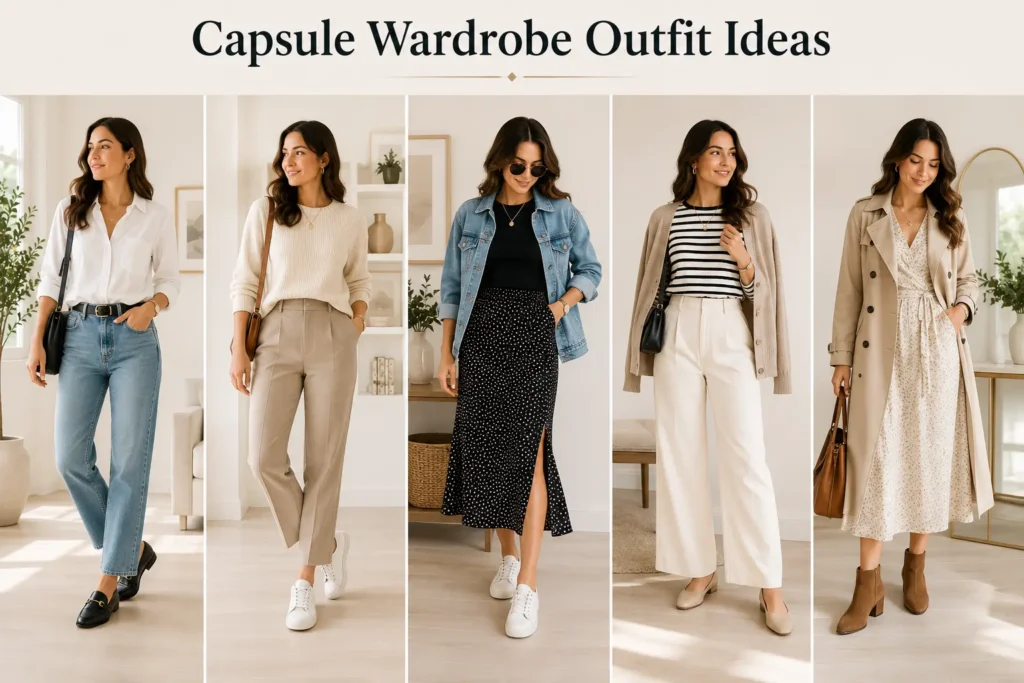
Here are a few outfit ideas:
- White button-down shirt + straight-leg jeans + loafers
- Knit sweater + tailored trousers + white sneakers
- Black T-shirt + midi skirt + denim jacket
- Striped top + wide-leg pants + cardigan
- Simple dress + trench coat + ankle boots
The goal is to create multiple outfits without constantly buying new clothes.
Minimalist Wardrobe Outfit Ideas
A minimalist wardrobe keeps dressing simple.
Most outfits rely on timeless basics that you can wear repeatedly without feeling out of style.
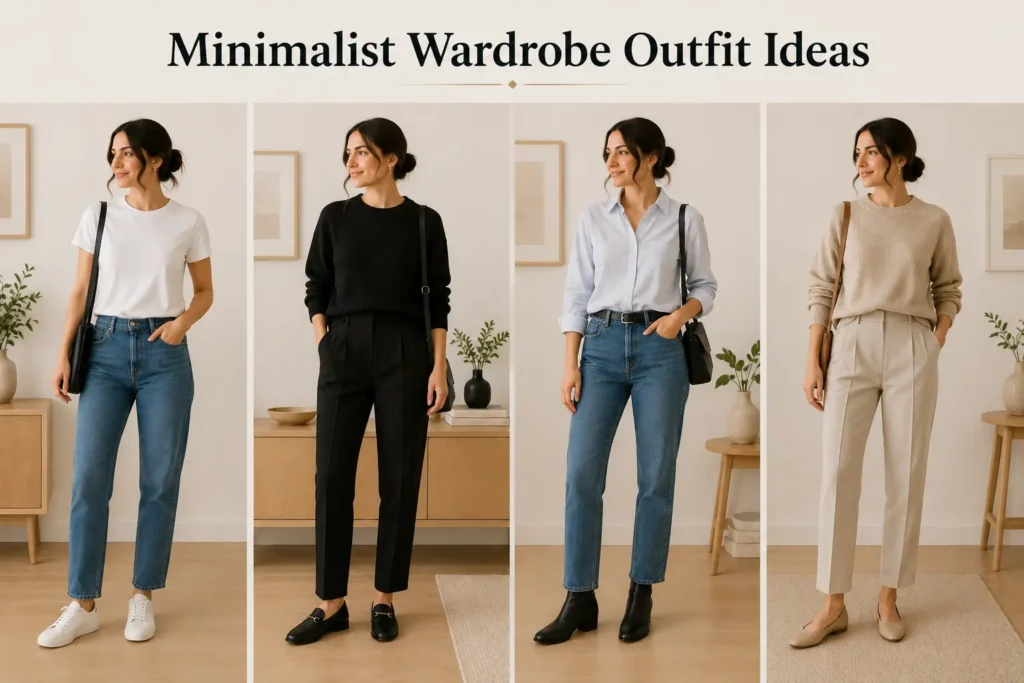
Here are some examples:
- White T-shirt + blue jeans + white sneakers
- Black knit sweater + black trousers + loafers
- Button-down shirt + straight-leg jeans + ankle boots
- Neutral sweater + tailored pants + flats
- Simple black dress + blazer + leather loafers
Instead of creating many different looks, you repeat outfit formulas that already work for you.
Capsule Wardrobe vs Minimalist Wardrobe: Which Saves More Money?
Both wardrobe systems can help you spend less on clothing.
The difference is how they save money.
A capsule wardrobe helps you buy smarter.
A minimalist wardrobe helps you buy less.
Capsule Wardrobe Reduces Unnecessary Purchases
When your wardrobe is planned, every new purchase has a purpose.
Instead of buying clothes because they look good in the store, you choose pieces that match your existing wardrobe.
This helps you avoid buying items that never get worn.
Over time, those small decisions can save a surprising amount of money.
Minimalist Wardrobe Reduces Impulse Shopping
Minimalism changes your shopping habits.
Instead of asking whether something looks nice, you ask whether you actually need it.
That simple question often prevents unnecessary purchases.
As a result, you spend less and appreciate the clothes you already own.
Think About Cost Per Wear
Price is not the only thing that matters.
Cost per wear is often a better way to judge value.
For example, a quality pair of jeans that you wear twice a week for several years usually offers better value than a trendy item worn only once or twice.
That does not mean you need expensive clothes.
It means you should choose pieces you know you will wear often.
Capsule Wardrobe vs Minimalist Wardrobe: Which Is More Sustainable?
Both a capsule wardrobe and a minimalist wardrobe can help you build a more sustainable closet. The difference is how they reduce waste.
A capsule wardrobe encourages you to buy versatile pieces that you can wear in many different outfits. A minimalist wardrobe focuses on buying fewer clothes and avoiding unnecessary purchases.
Whichever approach you choose, these habits make the biggest difference:
- Buy thoughtfully – Choose clothes that fit your lifestyle and will be worn regularly.
- Wear clothes more often – Get the most out of the pieces you already own instead of constantly buying new ones.
- Take care of your wardrobe – Wash, repair, and store your clothes properly so they last longer.
Neither wardrobe is automatically more sustainable. The most sustainable wardrobe is one that you wear often, shop for intentionally, and maintain over time.
Common Mistakes to Avoid
Whether you choose a capsule wardrobe or a minimalist wardrobe, avoiding these common mistakes will help you build a closet that actually works for your lifestyle.
- Decluttering too quickly – Avoid donating everything at once. If you’re unsure about an item, set it aside for a few weeks before making a final decision.
- Copying someone else’s wardrobe – Build a wardrobe that matches your lifestyle, job, climate, and personal style instead of following influencers or trends.
- Buying too many basics – Wardrobe essentials are useful, but only if you wear them. Buy pieces that suit your style instead of filling your closet with duplicates.
- Ignoring your daily routine – Choose clothes that fit how you actually live, whether you work in an office, travel often, or dress casually most days.
- Chasing every fashion trend – Focus on timeless pieces like jeans, blazers, knitwear, and comfortable shoes, then add trends only if they fit your personal style.
- Choosing style over comfort – Keep clothes that fit well, feel comfortable, and make you confident enough to wear them regularly.
- Buying without a plan – Before purchasing something new, make sure it works with your existing wardrobe and fills a real gap.
- Expecting a perfect wardrobe overnight – Building a capsule wardrobe or minimalist wardrobe is a gradual process. Make small improvements over time instead of rushing.
Final Verdict: Which Wardrobe Style Should You Choose?
There is no universal winner.
The right choice depends on your lifestyle and what you want from your wardrobe.
Choose a capsule wardrobe if you want more outfit combinations, enjoy mixing and matching clothes, and like having options without owning a large closet.
Choose a minimalist wardrobe if you want fewer clothes, fewer shopping decisions, and a simpler daily routine.
If you like both ideas, you do not have to choose only one.
A minimalist capsule wardrobe combines the best of both approaches. You own fewer clothes, but every piece works together to create outfits you actually enjoy wearing.
At the end of the day, the best wardrobe is not the one with the fewest clothes.
It is the one that fits your lifestyle, reflects your personal style, and makes getting dressed feel effortless.
Frequently Asked Questions
What is the difference between a capsule wardrobe and a minimalist wardrobe?
A capsule wardrobe focuses on creating many outfit combinations from a small collection of versatile clothing. A minimalist wardrobe focuses on owning fewer clothes and keeping only what you regularly wear.
Is a capsule wardrobe the same as a minimalist wardrobe?
No.
Both encourage intentional shopping and a simpler closet, but a capsule wardrobe is built around mix-and-match outfits, while a minimalist wardrobe focuses on reducing unnecessary clothing.
Can I have both a capsule wardrobe and a minimalist wardrobe?
Yes.
Many people combine both ideas by creating a minimalist capsule wardrobe. This approach keeps your closet small while making sure every piece works well with the others.
How many clothes should a minimalist wardrobe have?
There is no perfect number.
The right amount depends on your lifestyle, work, climate, and personal preferences. The goal is to own only the clothes you wear regularly.
Which wardrobe style is better for beginners?
A capsule wardrobe is often easier for beginners because it teaches you how to build outfits from versatile pieces.
If your biggest challenge is owning too many clothes, a minimalist wardrobe may be the better place to start.
Which wardrobe style is better for saving money?
Both can save money.
A capsule wardrobe helps you avoid buying clothes that do not match anything, while a minimalist wardrobe reduces impulse shopping by encouraging you to buy only what you truly need.

Chloe Parker is a fashion expert with a passion for helping readers build stylish and practical wardrobes. She shares simple outfit ideas, capsule wardrobe tips, and fashion advice to make everyday dressing easier. Her goal is to help people create a timeless personal style with confidence.