I used to think my child needed more clothes.
Every few months, I’d buy another T-shirt, a hoodie, something for a birthday party. Soon, every drawer was full. But every morning, my child still reached for the same few outfits. The rest just sat there.
The laundry basket told the same story. The favorite hoodie and joggers were always in the wash, while everything else barely moved. Then another season came, and I was shopping again anyway.
One weekend, while putting clothes away, I wondered why we kept so much that never got worn.
So I packed away what no longer fit, donated what my child never chose, and kept what was worn every week. That was the start of my kids capsule wardrobe.
The difference surprised me. Getting dressed got faster, laundry shrank, and shopping stopped feeling like a chore. Instead of adding more, we started using what we already had.
In this article, you’ll learn how to build a kids’ capsule wardrobe: how many clothes your child actually needs, what to include, and how to keep it practical as they grow.
What Is a Kids Capsule Wardrobe?
A kids’ capsule wardrobe is a carefully chosen collection of versatile clothes that can be mixed and matched to create many different outfits. Instead of filling drawers with dozens of random pieces, you keep only the clothing your child wears regularly.
If you’re new to the idea, our Capsule Wardrobe Beginner’s Guide explains the core principles behind building a wardrobe with fewer, more versatile pieces before applying the same approach to children.
This approach creates a simple kids’ wardrobe that is easier to manage throughout the year. It also helps reduce clutter, simplifies school mornings, and keeps seasonal wardrobe changes under control.
Why a Kids Capsule Wardrobe Makes Everyday Life Easier
Most parents don’t decide to build a children’s capsule wardrobe because they want fewer clothes. They do it because they’re tired of messy drawers, constant laundry, and buying clothes their kids barely wear.
A smaller wardrobe filled with everyday favorites can save time, reduce stress, and make getting dressed much easier.
Keeps Closets and Drawers Organized
Kids seem to collect clothes faster than they outgrow them. Between birthdays, holidays, hand-me-downs, and shopping trips, it’s easy for drawers and closets to become overcrowded.
Keeping only the clothes your child wears regularly creates more space and makes it easier to find everything.
Makes Busy Mornings Easier
Getting ready for school doesn’t have to start with, “I don’t know what to wear.”
When most tops and bottoms match, your child can pick an outfit in minutes without emptying half the dresser. It saves time and helps mornings feel a little less rushed.
Helps You Spend Less on Clothes
Buying more clothes doesn’t always mean your child has more to wear.
When you know what’s already in the closet, it’s easier to shop with a plan instead of buying another T-shirt or hoodie that looks almost the same as the ones at home. Over time, those small savings really add up.
Cuts Down on Laundry
Laundry never disappears when you have kids, but it can become much easier to manage.
With fewer clothes in the rotation, you’re washing the pieces your child actually wears instead of sorting through piles of clothes that have been sitting in drawers for weeks.
Creates More Outfits with Fewer Clothes
One of the biggest surprises is how many outfits you can make from a small wardrobe.
A few neutral tops, comfortable bottoms, and simple layering pieces can be mixed and matched in different ways, so your child has plenty of outfit choices without owning dozens of clothes.
Helps Kids Get Dressed on Their Own
A capsule closet for kids makes choosing clothes much simpler.
Instead of asking which shirt goes with which pants, children can pick their own outfits because almost everything matches. It encourages independence and gives them confidence while making mornings easier for everyone.
How Many Clothes Does a Child Really Need?
One of the first questions parents ask is, “How many clothes should my child have?”
The truth is, there isn’t one number that works for every family. A toddler who stays home most days doesn’t need the same wardrobe as a school-age child with sports, weekend activities, and school uniforms.
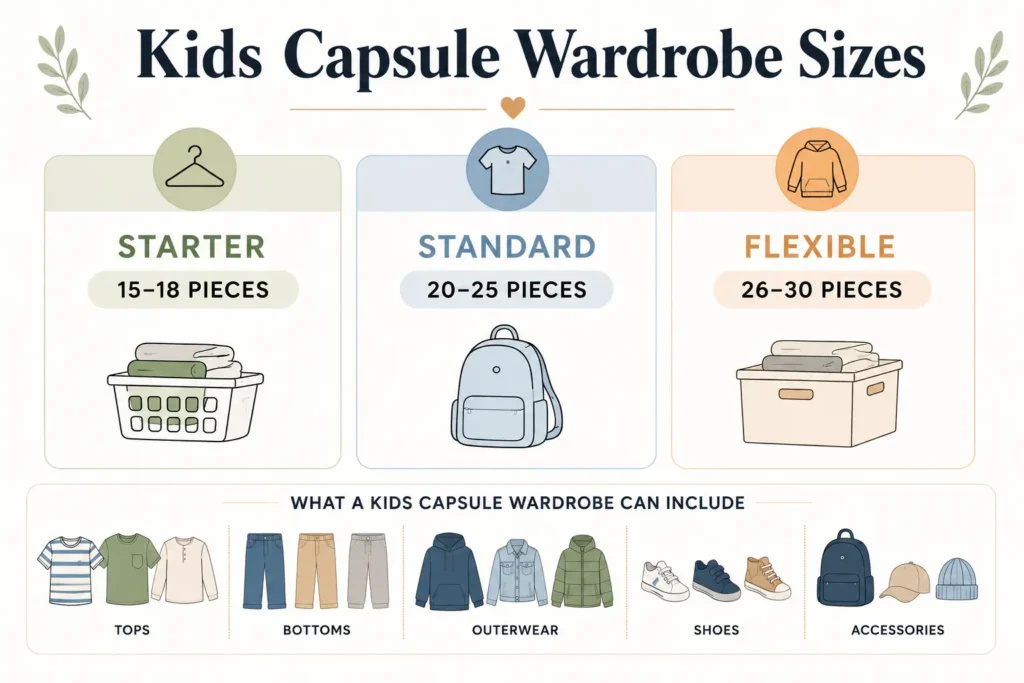
For most families, a capsule wardrobe usually falls somewhere between 15 and 30 everyday pieces. The right number depends on your routine, how often you do laundry, and your child’s daily activities.
| Capsule Size | Pieces | Best For |
| Starter | 15–18 | Families who do laundry several times a week |
| Standard | 20–25 | Most families have school and everyday activities |
| Flexible | 26–30 | Busy households that do laundry less often |
Before deciding how many clothes to keep, think about these four things.
How Often You Do Laundry
Laundry habits make a big difference.
If you usually wash clothes every two or three days, your child won’t need as many everyday outfits. If laundry only gets done once a week, keeping a few extra tops and bottoms can make life easier.
School and Uniforms
Think about what your child wears during the week.
If they wear a school uniform most days, you probably don’t need as many casual outfits. Instead, you can focus on clothes for evenings, weekends, holidays, and family outings.
Your Local Weather
The weather where you live also affects how many clothes your child needs.
Children in warmer areas can usually manage with lightweight T-shirts, shorts, and a light jacket. If you live somewhere with cold winters, you’ll also need sweaters, coats, boots, thermals, and other seasonal layers.
To keep the closet from getting overcrowded, store off-season clothes in a storage bin and bring them out when the weather changes.
Your Child’s Daily Routine
Every child has a different routine.
Some spend most afternoons at the playground, while others have sports practice, dance classes, or family events every week.
Before buying more clothes, think about where your child actually spends their time. A kids clothing capsule should fit your family’s lifestyle, not be filled with outfits that are only worn once or twice a year.
How to Build a Kids Capsule Wardrobe (Step-by-Step)
Building a kids’ capsule wardrobe doesn’t mean throwing away half the closet overnight.
Start with what your child already owns, then simplify one step at a time.
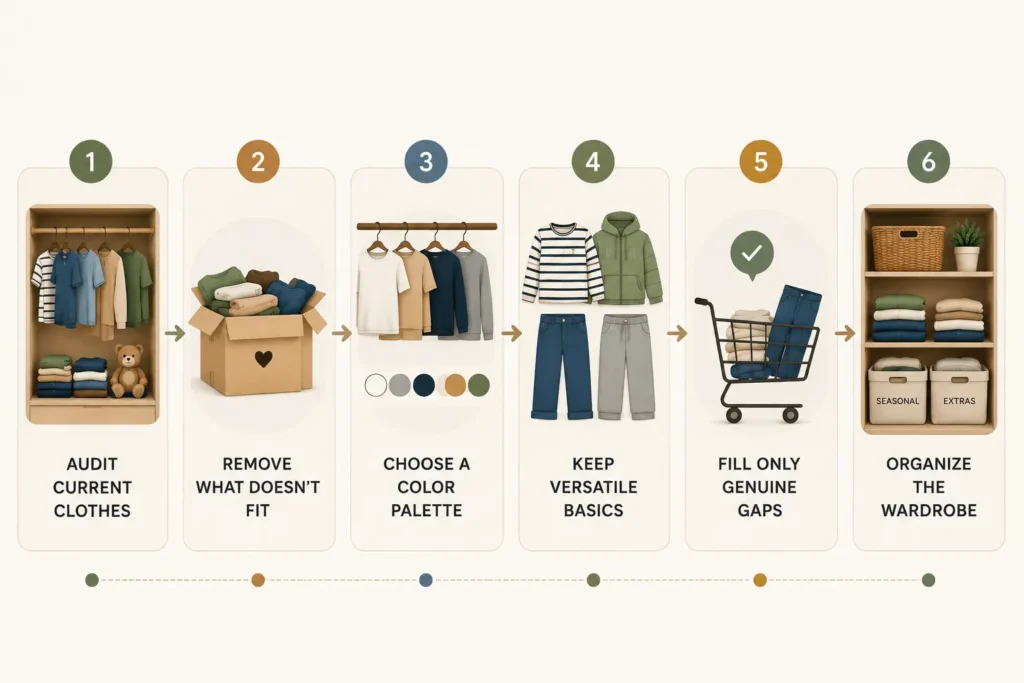
Step 1: Audit Current Clothes
Begin with a complete wardrobe audit.
Take everything out of the closet and drawers so you can see exactly what your child owns.
Sort clothes into simple groups:
- Tops
- Bottoms
- Dresses or one-piece outfits
- Layers
- Outerwear
- Shoes
- Accessories
You’ll probably discover duplicate items, clothes that no longer fit, or pieces your child hasn’t worn in months.
Seeing everything together makes it much easier to decide what actually belongs in the wardrobe.
Step 2: Remove What Doesn’t Fit
Children grow quickly, so many clothes become too small before they wear out.
Remove anything that:
- No longer fits properly.
- Is stained or damaged beyond repair.
- Feels uncomfortable.
- Doesn’t match the rest of the wardrobe.
- Hasn’t been worn for an entire season.
If younger siblings can use the clothes later, keep them in labeled storage bins by size. Otherwise, consider donating good-quality items or passing along hand-me-downs to family or friends.
Step 3: Choose a Color Palette
A simple color palette is what makes a capsule wardrobe work.
Start with neutral colors like:
- White
- Gray
- Navy
- Beige
- Black
Then choose two or three accent colors your child enjoys wearing.
For example:
- Navy + gray + white with green and mustard accents.
- Beige + cream + brown with soft blue accents.
- Gray + denim with pink and lavender accents.
When most clothes share the same color palette, creating outfits becomes almost effortless because nearly everything matches.
Step 4: Keep Versatile Basics
Now choose the everyday clothing your child wears most often.
Focus on comfortable basics such as:
- T-shirts
- Long-sleeve shirts
- Leggings
- Joggers
- Jeans
- Shorts
- Sweaters
- Cardigans
- Lightweight jackets
Look for soft fabrics, adjustable waistbands, and easy-to-wear styles that allow freedom of movement during school, play, and everyday activities.
Comfort should always come before fashion trends.
Step 5: Fill Only Genuine Gaps
Once you’ve sorted the wardrobe, make a short shopping list.
Only replace items your child actually needs.
For example, if they already have enough T-shirts but only one pair of everyday shoes, buy shoes instead of another graphic tee.
This habit keeps impulse buying under control and helps you build a practical wardrobe over time.
Affordable stores like Target, Old Navy, Gap, H&M, and The Children’s Place often offer good-quality basics, while secondhand shops and hand-me-downs can help stretch your clothing budget even further.
Step 6: Organize the Wardrobe
A well-organized wardrobe is much easier to maintain.
Group similar items together, fold clothes neatly, and keep frequently worn pieces within easy reach.
Many parents also find it helpful to:
- Label storage bins.
- Store off-season clothing separately.
- Keep shoes together in one place.
- Rotate seasonal clothing every few months.
When everything has its place, children are more likely to put clothes away themselves and keep their wardrobe tidy.
The same step-by-step process works for adults, too. If you’re creating your own closet, follow our guide on how to build a capsule wardrobe for a complete walkthrough.
Kids Capsule Wardrobe Checklist
A kid’s capsule wardrobe works best when every piece has a purpose. Instead of buying lots of clothes, focus on versatile basics that your child can wear again and again.
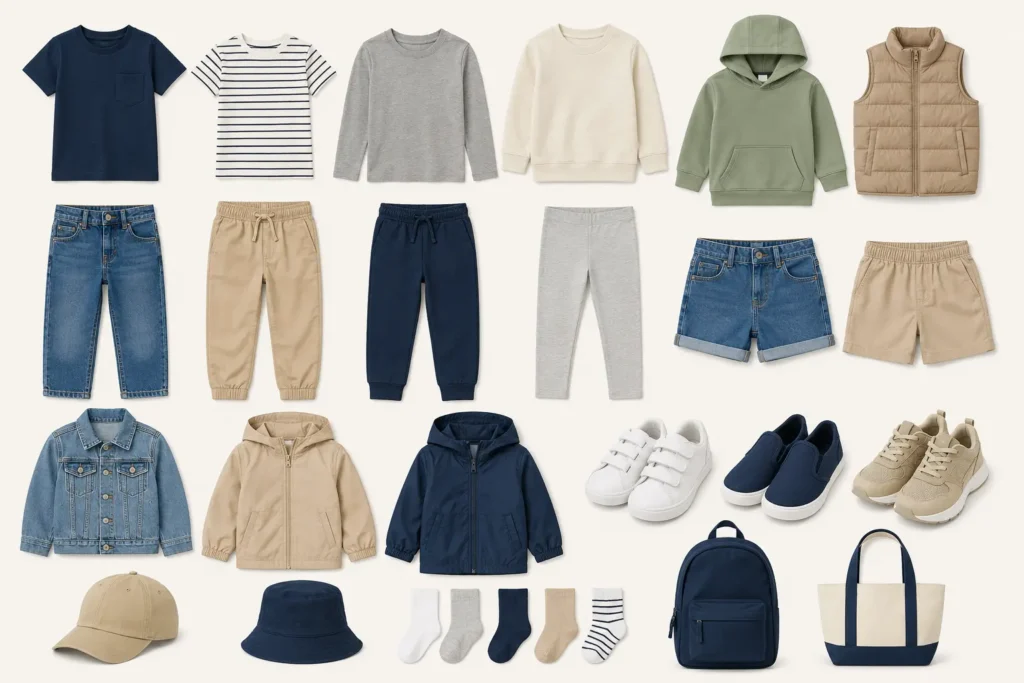
Remember, this checklist is a guide, not a strict rule. Adjust it based on your child’s age, daily routine, school requirements, climate, and how often you do laundry.
Need a printable version for planning? Our capsule wardrobe checklist can help you organize clothing categories before you start shopping.
Tops
Tops usually get the most wear, so choose comfortable pieces that are easy to mix with every bottom.
A practical capsule often includes:
- 5–6 T-shirts
- 2–3 long-sleeve shirts
- 1 button-down shirt (optional)
- 1–2 sweatshirts or hoodies
What should they wear?
Choose soft cotton or cotton-blend tops that allow plenty of movement. Neutral basics like white, gray, navy, and beige pair easily with colorful bottoms, while one or two playful prints add personality without making outfit matching difficult.
Bottoms
Kids climb, run, crawl, and play every day, so bottoms should be durable and comfortable.
A good starting point includes:
- 2 pairs of jeans
- 2 joggers or leggings
- 2–3 pairs of shorts
- 1 nicer pair of pants or skirt
What should they wear?
Look for adjustable waistbands, stretchy fabrics, and easy fits that stay comfortable throughout the day. Joggers, leggings, and soft jeans usually become everyday favorites because they work for both school and play.
Dresses & One-Pieces
If your child enjoys wearing dresses or rompers, include a few versatile options.
A capsule may include:
- 2–3 dresses
- 1–2 rompers or jumpsuits
What should they wear?
Choose simple styles that can be worn alone during warm weather or layered with leggings and a cardigan when temperatures drop.
Layers
Layering pieces makes one wardrobe work across multiple seasons.
Include:
- 1 cardigan
- 1 lightweight sweater
- 1 zip-up hoodie
What should they wear?
Pick versatile layers in neutral colors so they work over almost every outfit. Lightweight pieces also make changing weather much easier to manage.
Outerwear
Every child needs weather-appropriate outerwear.
Depending on your climate, include:
- 1 lightweight jacket
- 1 raincoat
- 1 winter coat
- Snow gear if needed
What should they wear?
Choose jackets that are easy to put on independently and comfortable enough for everyday school runs, playground visits, and family outings.
Shoes
Kids don’t need a large shoe collection.
Most capsule wardrobes only require:
- Everyday sneakers
- Sandals
- Boots
- Dress shoes (if needed)
What should they wear?
Comfort comes first. Every day, sneakers are usually used for school, parks, shopping trips, and weekend activities. Add seasonal footwear only when your local weather requires it.
Accessories
Accessories complete the wardrobe without creating unnecessary clutter.
Keep:
- Hat or beanie
- Sun hat
- Gloves or mittens
- Sunglasses
- Backpack (if needed)
What should they wear?
Choose accessories your child actually uses instead of buying several similar options.
Kids Capsule Wardrobe by Age
Children’s clothing needs change quickly, so one capsule doesn’t fit every age.
Here’s how to adjust your wardrobe as your child grows.
Toddlers (1–3 Years)
Toddlers learn by exploring everything around them.
Their clothes should handle spills, climbing, crawling, and frequent outfit changes.
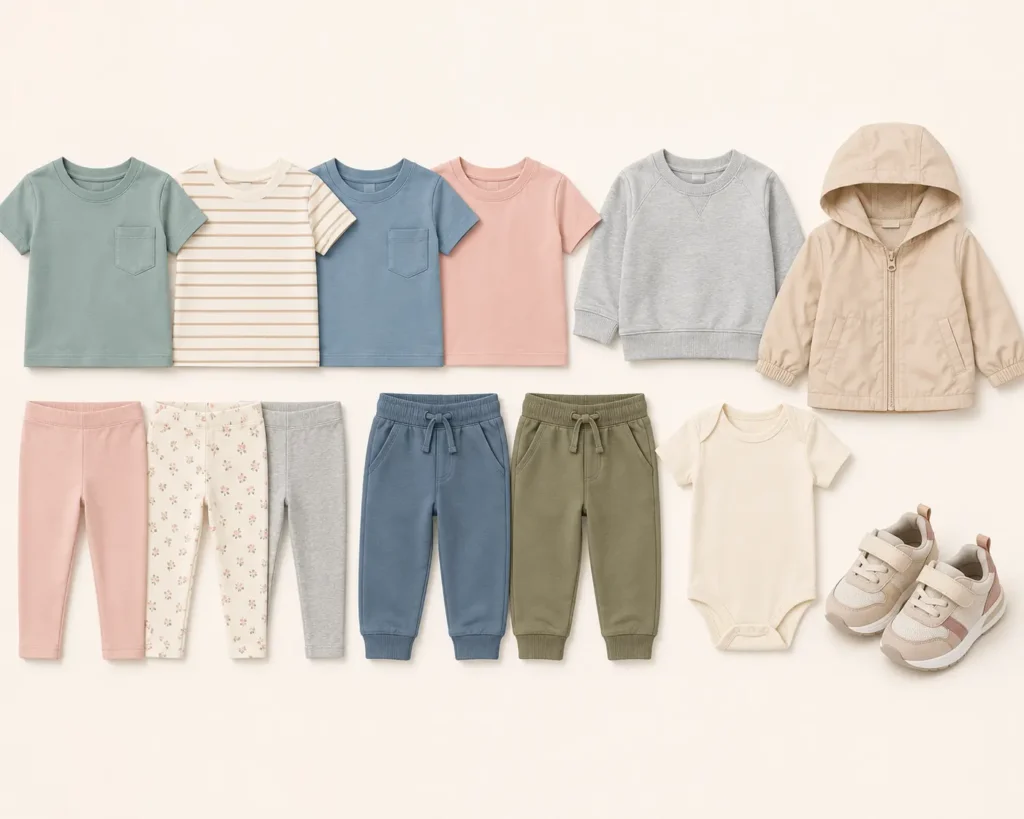
Focus on:
- Soft T-shirts
- Leggings
- Joggers
- Onesies
- Sweatshirts
- Lightweight jackets
- Comfortable sneakers
Because accidents happen often, you may want a few extra everyday outfits without overcrowding the wardrobe.
Preschool Kids (3–5 Years)
Preschoolers become much more independent.
They often enjoy choosing their own outfits, so keeping everything coordinated helps them dress without frustration.
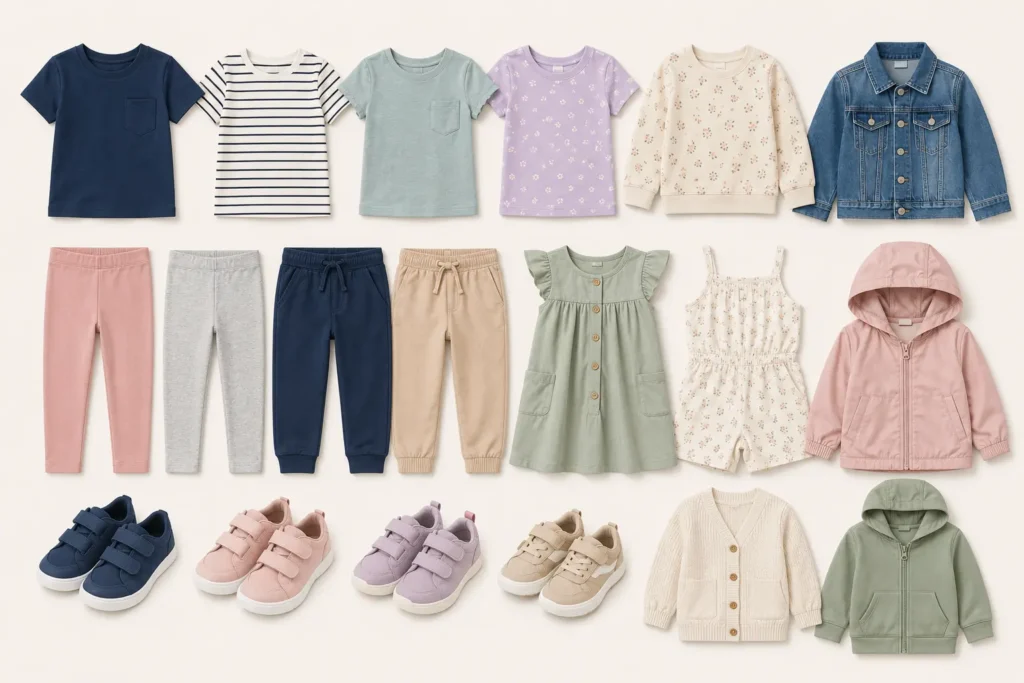
A preschool capsule should include:
- Comfortable everyday tops
- Stretchy bottoms
- Easy dresses or rompers
- Sneakers
- Seasonal layers
Simple mix-and-match clothing makes mornings much smoother.
School-Age Kids (6–10 Years)
School-age children usually need clothes for several activities.
Besides school, they may attend sports, birthday parties, family gatherings, or after-school clubs.
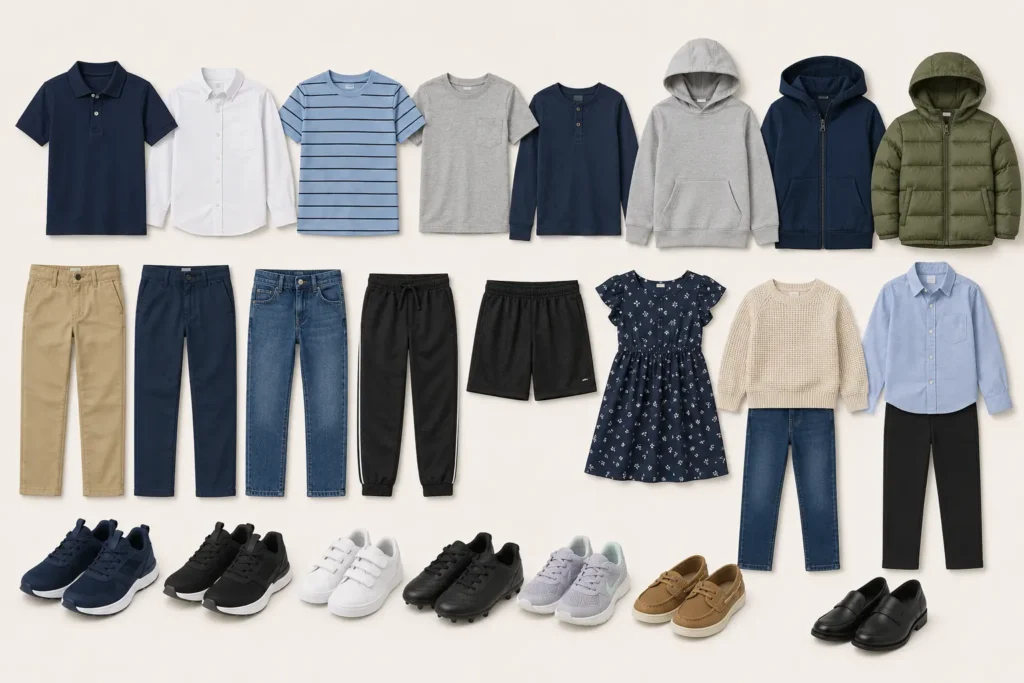
A practical wardrobe includes:
- School outfits
- Play clothes
- One dressier outfit
- Seasonal outerwear
- Comfortable everyday shoes
Durability becomes especially important because active children put their clothes through plenty of wear.
Preteens (11–13 Years)
As children grow older, personal style becomes more important.
Instead of choosing everything yourself, involve them when selecting colors, prints, and clothing styles.
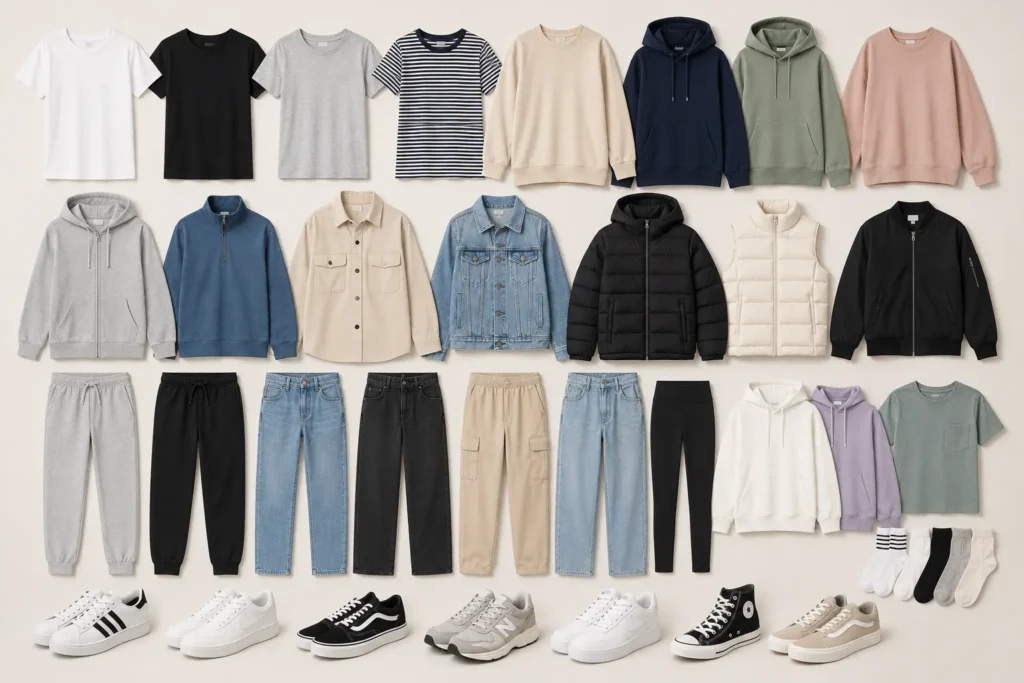
Focus on:
- Quality basics
- Comfortable layers
- Neutral colors
- A few favorite accent colors
- Versatile jackets
- Everyday sneakers
Giving preteens some choice helps them enjoy wearing their capsule wardrobe while keeping shopping intentional.
Kids Capsule Wardrobe Plans
The perfect capsule size depends on your family, but these examples provide a simple starting point.
15-Piece Starter Capsule
Perfect for families who wash clothes several times each week.
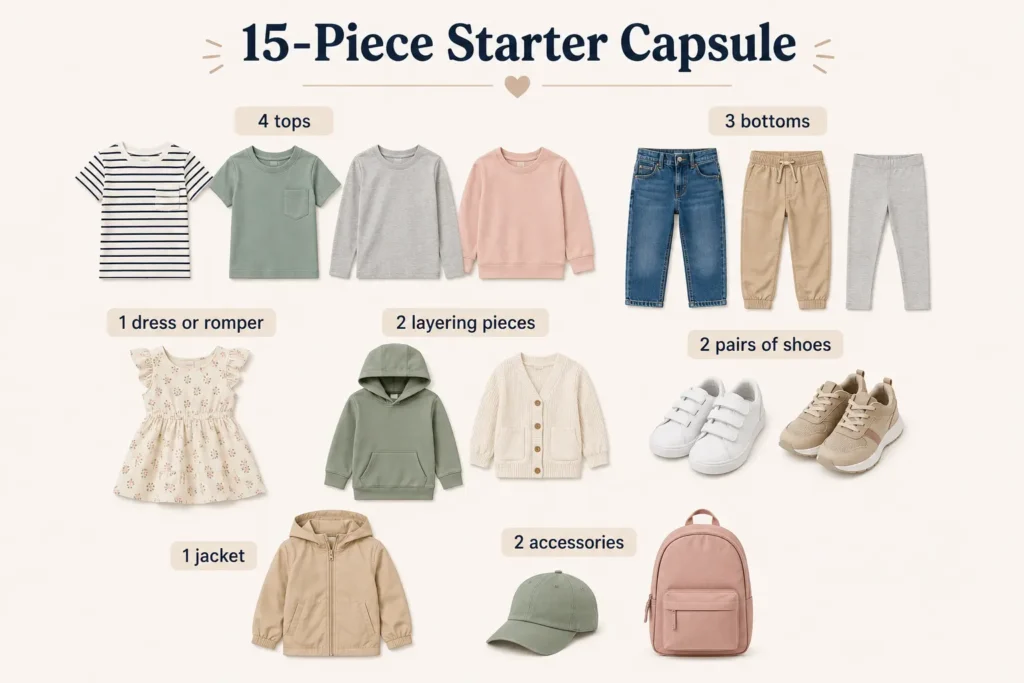
Example:
- 4 tops
- 3 bottoms
- 1 dress or romper
- 2 layering pieces
- 2 pairs of shoes
- 1 jacket
- 2 accessories
This small capsule keeps daily decisions simple while covering most everyday activities.
20-Piece Everyday Capsule
This works well for most families.
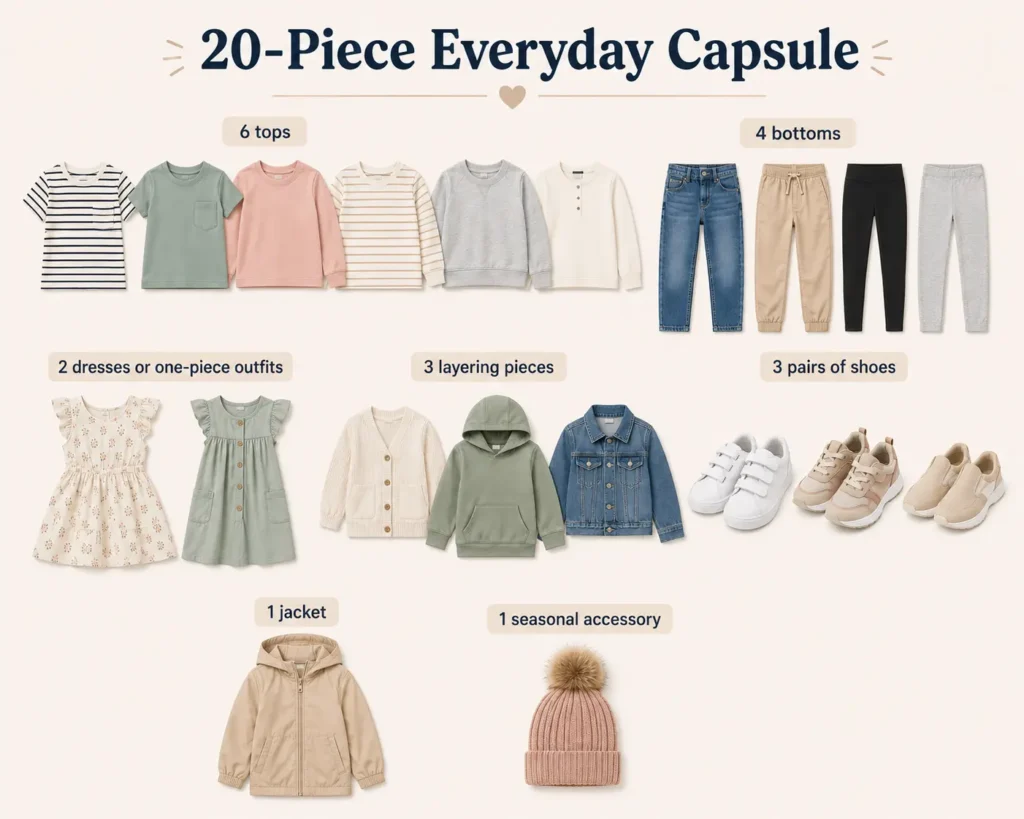
Example:
- 6 tops
- 4 bottoms
- 2 dresses or one-piece outfits
- 3 layering pieces
- 3 pairs of shoes
- 1 jacket
- 1 seasonal accessory
With around twenty pieces, children can create dozens of mix-and-match outfits without feeling limited.
30-Piece Complete Capsule
This option gives families more flexibility, especially if laundry happens less often or children have busy schedules.
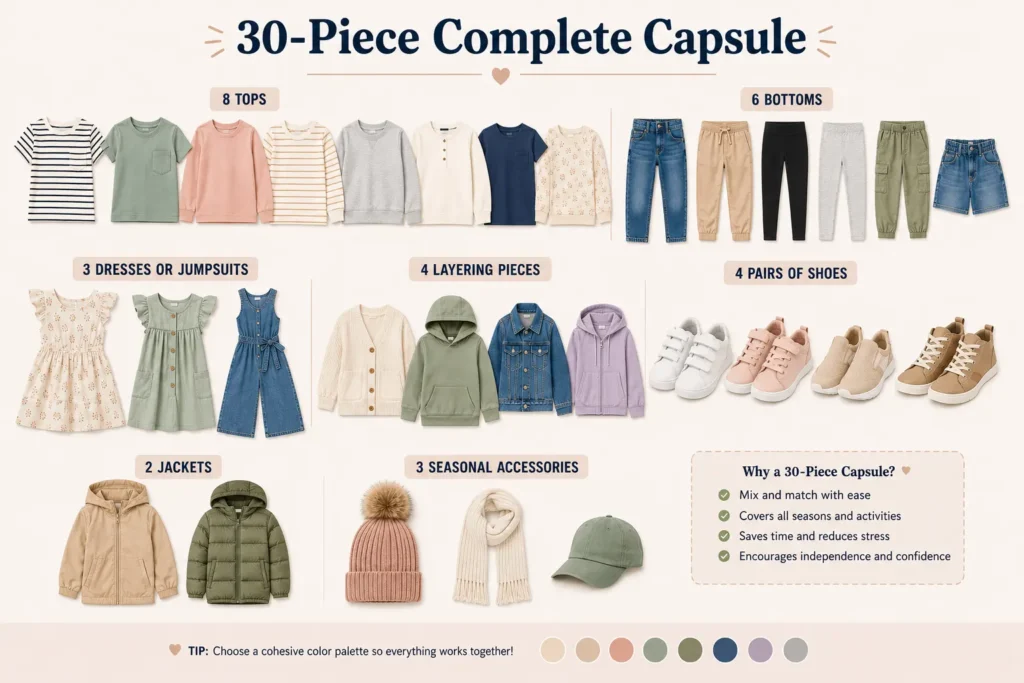
Example:
- 8 tops
- 6 bottoms
- 3 dresses or jumpsuits
- 4 layering pieces
- 4 pairs of shoes
- 2 jackets
- 3 seasonal accessories
Even with thirty carefully chosen pieces, the wardrobe stays organized because every item coordinates with the rest.
Kids Capsule Wardrobe Outfit Ideas
One of the biggest advantages of a kids capsule wardrobe is that getting dressed becomes almost effortless.
Here are a few outfit ideas that work for different occasions.
School Outfits
Simple, practical outfits help children stay comfortable throughout the school day.
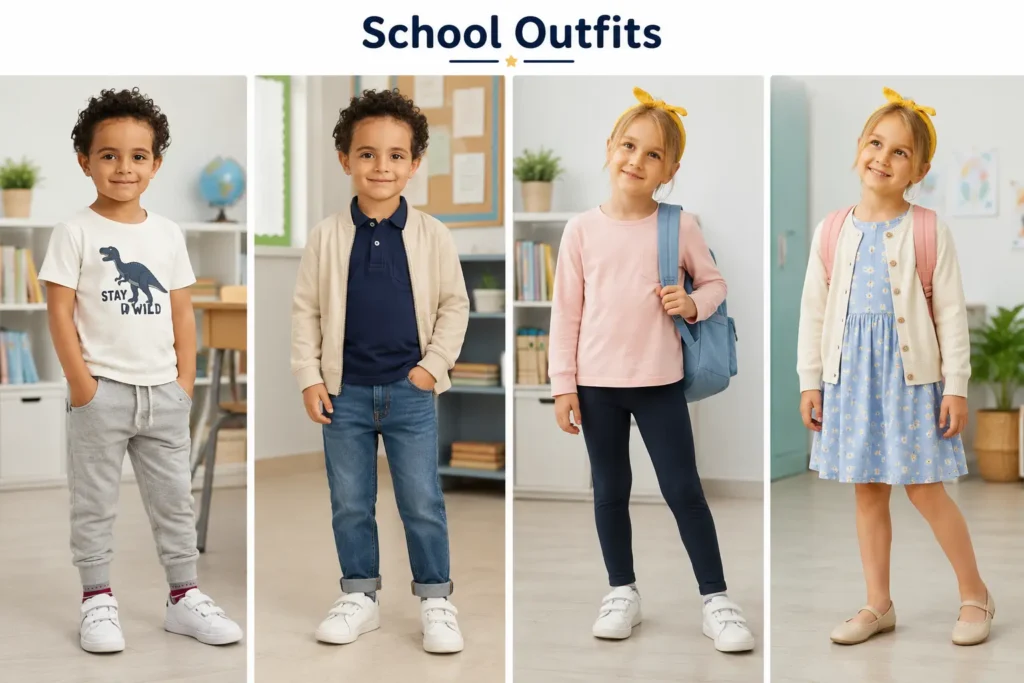
Ideas:
- Graphic T-shirt + joggers + sneakers
- Polo shirt + jeans + lightweight jacket
- Long-sleeve shirt + leggings + sneakers
- Dress + cardigan + flats
These outfits are easy to move in and work well for classroom activities.
Playtime Outfits
Play clothes should handle running, climbing, painting, and outdoor adventures.
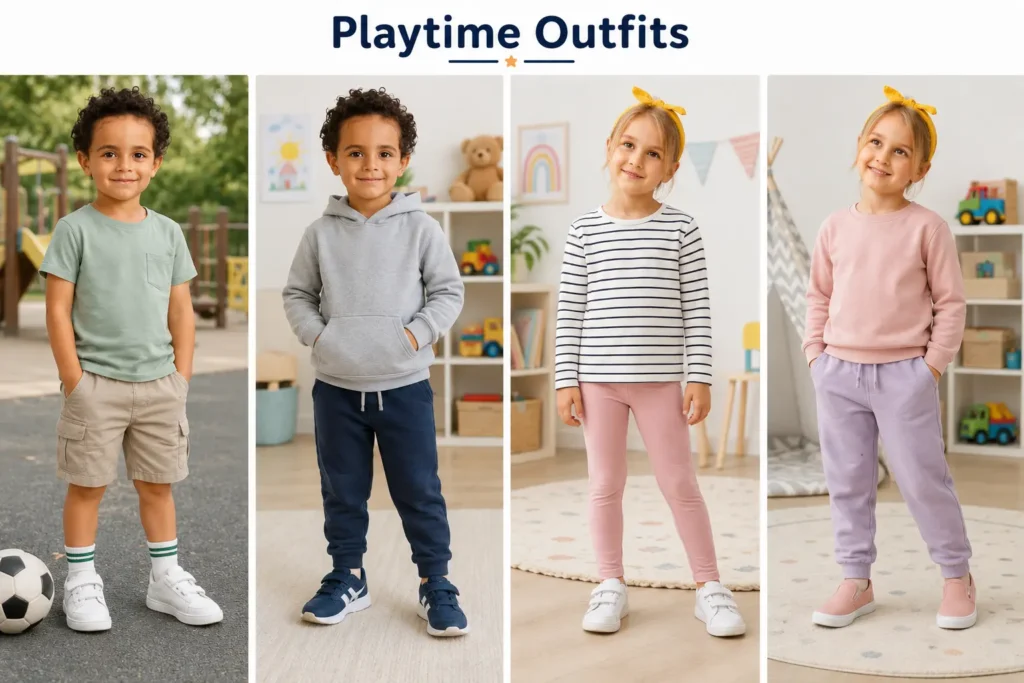
Ideas:
- Cotton T-shirt + shorts + play sneakers
- Hoodie + joggers + trainers
- Long-sleeve tee + leggings + sneakers
- Sweatshirt + soft pants + slip-on shoes
Choose durable fabrics that can handle frequent washing.
Dressy & Special Occasion Outfits
Children don’t need lots of formal clothing.
One or two nicer outfits usually cover most events.
Birthday Party Outfits
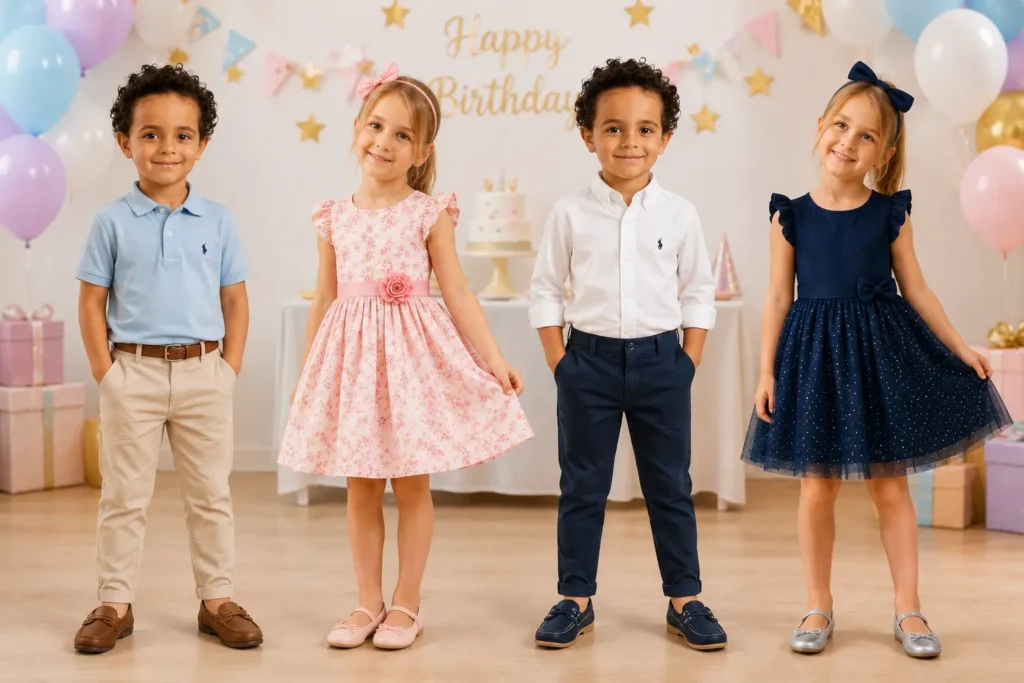
- Polo shirt + chinos + loafers
- Printed dress + ballet flats
Family Dinner Outfits
- Button-down shirt + jeans + sneakers
- Knit dress + cardigan
Wedding Guest Outfits
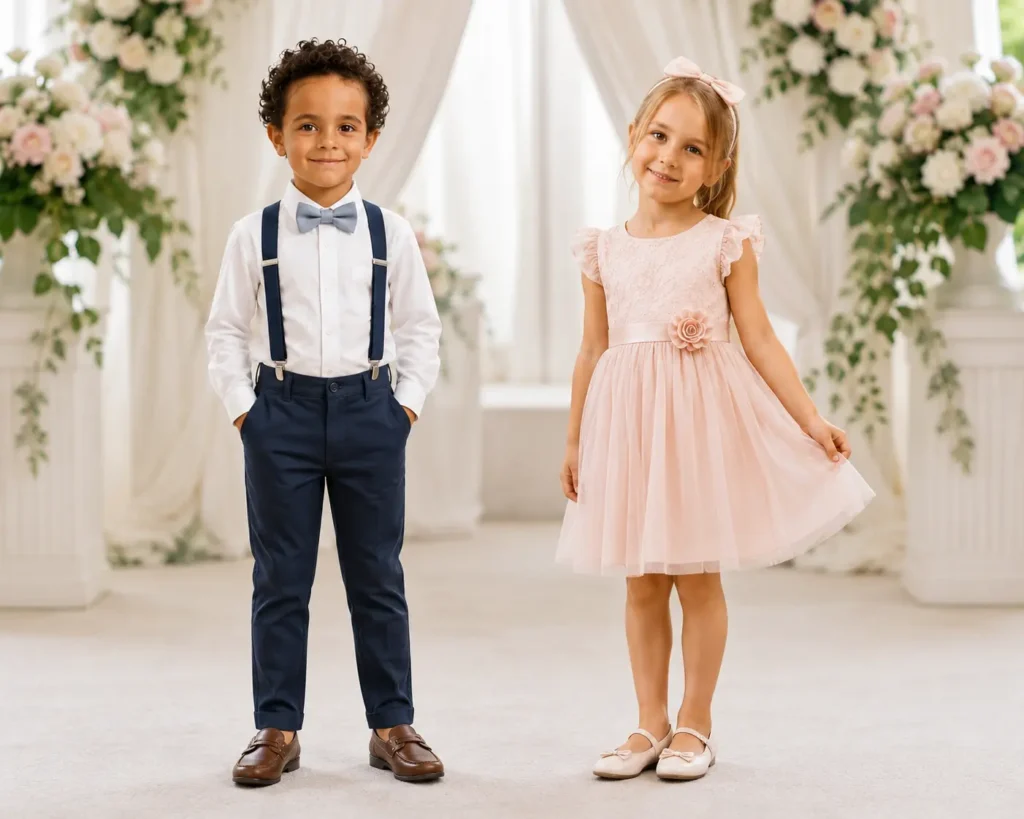
- Dress shirt + trousers + dress shoes
- Simple dress + lightweight cardigan + flats
Holiday Outfits
- Festive sweater + dark jeans + boots
- Velvet dress + tights + flats
School Event Outfits

- Polo shirt + chinos
- Printed dress + cardigan
These outfits look polished without sitting unused for most of the year.
Cold Weather Outfits
Layering keeps children warm without making movement difficult.
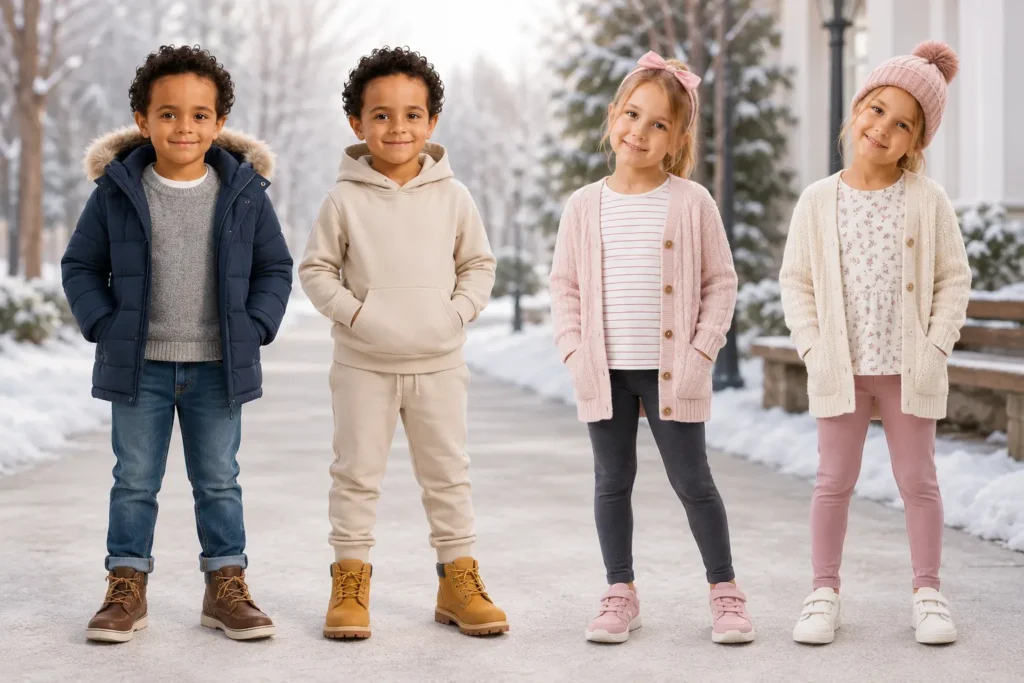
Ideas:
- Thermal shirt + sweater + jeans + winter coat
- Hoodie + joggers + boots
- Long-sleeve shirt + cardigan + leggings + sneakers
Choose warm layers that children can easily remove indoors.
When temperatures drop, adding warm layers without overcrowding the closet follows the same strategy used in a winter capsule wardrobe.
Summer Outfits
Hot weather calls for lightweight, breathable clothing.
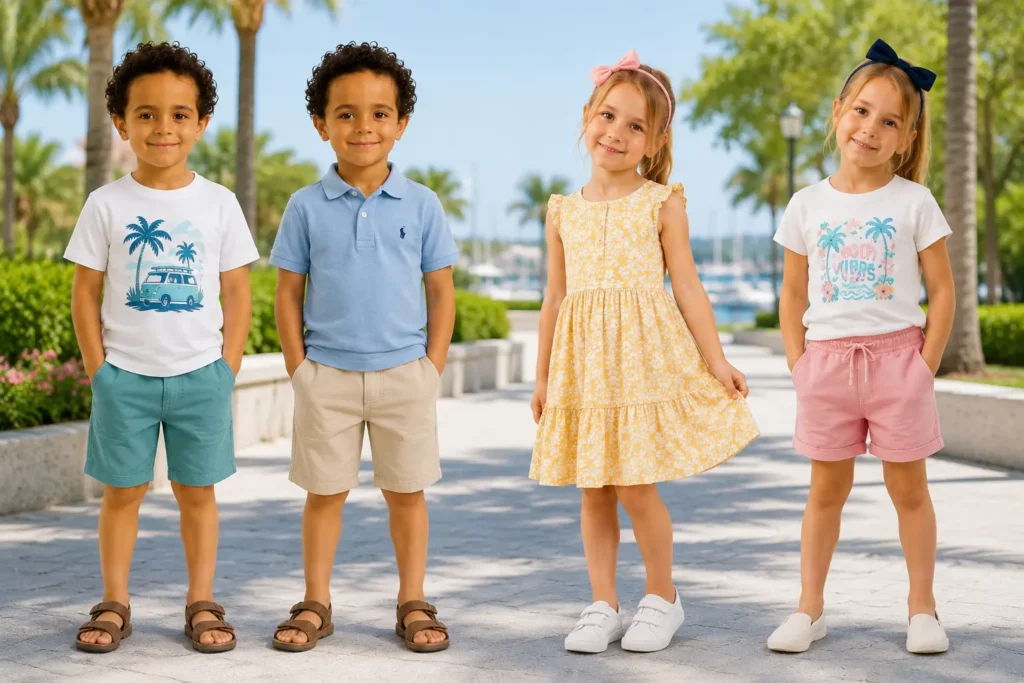
Ideas:
- Cotton T-shirt + shorts + sandals
- Sleeveless dress + sneakers
- Polo shirt + lightweight shorts + sandals
- Graphic tee + cotton jogger shorts + slip-on shoes
Natural fabrics like cotton help children stay cool during active summer days.
As the weather changes, you can swap these pieces using the same approach described in our summer capsule wardrobe guide.
Choosing Colors and Fabrics for a Kids Capsule Wardrobe
The right colors and fabrics make it much easier to build a wardrobe that your child will wear every day. Keep things simple and choose clothes that are comfortable, easy to match, and made to last.
Choose a Simple Color Palette
Start with three or four neutral colors like white, gray, navy, beige, black, or cream. Then add two or three accent colors your child enjoys wearing.
For example:
- Navy + Gray + White + Mustard
- Beige + Cream + Olive Green
- Gray + Denim + Pink
When most clothes share the same color palette, it’s much easier to mix and match outfits.
Choose Comfortable, Durable Fabrics
Kids spend most of their day running, climbing, playing, and learning, so comfort should always come first.
Look for fabrics such as:
- Cotton
- Organic cotton
- Bamboo blends
- Jersey knit
- Soft fleece
Also, choose clothes with strong stitching, adjustable waistbands, and a little stretch. They’ll usually last longer and stay comfortable as your child grows.
Keep Patterns Simple
A few fun prints are great, but don’t let them take over the whole wardrobe.
Most tops and bottoms should be easy to pair together. Neutral basics mixed with a few colorful pieces give your child plenty of outfit choices without making the closet feel cluttered.
How to Maintain a Kids Capsule Wardrobe
Once you’ve built a children’s capsule wardrobe, keeping it organized is surprisingly simple. A quick check every few months is usually all it takes.
Check the Wardrobe Each Season
Children grow fast, so review the wardrobe at the start of every season.
Ask yourself:
- Does everything still fit?
- Is anything worn out?
- Does my child still wear these clothes?
- Are we ready for the new weather?
A quick seasonal check helps you avoid unnecessary shopping later.
Replace Only What Is Needed
You don’t need to replace the entire wardrobe every time your child grows.
Simply swap out the clothes that no longer fit and replace everyday essentials as needed. This keeps costs down and prevents the closet from filling up again.
Store Off-Season Clothes
Keep only the current season’s clothes in the closet.
Store winter coats, heavy sweaters, and boots during summer, then rotate them back when the weather changes. Clear storage bins or labeled containers make everything easier to find.
Shop with a Plan
Before buying new clothes, ask yourself:
- Does my child really need it?
- Will it match the rest of the wardrobe?
- Is it replacing something that’s worn out?
Buying only what you need helps keep the wardrobe simple and your clothing budget under control.
Common Mistakes Parents Make
Building a capsule wardrobe for kids is simple, but a few common mistakes can make it harder than it needs to be.
Buying Too Many Clothes
It’s easy to keep adding “just one more” outfit.
Start with the essentials and only add more if your child genuinely needs them.
Ignoring Your Child’s Preferences
Children are more likely to wear clothes they choose themselves.
Let them help pick colors, prints, or favorite T-shirts so they enjoy getting dressed.
Choosing Style Over Comfort
Kids spend most of their day playing, learning, and moving.
Choose soft, comfortable clothes that they can wear all day instead of outfits that only look good.
Forgetting About Growth Spurts
Children outgrow clothes quickly.
Buy new pieces as needed instead of replacing the entire wardrobe at once.
Buying Everything Brand New
A great wardrobe doesn’t have to be expensive.
Mix new basics with hand-me-downs, secondhand finds, or seasonal sales. The goal is to choose clothes your child will actually wear, not to fill the closet with new items.
Final Thoughts
A kid’s capsule wardrobe isn’t about limiting your child’s choices. It’s about making everyday life simpler.
When every piece has a purpose, mornings become less stressful, laundry feels more manageable, and shopping becomes much more intentional. Instead of overflowing drawers filled with clothes your child rarely wears, you’ll have a practical collection of comfortable, mix-and-match outfits that work for school, play, weekends, and special occasions.
Start small. You don’t need to rebuild the entire wardrobe in one weekend. Begin with the clothes your child already loves to wear, remove the pieces that no longer fit, and slowly build a collection that suits your family’s lifestyle.
Over time, you’ll likely discover what many parents already have—a smaller wardrobe often makes life feel much bigger, calmer, and easier.
Frequently Asked Questions
What is a kids capsule wardrobe?
A kid’s capsule wardrobe is a small collection of everyday clothes that can be mixed and matched easily. Instead of filling the closet with lots of outfits, you keep versatile pieces your child wears regularly.
How many clothes should a child have?
Most children only need 20 to 25 pieces of everyday clothing. The exact number depends on their age, school routine, climate, activities, and how often you do laundry.
At what age can children start using a capsule wardrobe?
A capsule wardrobe works for children of almost any age, from toddlers to preteens. Simply choose clothes that suit your child’s age, lifestyle, and daily routine.
How often should I update my child’s wardrobe?
Check the wardrobe at the start of every season or whenever your child has a growth spurt. Replace only the clothes that no longer fit or are worn out.
Can a capsule wardrobe work if my child wears a school uniform?
Yes. Keep school uniforms separate from casual clothes and build the rest of the wardrobe around weekends, holidays, and after-school activities.
Do pajamas, socks, and underwear count?
No. Pajamas, underwear, socks, swimwear, and school uniforms are usually kept outside your everyday capsule because they serve a different purpose.
What colors work best for a children’s capsule wardrobe?
Neutral colors such as gray, navy, white, beige, black, and cream work best. Add two or three accent colors your child enjoys wearing to make outfit matching easy.
Is a kids capsule wardrobe expensive?
No. Many families spend less because they buy fewer clothes and focus on pieces their children actually wear instead of making unnecessary purchases.
What fabrics are best for kids’ clothes?
Soft, breathable fabrics like cotton, organic cotton, bamboo blends, jersey knit, and French terry are comfortable for everyday wear and hold up well after repeated washing.
Can I include hand-me-downs?
Absolutely. Hand-me-downs fit perfectly into a capsule wardrobe as long as they fit well, are in good condition, and match the rest of your child’s clothes.
How do I keep the wardrobe from becoming cluttered again?
Review it every season, donate clothes your child has outgrown, store off-season items separately, and only buy new pieces when they’re genuinely needed.
Emma studied fashion but could never get her own closet under control. Capsule wardrobes finally fixed that. Now she writes about what actually worked for her, in the hope it saves you a few frustrating mornings.