Every winter, I used to make the same mistake.
As soon as the temperature dropped, I convinced myself I needed more clothes. A new sweater. Another coat. A pair of boots that looked great online. Yet somehow, my closet became fuller while getting dressed became harder.
I still remember opening my closet on a cold winter morning and feeling frustrated. Even though my wardrobe was packed with seasonal clothes, creating an outfit that looked good and felt practical took far longer than it should have.
One sweater only matched a single pair of jeans. A coat was too tight over chunky knitwear. Although I loved how my boots looked, they rarely felt comfortable for a full day of wear.
That’s when I realized the problem wasn’t a lack of clothing. It was a lack of strategy.
Instead of owning versatile pieces that worked together, I had built a collection of random winter purchases. Everything looked fine on its own, but creating outfits felt frustrating and time-consuming.
That experience led me to build my first winter capsule wardrobe. By focusing on timeless essentials, practical layers, and a simple color palette, I was able to create more outfits with fewer pieces.
Getting dressed became easier, shopping became more intentional, and my closet finally felt organized.
If you’ve ever looked at a full wardrobe and still felt like you had nothing to wear, you’re not alone.
In this article, I’ll show you how to build a winter capsule wardrobe that is practical, versatile, and easy to wear throughout the season.
You’ll learn which pieces to include, how to choose the right fabrics and colors, and how to create stylish winter outfits without owning an overflowing closet.
What Is a Winter Capsule Wardrobe?
A winter capsule wardrobe is a curated collection of cold-weather clothing that works together.
It usually includes winter wardrobe staples like basic tops, sweaters, coats, jeans, trousers, boots, and accessories. Each piece should be easy to style in more than one way.
Instead of asking, “What should I wear today?” every morning, you already have a closet full of pieces that go together.
A turtleneck works under a wool coat. Straight-leg jeans work with ankle boots. A neutral sweater works with trousers, skirts, or denim.
That is what makes a capsule closet so helpful. It gives you fewer decisions and more outfit combinations.
Benefits of Building a Winter Capsule Wardrobe
Instead of owning more clothes, you focus on versatile pieces that work together.
Saves Time Getting Dressed
When your clothing is designed to coordinate, creating winter outfits takes far less effort. You spend less time deciding what to wear and more time getting on with your day.
Reduces Unnecessary Shopping
A capsule wardrobe encourages smarter purchases. Instead of buying trendy items you rarely wear, you focus on pieces that fit your style and work with the rest of your wardrobe.
Makes Layering Easier
Winter dressing is all about layers. When your wardrobe is built around compatible pieces, you can layer comfortably without your outfits feeling bulky or mismatched.
Creates More Outfit Combinations
A few versatile pieces can create dozens of different outfits. Mixing and matching tops, bottoms, and outerwear gives you more variety without needing a large closet.
Helps Define Your Personal Style
By simplifying your closet, you can focus on the pieces that make you feel comfortable and confident. Over time, it becomes easier to identify your preferred colors, fits, and overall style.
Supports More Sustainable Fashion Habits
Buying fewer, better-quality pieces often leads to less waste and more wear from each item. It is a simple way to build a wardrobe that is both practical and long-lasting.
Before You Build Your Winter Capsule Wardrobe
Before buying anything new, take some time to plan your wardrobe. This step is often overlooked, but it can save you money, prevent clutter, and help you build a capsule wardrobe that actually works for your life.
When I first started building a winter capsule wardrobe, I made the mistake of focusing on shopping before planning. I bought pieces I liked individually, but they didn’t always work together. Once I started evaluating my closet first, everything became much easier.
Step 1: Assess Your Current Closet
Start with a simple wardrobe audit.
Pull out your winter clothing and sort it into three categories:
- Wear regularly
- Wear occasionally
- Never wear
Pay attention to the pieces you naturally reach for every week. Those are often your true wardrobe staples.
You may discover that your favorite winter outfits already revolve around a few key pieces, such as:
- Dark wash jeans
- A wool coat
- A turtleneck sweater
- White sneakers
- Black ankle boots
Those items should become the foundation of your winter capsule wardrobe.
Step 2: Define Your Lifestyle Needs
A capsule wardrobe should fit your real life, not someone else’s.
Start by looking at how you typically spend your time each week.
Ask yourself:
- Do you work in an office?
- Do you work from home?
- Are you a college student?
- Do you attend formal events regularly?
- Do you spend a lot of time outdoors?
Someone working remotely may need more cozy knitwear and leggings. Someone working in a corporate environment may need tailored trousers, blazers, and smart casual outfits.
Your wardrobe should support your daily routine.
Step 3: Identify Your Personal Style
One of the biggest benefits of a capsule wardrobe is that it helps you create a more consistent personal style.
If you’re unsure where to start, look at outfits you’ve saved on Pinterest or Instagram.
Notice patterns such as:
- Neutral colors
- Monochrome outfits
- Minimalist fashion
- Classic tailoring
- Relaxed casual styles
Personally, I’ve found that understanding your style makes shopping much easier. Instead of buying trendy pieces that only work for one season, you focus on clothing you’ll enjoy wearing for years.
Step 4: Choose a Winter Color Palette
A color palette makes outfit planning much easier.
Most successful winter capsule wardrobes rely on neutral colors because they create more outfit combinations.
Popular winter color palettes include:
- Black
- White
- Gray
- Camel
- Navy
- Cream
- Chocolate brown
You can then add one or two accent colors for variety.
Examples include:
- Burgundy
- Forest green
- Dusty blue
- Deep plum
A simple color palette helps every piece in your wardrobe work together naturally.
Step 5: Set a Realistic Clothing Budget
Building a capsule wardrobe doesn’t mean replacing everything at once.
Start with what you already own and gradually upgrade pieces when needed.
I usually recommend prioritizing investment pieces first because they have the biggest impact on comfort, durability, and cost-per-wear.
Examples include:
- Wool coat
- Weatherproof boots
- Quality knitwear
- Tailored trousers
For basics like t-shirts, long-sleeve tops, and accessories, there are plenty of affordable options that perform just as well.
A realistic budget prevents impulse purchases and helps you build a more intentional wardrobe.
Step 6: Consider Your Local Climate
Seasonal wardrobes should always reflect your local weather conditions. Someone living in a warmer climate may keep many pieces from a summer capsule wardrobe throughout the year, while those experiencing colder temperatures often need additional layers, knitwear, and winter outerwear.
A person living through mild winters needs very different clothing than someone dealing with snow and freezing temperatures.
For mild winters:
- Lightweight sweaters
- Trench coats
- Loafers
- Straight-leg jeans
For cold climates:
- Wool coats
- Puffer jackets
- Thermal layers
- Wool socks
For snowy winters:
- Waterproof boots
- Insulated outerwear
- Merino wool layers
- Weather-resistant accessories
The best winter capsule wardrobe is not the one that looks best online. What matters most is choosing clothing that works for your local weather and lifestyle.
The Ultimate Winter Capsule Wardrobe Checklist
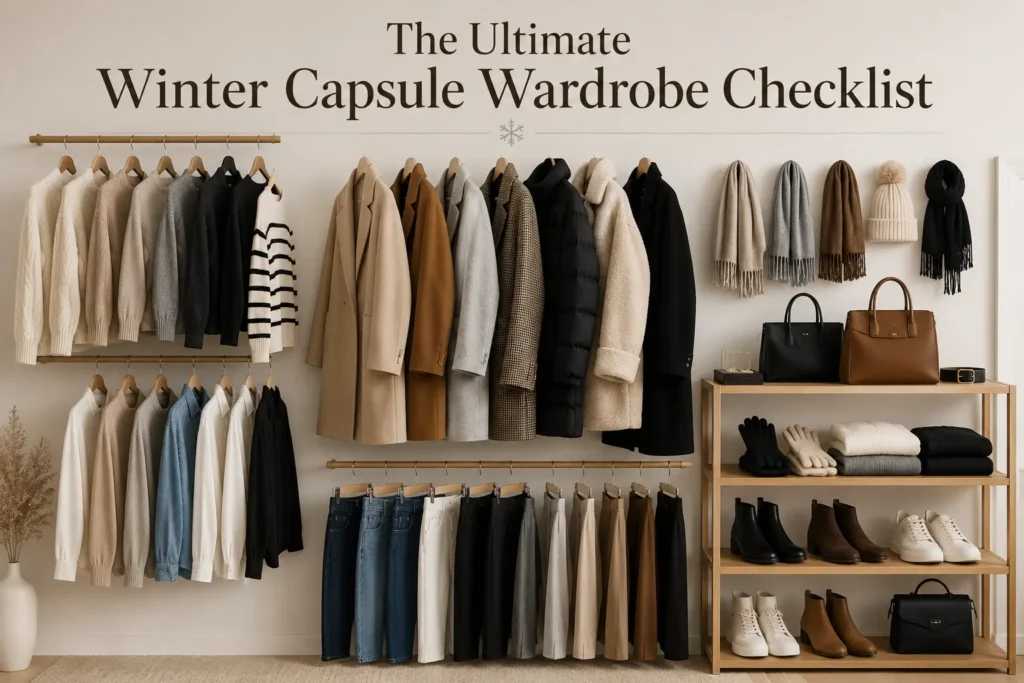
A successful winter capsule wardrobe does not require dozens of clothing items. Choose pieces that pair naturally with each other and adapt to a variety of settings. Focus on these core categories when building your winter wardrobe.
Tops
Your winter tops should provide warmth while working with multiple outfits.
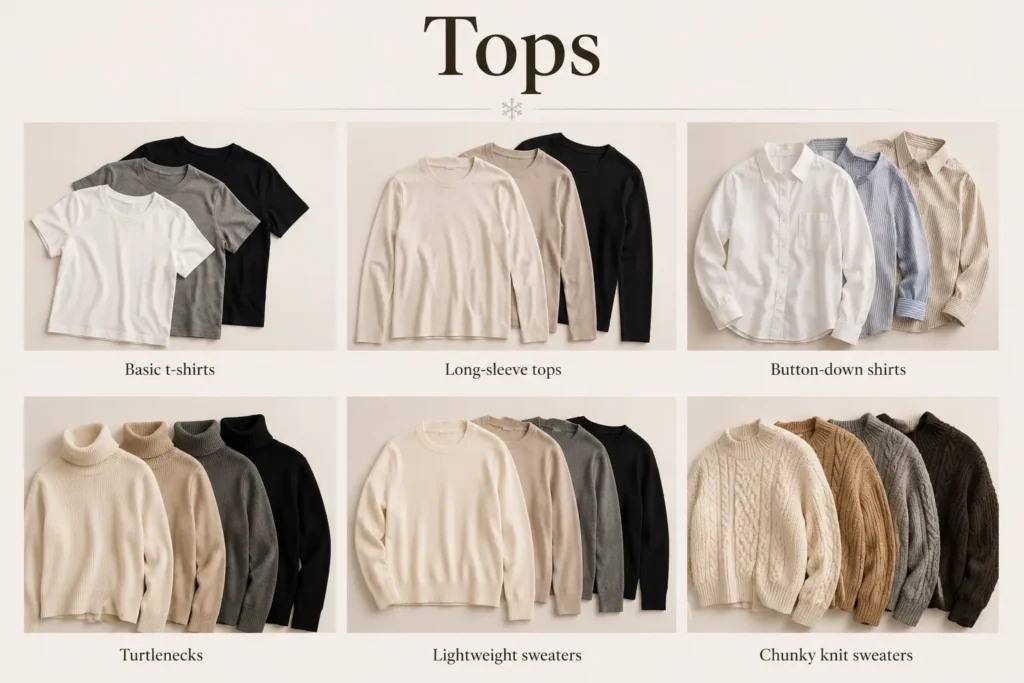
Essential winter tops include:
- Basic t-shirts
- Long-sleeve tops
- Button-down shirts
- Turtlenecks
- Lightweight sweaters
- Chunky knit sweaters
Choose neutral colors such as black, white, gray, cream, camel, and navy to maximize outfit combinations.
Layers and Outerwear
Layering is the foundation of a practical winter capsule wardrobe. A few versatile outerwear pieces can create countless outfit combinations.
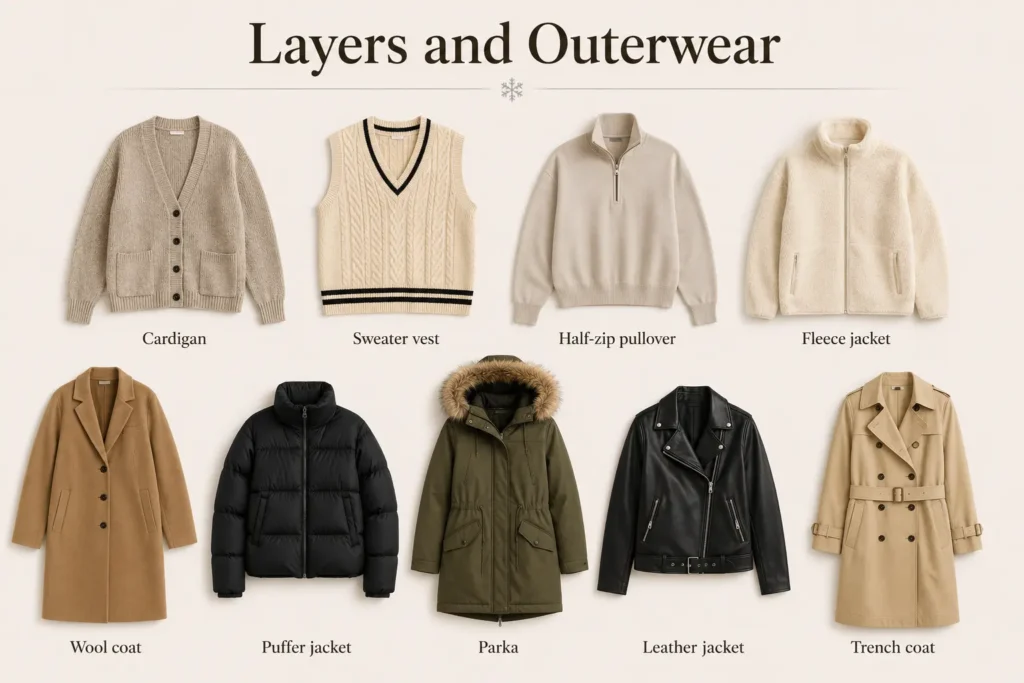
Key layering pieces include:
- Cardigan
- Sweater vest
- Half-zip pullover
- Fleece jacket
- Wool coat
- Puffer jacket
- Parka
- Leather jacket
- Trench coat
Select styles that suit your climate and everyday lifestyle.
Bottoms
Winter bottoms should be comfortable, practical, and easy to pair with your tops and outerwear.
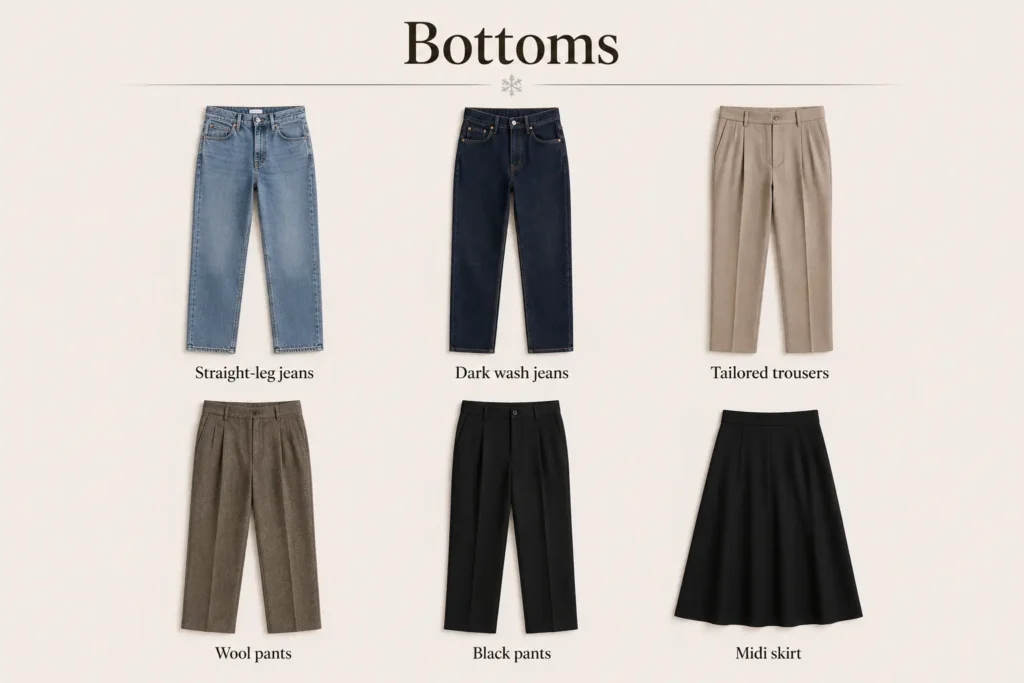
Core options include:
- Straight-leg jeans
- Dark wash jeans
- Tailored trousers
- Wool pants
- Black pants
- Midi skirt
A mix of casual and polished bottoms will cover most winter occasions.
Dresses and One-Piece Options
Dresses can still be an important part of a winter capsule wardrobe when layered correctly.
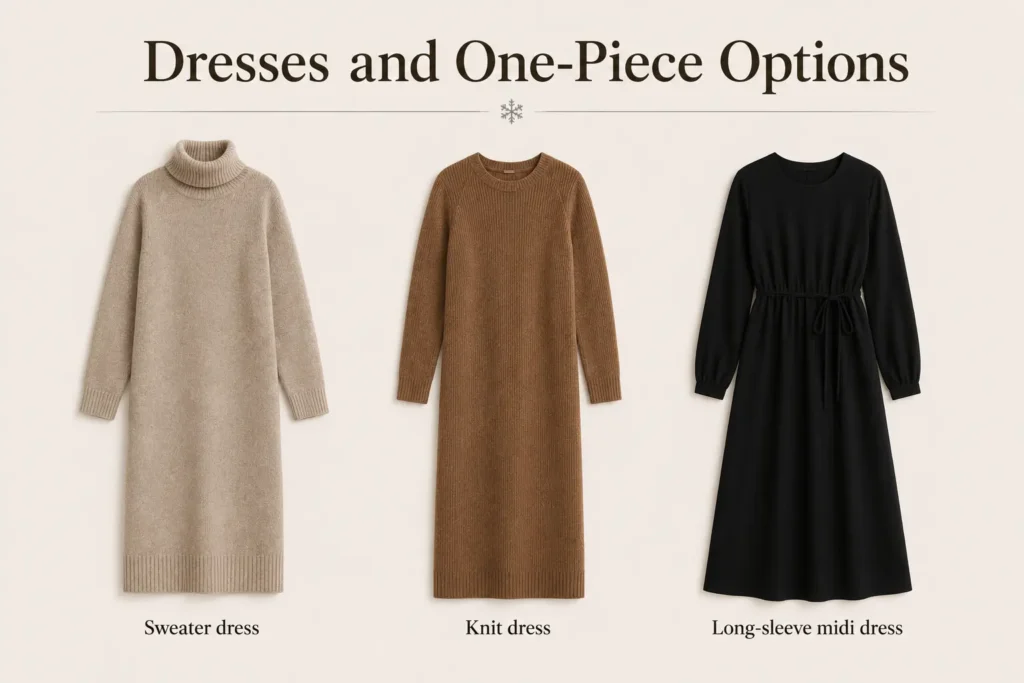
Consider including:
- Sweater dress
- Knit dress
- Long-sleeve midi dress
These pieces work well with coats, boots, and winter accessories.
Shoes
Winter footwear should balance comfort, warmth, and versatility.
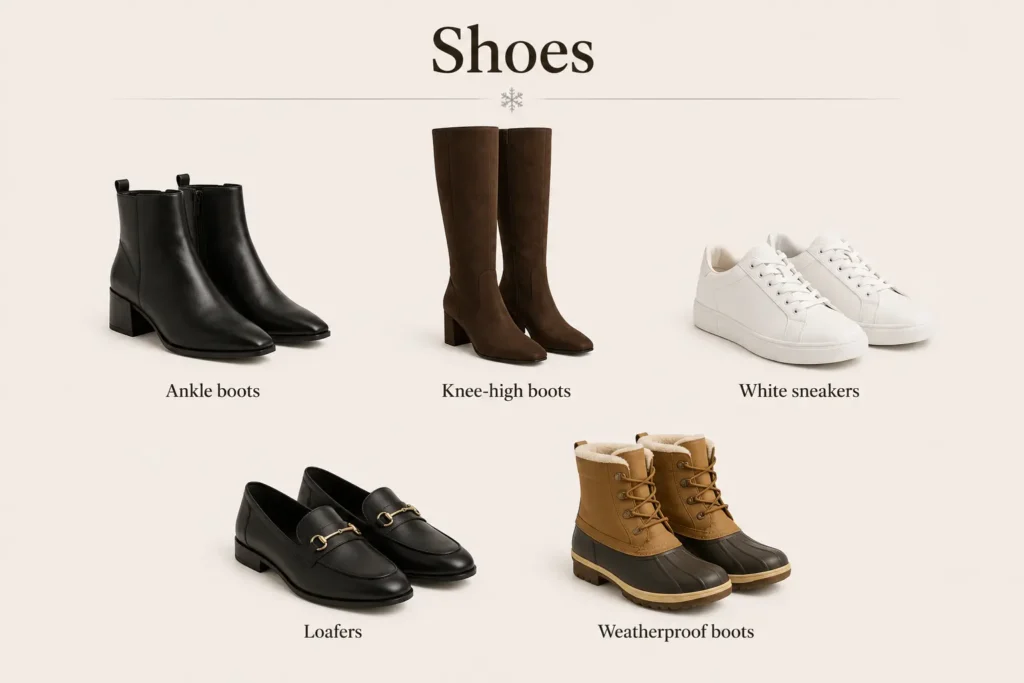
Essential options include:
- Ankle boots
- Knee-high boots
- White sneakers
- Loafers
- Weatherproof boots
Choose footwear that complements the rest of your wardrobe and suits local weather conditions.
Accessories
Accessories add warmth and help complete winter outfits.
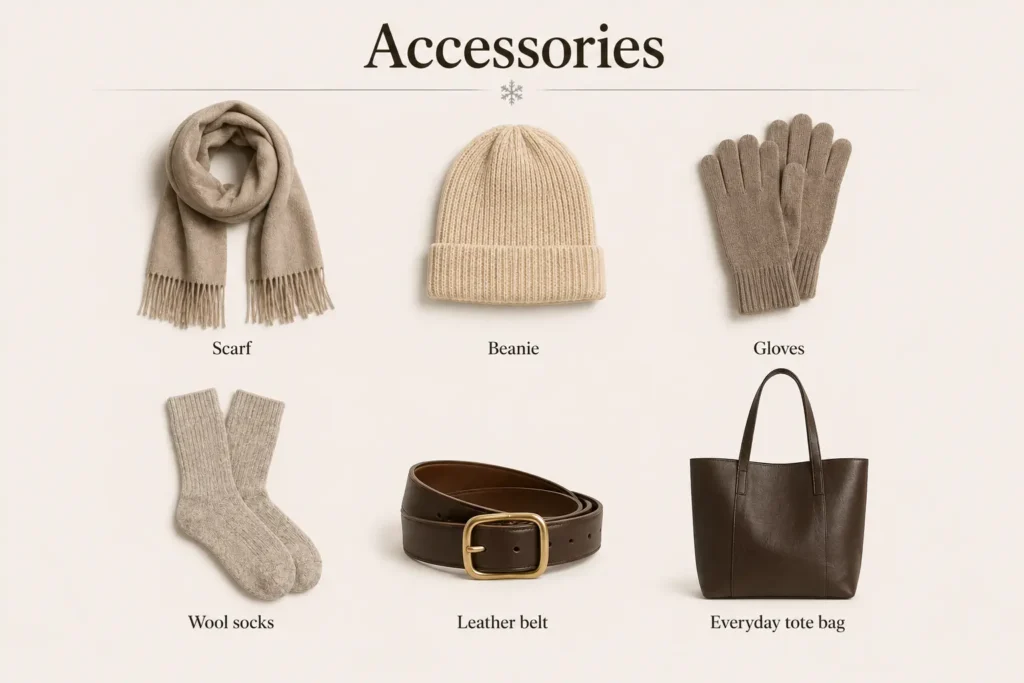
Winter essentials include:
- Scarf
- Beanie
- Gloves
- Wool socks
- Leather belt
- Everyday tote bag
A few well-chosen accessories can make your winter wardrobe feel more polished and functional.
How Many Pieces Should a Winter Capsule Wardrobe Have?
One of the most common questions people ask is:
How many essentials should be included in a winter capsule wardrobe?
The answer depends on your lifestyle, climate, and personal preferences.
There is no perfect number.
The goal is to create enough outfit combinations without creating clutter.
20-Piece Minimalist Capsule
A 20-piece capsule works well for true minimalist fashion lovers.
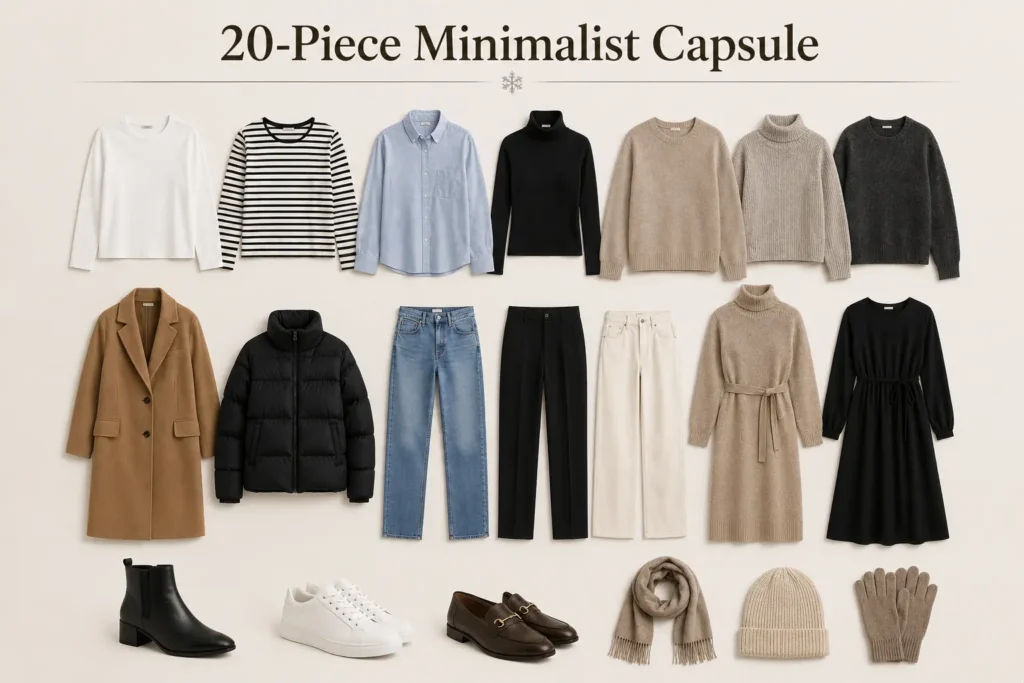
Typical pieces include:
- 4 tops
- 3 sweaters
- 2 outerwear pieces
- 3 bottoms
- 2 dresses
- 3 shoes
- 3 accessories
This approach focuses heavily on quality, versatility, and repeat wear.
Best for:
- Minimalists
- Frequent travelers
- People who prefer simple wardrobes
30-Piece Balanced Capsule
For most people, this is the sweet spot.
A 30-piece winter capsule wardrobe offers enough variety without feeling overwhelming.
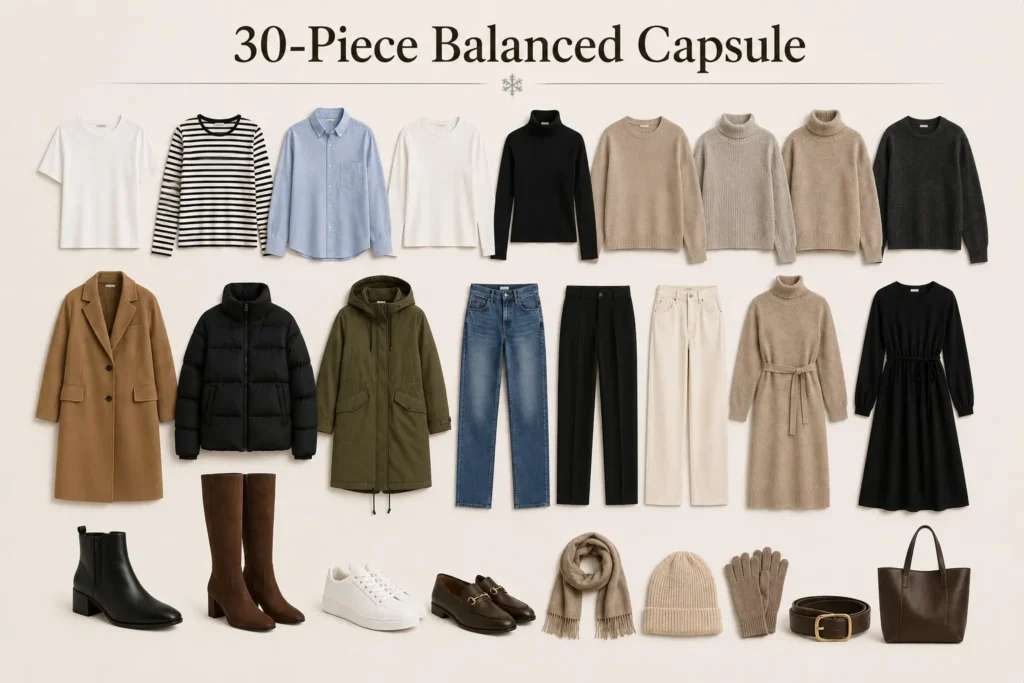
You’ll have:
- Multiple layering options
- Several outfit formulas
- Workwear flexibility
- Weekend outfit choices
Most readers will likely find this option the most practical.
40-Piece Extended Capsule
If you experience long winters or need clothing for multiple activities, a larger capsule may make sense.
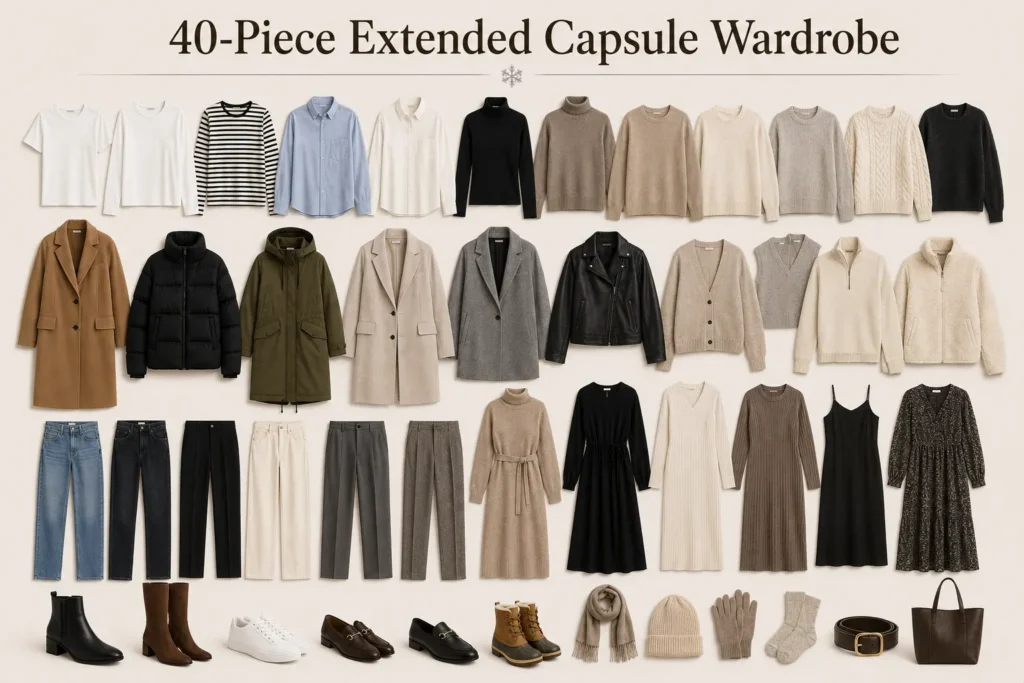
A 40-piece wardrobe can support:
- Office work
- Social events
- Travel
- Outdoor activities
- Formal occasions
The key is maintaining versatility.
Avoid adding pieces that only work with one outfit.
Choosing the Right Number for Your Lifestyle
Instead of focusing on a specific number, focus on function.
Ask yourself:
- Do I have enough outfits for my weekly routine?
- Can most pieces mix and match?
- Am I wearing everything regularly?
- Does my wardrobe support my climate?
A successful capsule wardrobe is measured by usefulness, not by the number of items it contains.
The Best Winter Capsule Wardrobe Color Palettes
One of the easiest ways to create a cohesive wardrobe is through color.
A carefully chosen color palette helps every piece work together.
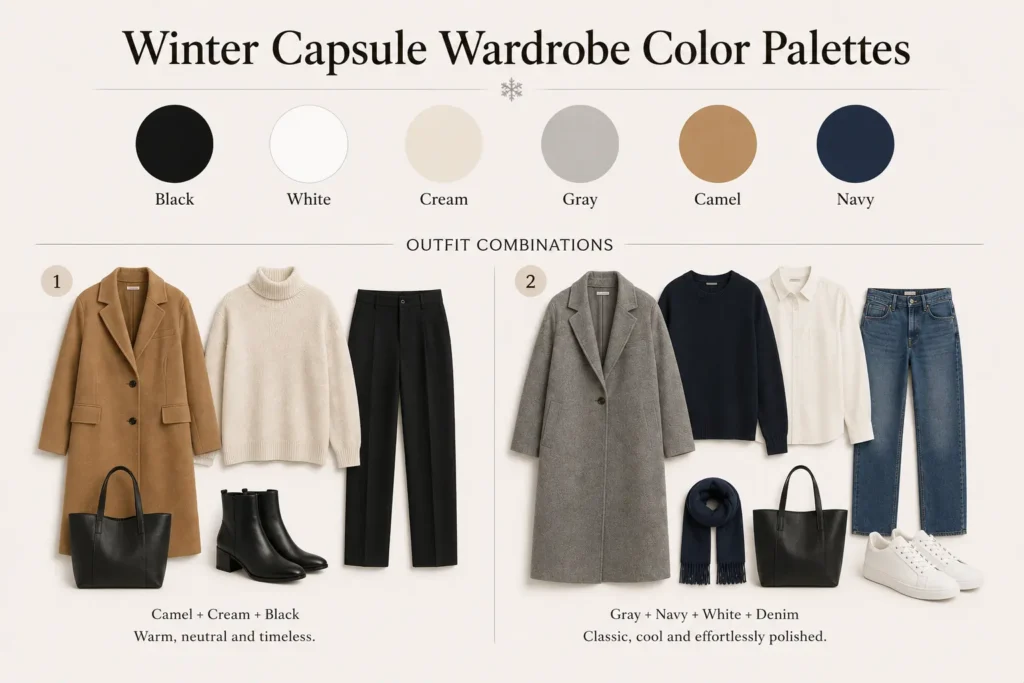
Neutral Winter Capsule Wardrobe
A neutral winter wardrobe remains one of the most popular options.
Common colors include:
- Black
- White
- Cream
- Gray
- Camel
- Navy
These shades create endless outfit combinations.
Monochrome Winter Capsule Wardrobe
Monochrome outfits use different shades of the same color.
Examples:
- All black
- All gray
- Cream and ivory tones
- Brown tonal dressing
Monochrome winter outfits often look sophisticated with minimal effort.
Classic Black, Camel, and White Palette
This combination has remained timeless for years.
Why it works:
- Easy to style
- Looks polished
- Works across casual and formal outfits
If you’re unsure where to start, this palette is one of the safest options.
Earth-Tone Winter Capsule Wardrobe
Earth tones create warmth and depth.
Popular shades include:
- Olive green
- Rust
- Chocolate brown
- Taupe
- Terracotta
These colors pair beautifully with cream and camel.
Adding Seasonal Accent Colors
Accent colors help prevent your wardrobe from feeling repetitive.
Consider:
- Burgundy
- Forest green
- Deep blue
- Plum
- Dusty rose
I usually recommend limiting accent colors to one or two shades so the wardrobe remains cohesive.
How to Layer Winter Clothes Like a Stylist
Great winter style is rarely about a single piece.
It’s about layering.
The best outfits often combine warmth, comfort, and visual balance.
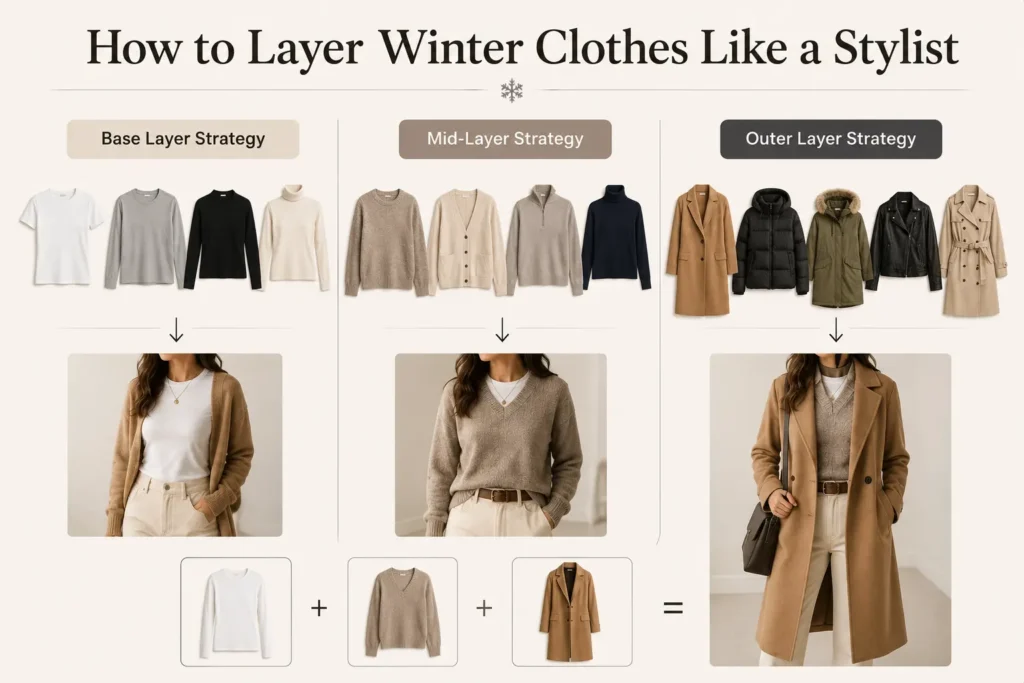
Base Layer Strategy
Your base layer sits closest to your body.
Examples:
- Fitted t-shirt
- Long-sleeve tee
- Thermal top
- Lightweight turtleneck
The goal is warmth without bulk.
Mid-Layer Strategy
The mid-layer provides insulation.
Examples:
- Sweater
- Cardigan
- Half-zip pullover
- Knitwear
This layer often becomes the focal point of the outfit.
Outer Layer Strategy
Your outer layer protects against the weather.
Examples:
- Wool coat
- Puffer jacket
- Parka
- Leather jacket
- Trench coat
Choose outerwear based on your climate and daily activities.
Layering Without Looking Bulky
One thing I’ve learned over the years is that bulky outfits usually happen when every layer is oversized.
Instead:
- Keep base layers fitted
- Use medium-weight sweaters
- Choose structured outerwear
This creates warmth while maintaining shape.
Winter Layering Mistakes to Avoid
Avoid these common mistakes:
- Wearing bulky layers underneath bulky coats
- Ignoring fabric weight
- Skipping base layers
- Choosing style over warmth
- Wearing too many statement pieces at once
A well-layered outfit should feel comfortable, not restrictive.
Simple Winter Capsule Wardrobe Outfit Ideas
One of the biggest advantages of a winter capsule wardrobe is how easily the pieces work together.
You don’t need dozens of clothes to create stylish outfits. You simply need versatile clothing that can be mixed and matched in different ways.
Casual Everyday Outfits
These are the outfits you’ll probably wear most often.
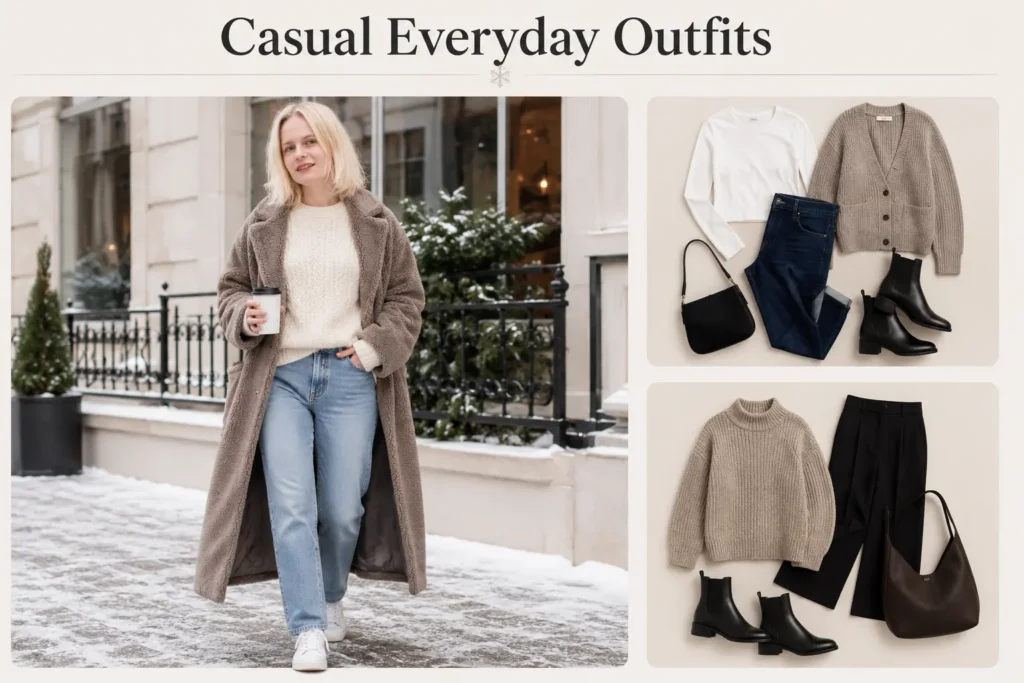
Most of my everyday winter outfits follow a simple formula:
Knit Top + Jeans + Comfortable Shoes + Layer
Try combinations such as:
- Cream sweater + straight-leg jeans + white sneakers
- Long-sleeve tee + cardigan + dark wash jeans + ankle boots
- Chunky knit sweater + black pants + Chelsea boots
These outfits feel comfortable, practical, and effortless.
Business Casual Winter Outfits
For business casual settings, I usually follow this formula:
Smart Top + Tailored Bottoms + Polished Shoes + Coat
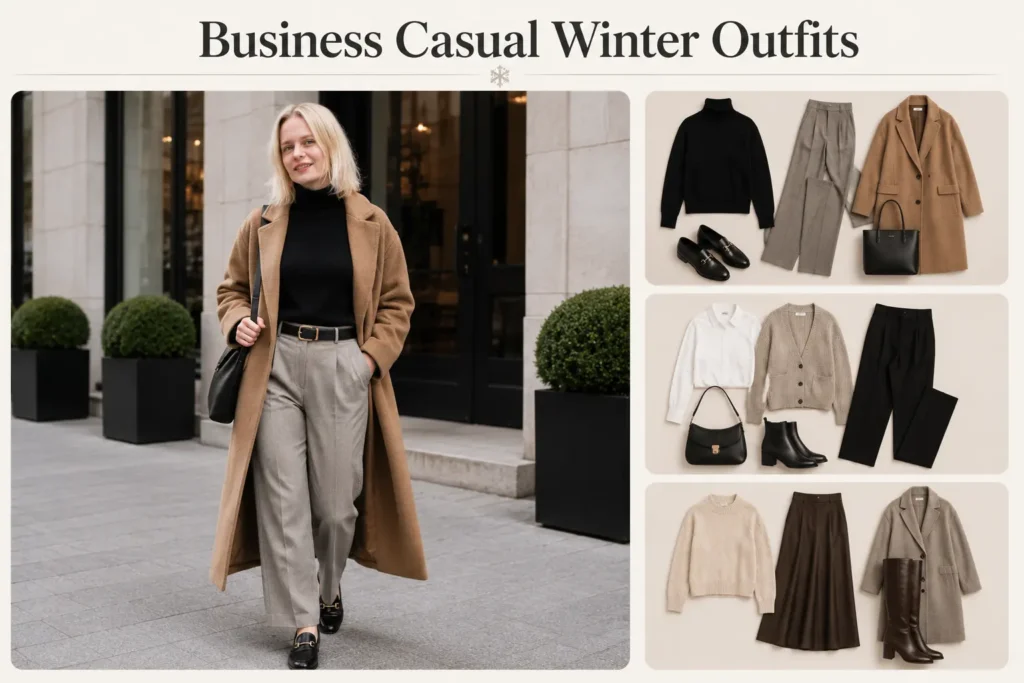
Also, try those combinations:
- Turtleneck + tailored trousers + loafers + wool coat
- Button-down shirt + cardigan + black pants + ankle boots
- Lightweight sweater + midi skirt + knee-high boots
These combinations look polished without feeling overly formal.
Weekend Winter Outfits
Weekends are perfect for a relaxed, cozy winter style. My go-to formula is:
Cozy Layer + Relaxed Bottoms + Casual Footwear
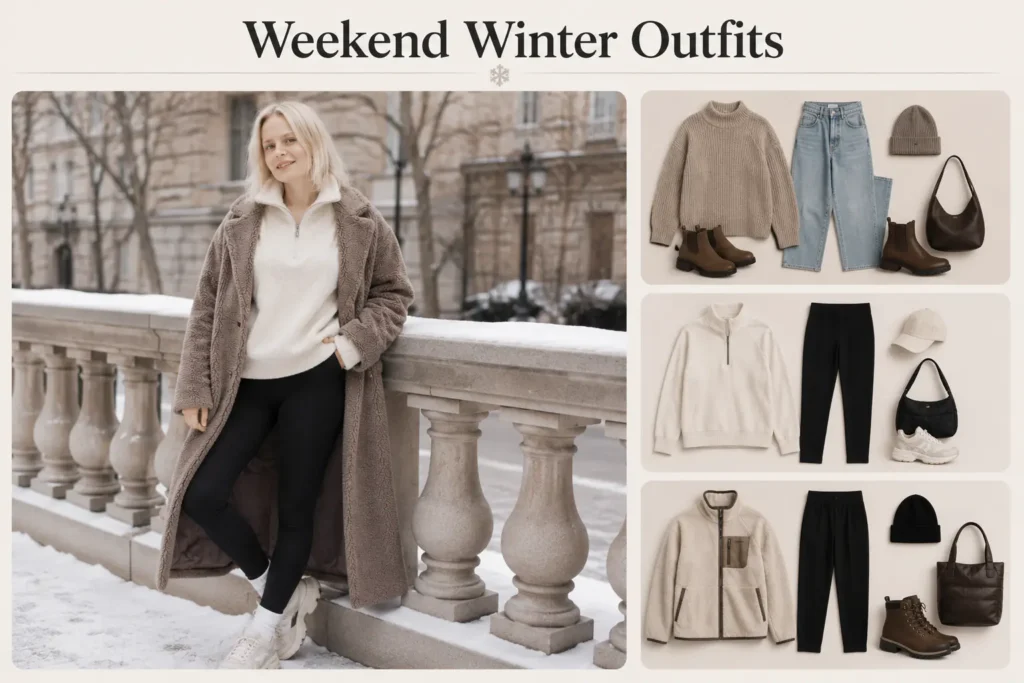
Try combinations such as:
- Half-zip pullover + leggings + sneakers
- Chunky knit sweater + straight-leg jeans + boots
- Fleece jacket + black pants + weatherproof boots
These outfits are ideal for errands, coffee runs, and casual outings.
Date Night Winter Outfits
Winter date-night outfits can be warm and stylish. For winter date nights, I usually follow this formula:
Statement Piece + Elegant Layer + Dressier Shoes
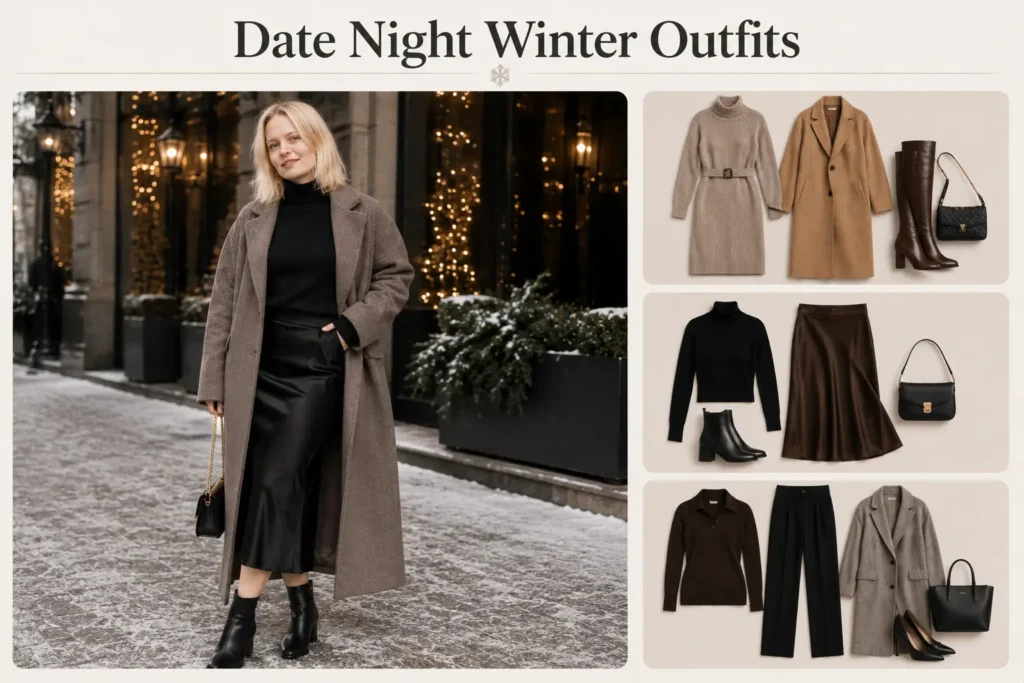
Ideas include:
- Sweater dress + knee-high boots + wool coat
- Satin midi skirt + turtleneck + ankle boots
- Black trousers + fitted knit top + long coat
The key is balancing comfort with sophistication.
Travel-Friendly Winter Outfits
A winter travel capsule wardrobe should focus on layering.
When traveling, I rely on a simple layering formula:
Base Layer + Mid Layer + Comfortable Bottoms + Practical Shoes
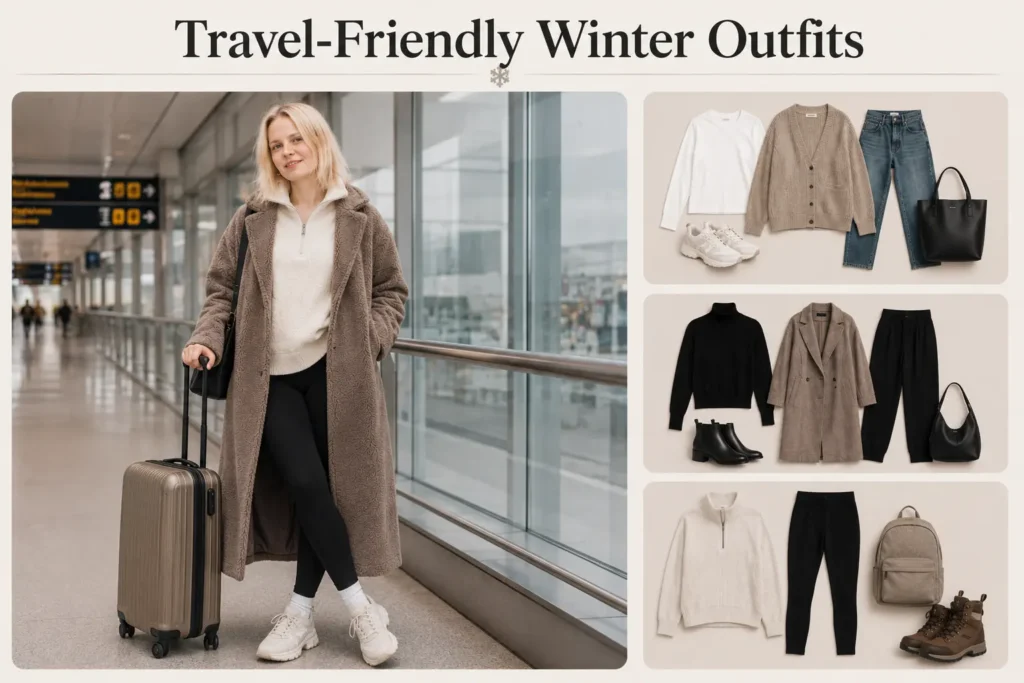
Try those combinations:
- Long-sleeve tee + cardigan + jeans + sneakers
- Turtleneck + wool coat + black pants
- Half-zip pullover + leggings + weatherproof boots
This approach keeps outfits comfortable, versatile, and easy to adapt to different weather conditions.
Winter Capsule Wardrobe by Lifestyle
Not every wardrobe should look the same.
Your lifestyle should always influence your clothing choices.
Stay-at-Home Moms

Priorities often include:
- Comfortable knitwear
- Leggings
- Sneakers
- Easy layering pieces
- Washable fabrics
Focus on comfort without sacrificing style.
College Students

Students often need:
- Versatile basics
- Budget-friendly essentials
- Comfortable footwear
- Layering pieces
- Durable outerwear
A balanced capsule wardrobe helps maximize outfit options while minimizing spending.
Minimalist Fashion Lovers
Minimalists often prefer:
- Neutral color palettes
- Timeless fashion staples
- High-quality fabrics
- Simple silhouettes
- Fewer but better pieces
This approach supports a true minimalist wardrobe philosophy.
Winter Capsule Wardrobe by Climate
Climate plays a huge role in wardrobe planning.
Mild Winter Capsule Wardrobe
Focus on:
- Lightweight sweaters
- Cardigans
- Trench coats
- Loafers
- Straight-leg jeans
Heavy parkas may not be necessary.
Cold Climate Capsule Wardrobe
Prioritize:
- Wool coats
- Merino wool layers
- Puffer jackets
- Wool socks
- Weatherproof boots
Layering becomes especially important.
Snowy Winter Capsule Wardrobe
Include:
- Waterproof footwear
- Insulated outerwear
- Thermal base layers
- Gloves
- Beanies
Function should always come before trends.
Extremely Cold Weather Essentials
For freezing temperatures, add:
- Parka
- Down insulation
- Thermal leggings
- Heavy wool sweaters
- Insulated boots
The goal is staying warm while maintaining versatility.
Best Fabrics for a Winter Capsule Wardrobe
The fabrics you choose can make a big difference in how warm, comfortable, and long-lasting your winter wardrobe feels. Wool is one of the best options because it provides excellent insulation, regulates temperature naturally, and remains stylish year after year.
Cashmere is another popular choice for winter. It feels incredibly soft, offers warmth without extra weight, and works beautifully in sweaters and knitwear. For those who prefer lighter layers, merino wool is an excellent alternative. It is breathable, moisture-wicking, and ideal for layering under jackets and coats.
Cotton also deserves a place in a winter capsule wardrobe, especially for base layers and everyday essentials. It is comfortable, breathable, and easy to care for. For casual outfits and outdoor activities, fleece provides lightweight warmth and reliable comfort during colder days.
When temperatures drop significantly, down and synthetic insulation become especially important. These materials are commonly used in puffer jackets and parkas because they provide excellent protection against cold weather while remaining relatively lightweight.
How to Transition Your Fall Capsule Wardrobe into Winter
One thing I love about capsule wardrobes is that you don’t need to start over every season.
Many fall staples work beautifully during winter.
What Pieces to Keep
Keep:
- Dark wash jeans
- Straight-leg jeans
- Cardigans
- Leather jackets
- Button-down shirts
- Neutral sweaters
These pieces transition easily.
What Pieces to Add
Add:
- Wool coat
- Puffer jacket
- Thermal layers
- Wool socks
- Winter accessories
These pieces transition easily between seasons. In fact, many of them are considered spring wardrobe staples and can continue working well into winter when paired with heavier layers and outerwear.
Seasonal Layering Adjustments
Winter simply requires more strategic layering.
A fall outfit can often become winter-ready by adding:
- Base layer
- Heavier knitwear
- Warmer outerwear
Small changes make a big difference.
Winter Capsule Wardrobe Shopping Guide
Building a capsule wardrobe doesn’t require buying everything at once.
Focus on intentional shopping.
Investment Pieces Worth Spending More On
Consider investing in:
- Wool coat
- Quality boots
- Tailored trousers
- Durable knitwear
- Everyday tote bag
These pieces typically offer excellent cost-per-wear value.
Budget-Friendly Essentials
You can save money on:
- Basic t-shirts
- Long-sleeve tops
- Accessories
- Layering pieces
Affordable options often perform just as well in these categories.
How to Shop Intentionally
Before purchasing, ask:
- Does this fit my lifestyle?
- Can I wear it multiple ways?
- Does it match my color palette?
- Will I wear it next year?
These questions prevent impulse purchases.
Recommended Brands by Budget Level
Budget-Friendly
- H&M
- GAP
- Aerie
Mid-Range
- Abercrombie
- Mango
- Adidas
Premium
- Aritzia
- AGOLDE
- Saint Laurent
Common Winter Capsule Wardrobe Mistakes
Avoid these common mistakes when building your winter capsule wardrobe:
- Buying trendy pieces before investing in wardrobe basics.
- Skipping essential layering pieces that add warmth and versatility.
- Choosing too many colors instead of sticking to a cohesive color palette.
- Keeping clothing that is uncomfortable, poorly fitting, or rarely worn.
- Prioritizing style over practical winter footwear.
- Buying items that do not coordinate with the rest of your wardrobe.
- Owning multiple similar pieces instead of versatile essentials.
- Ignoring your local climate when selecting winter clothing.
- Focusing on quantity rather than quality.
- Building a wardrobe around trends instead of your personal style.
Build Your Winter Capsule Wardrobe with Confidence
A successful winter capsule wardrobe isn’t about owning less for the sake of owning less.
It’s about creating a wardrobe that works for your real life.
Start with versatile basics. Choose quality over quantity. Focus on clothing that matches your personal style, climate, and daily routine.
Over time, you’ll discover which pieces earn their place in your closet and which ones don’t.
The best capsule wardrobes aren’t built in a weekend. They’re refined season after season until every piece serves a purpose.
Frequently Asked Questions
What should be included in a winter capsule wardrobe?
A winter capsule wardrobe should include versatile tops, sweaters, outerwear, bottoms, shoes, and accessories that can be mixed and matched easily.
How many items are in a winter capsule wardrobe?
Most people find that 30 to 40 pieces provide enough variety while maintaining simplicity.
What colors work best for a winter capsule wardrobe?
Neutral colors such as black, white, gray, navy, cream, and camel are the easiest to mix and match.
How do I create a winter capsule wardrobe on a budget?
Start with your existing wardrobe, identify gaps, and gradually add essentials rather than replacing everything at once.
Can I include trendy pieces in a capsule wardrobe?
Yes. Use timeless basics as your foundation and add a few trend-focused pieces each season.
How often should I update my winter capsule wardrobe?
Review it at the start and end of every winter season. Replace worn items and adjust based on your lifestyle needs.
What is the difference between a minimalist wardrobe and a capsule wardrobe?
A minimalist wardrobe focuses on owning fewer items overall, while a capsule wardrobe focuses on owning versatile pieces that work together.
What shoes are essential for a winter capsule wardrobe?
Most people benefit from having ankle boots, weatherproof boots, white sneakers, and either loafers or knee-high boots, depending on their lifestyle.

Emma studied fashion but could never get her own closet under control. Capsule wardrobes finally fixed that. Now she writes about what actually worked for her, in the hope it saves you a few frustrating mornings.