Pregnancy can make your closet feel confusing almost overnight.
One week, your favorite jeans still button. The next week, they feel too tight before breakfast. A sweater you used to love suddenly feels shorter than you remember.
Even a simple outfit can take longer because your body is changing, your comfort level is different, and the clothes you once reached for without thinking no longer feel right.
I remember trying to build a fall wardrobe around a growing bump and realizing that my usual outfit formulas did not work the same way anymore. I still wanted soft sweaters, cozy layers, jeans, boots, and easy everyday outfits, but I did not want to buy a completely new closet for a temporary season.
Instead of buying random maternity clothes every time something stops fitting, you create a small group of reliable pieces that work together. These pieces should stretch, layer, mix, and match, and support your body from early pregnancy to postpartum.
The goal is not to create a perfect wardrobe. The goal is to make getting dressed easier.
A good maternity capsule wardrobe can help you feel comfortable without losing your personal style. It can also help you avoid overspending on clothes you only wear once or twice.
In this article, you will learn how to build a maternity capsule wardrobe that works from bump to baby. We will cover pregnancy wardrobe staples, maternity and non-maternity pieces, nursing-friendly clothes, seasonal outfit planning, and comfortable fabrics.
What Is a Maternity Capsule Wardrobe?
A maternity capsule wardrobe is a small collection of versatile clothes that you can wear during pregnancy and, ideally, after birth too.
Pregnancy changes all things. Waistbands may feel tight. Fabrics may feel scratchy. Shoes may feel uncomfortable. Tops may suddenly feel too short over your growing bump.
A capsule wardrobe works because it removes guesswork. You already know which pieces feel good and which ones work together.
A pregnancy wardrobe also gives you flexibility. Some days you may want maternity leggings and a soft knit. Other days, you may need wide-leg pants, a blazer, and loafers for a more polished look.
How It Differs From a Regular Capsule Wardrobe
A regular capsule wardrobe focuses on style, color, and versatility. While pregnancy capsule wardrobe has to do all of that while also supporting your changing body.
That means comfort becomes more important.
A good maternity wardrobe needs stretch, breathable fabrics, bump-friendly fits, soft waistbands, nursing access, and postpartum flexibility. It should also include layers that can stay open, because coats, blazers, and button-down shirts may not close over the bump later in pregnancy.
You are not just dressing for one body shape. You are dressing for a body that may feel different every few weeks.
Why Build a Maternity Capsule Wardrobe?
Building a maternity wardrobe is not about limiting your style. It is about making your closet easier to use during a season when your body, energy, and daily needs are changing.
Here is why it helps.
1. Saves Money on Temporary Clothing
Pregnancy clothes can get expensive quickly if you buy without a plan.
This is especially helpful if you want a budget maternity wardrobe, or if you do not want to spend a lot on clothes you may only wear for a few months.
2. Makes Daily Outfits Easier
Some mornings during pregnancy, you may not want to try on five outfits before finding one that feels right.
That ease matters, especially on busy mornings, tired days, or appointment days.
3. Reduces Closet Clutter
Buying too many maternity clothes can make your closet feel more stressful, not less.
You know what fits. You know what layers well. You know what makes you feel comfortable.
When every piece has a purpose, your wardrobe feels easier to manage.
4. Keeps You Comfortable as Your Body Changes
Comfort is one of the biggest reasons to build a maternity wardrobe during pregnancy.
Soft knits, stretchy bottoms, breathable fabrics, supportive bras, and relaxed layers can make a big difference. A waistband that feels fine in the morning may feel uncomfortable by evening, so flexible pieces matter.
The goal is to choose clothes that move with you instead of fighting your body.
5. Helps You Dress for Pregnancy and Postpartum
The best maternity clothes can also work after birth.
Button-down shirts, nursing tanks, robes, cardigans, stretchy leggings, loose dresses, and soft loungewear can move easily into the fourth trimester. These pieces help when you want comfort, nursing access, and easy outfits after the baby arrives.
This makes your wardrobe more useful and less wasteful.
6. Makes Nursing and Recovery Dressing Easier
Postpartum dressing has different needs. You may want soft waistbands, easy nursing access, breathable fabrics, and clothes that do not press on sensitive areas.
Planning helps you avoid last-minute shopping after birth.
Even if you do not know exactly what postpartum will look like for you, having a few nursing-friendly and recovery-friendly pieces gives you a better starting point.
Before You Buy New Clothes: Plan Your Pregnancy Capsule Wardrobe
Before you start adding maternity clothes to your cart, stop for a moment.
It is easy to panic-buy when your regular clothes no longer fit. I understand that feeling. You try on three outfits, nothing feels right, and suddenly buying ten new pieces feels like the only solution.
But a good Pregnancy capsule wardrobe starts with a plan, not a shopping spree.
The same principles we cover in How to Build a Capsule Wardrobe in 7 Simple Steps can help you create a maternity wardrobe that feels practical and easy to manage.
The goal is to figure out what you already own, what your body needs now, what season you are dressing for, and which pieces will give you the most use during pregnancy and postpartum.
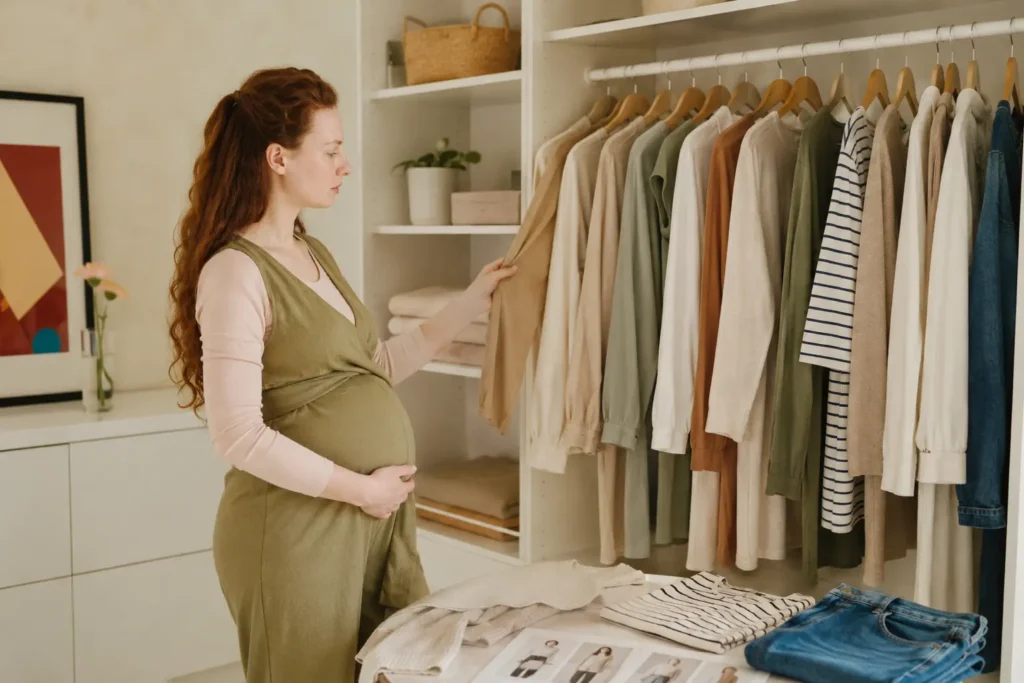
Step 1: Start With Your Current Closet
Before buying anything new, look through your current wardrobe first.
You may already own pieces that can work during pregnancy, especially in the first and second trimesters. Oversized shirts, stretchy dresses, cardigans, open blazers, loose sweaters, elastic-waist skirts, and relaxed jackets can often stay in rotation longer than expected.
Try everything on with comfort in mind. Do not ask, “Does this still fit like before?” Ask, “Can I wear this comfortably right now?”
If a piece pulls across the bump, feels tight at the bust, or makes you adjust it all day, set it aside. Your pregnancy wardrobe should not make you feel restricted.
Keep the pieces that feel soft, flexible, and easy to layer. These items can become the non-maternity support pieces in your wardrobe.
Step 2: Consider Your Trimester and Due Date
Your clothing needs will change as pregnancy progresses.
In the first trimester, you may not need many maternity-specific clothes yet. Soft bras, stretchy waistbands, loose tops, and open layers may be enough. This is also when many people feel bloated or sensitive around the waist, so comfort matters even before a visible bump appears.
In the second trimester, your bump usually becomes more noticeable, and this is often the best time to build the core capsule. Maternity leggings, maternity jeans, bump-friendly tops, and stretchy dresses become more useful.
In the third trimester, comfort becomes the priority. You may want breathable fabrics, slip-on shoes, soft dresses, supportive bras, and clothes that are easy to put on.
Also, think about your due date. If your third trimester falls in winter, you may need warm leggings, maternity tights, soft knits, and a coat that works over the bump. If it falls in summer, you may need breathable dresses, linen pieces, sandals, and lightweight tops.
Step 3: Think About Your Season
Consider the season you’ll be pregnant in. Your wardrobe needs will differ depending on whether you’re dressing for spring, summer, fall, or winter.
We’ll cover seasonal maternity capsule wardrobe ideas later in this guide.
Step 4: Match Your Wardrobe to Your Lifestyle
Your Minimal maternity wardrobe should match your real life, not someone else’s.
If you work from home, you may need more leggings, joggers, nursing tanks, cardigans, and soft loungewear.
If you work in an office, stretchy trousers, button-down shirts, blazers, simple dresses, and loafers may matter more.
If you attend events, travel often, or have many baby appointments, add pieces that can move between casual and polished. A wrap dress, soft blazer, comfortable flats, and crossbody bag can help.
The best wardrobe is not the one with the most pieces. It is the one that fits your daily routine.
Step 5: Choose a Simple Color Palette
A simple color palette makes mixing and matching much easier.
Start with neutrals like black, white, cream, beige, gray, navy, denim, or camel. Then add one or two accent colors that match your personal style.
For example, a fall maternity wardrobe might include black leggings, cream sweaters, blue denim, camel coats, and soft brown accessories. A spring wardrobe might include white tees, light denim, beige cardigans, and soft pastel accents.
When your colors work together, you can create more outfits from fewer clothes.
This also helps your capsule feel polished, even when the pieces are simple.
Step 6: Set a Realistic Budget
You do not need to buy every maternity item new.
Spend more on pieces that affect comfort and fit, such as maternity bras, nursing bras, leggings, jeans, underwear, and supportive shoes.
Save on pieces that are easy to find secondhand or borrow, such as occasion dresses, jackets, sweaters, maternity tops, and photoshoot outfits.
A smart Minimal maternity wardrobe should include a mix of investment pieces and affordable staples. The key is to spend where comfort matters most and save where you can.
Step 7: Focus on Cost Per Wear
Cost per wear is one of the best ways to shop during pregnancy.
A $60 pair of maternity leggings you wear three times a week may be a better buy than a $30 dress you only wear once.
Before buying something, ask yourself:
- Can I wear this in more than one outfit?
- Does it work for my current trimester?
- Can I wear it postpartum?
- Does it match pieces I already own?
- Is it comfortable enough for a full day?
If the answer is yes, it may be worth adding to your capsule.
Maternity vs Non-Maternity Clothes: What Should You Actually Buy?
One of the biggest questions during pregnancy is simple: Should you buy maternity clothes, or can you keep wearing regular clothes?
The answer is usually both.
Some maternity pieces are worth buying because they are designed for a growing bump, changing bust size, and comfort. But many non-maternity pieces can still work beautifully if they have stretch, room, or an open fit.
The best Minimal maternity wardrobe blends both.
Maternity Pieces Worth Buying
Some pieces are worth buying in maternity versions because regular clothes do not always give the right fit or support.
- Maternity jeans
- Over-the-bump jeans
- Under-the-bump jeans
- Maternity leggings
- Maternity bra
- Nursing bra
- Nursing tank
- Cardigan
- Sweater
- Button-down shirt
- Robe
- Stretchy midi dress
- Wrap dress
- Black maternity dress
- Bump-friendly dress
Non-Maternity Pieces You Can Keep Wearing
You do not need every item to have a maternity label.
- Oversized shirt
- Leggings
- Jeans
- Stretchy skirt
- Cardigan
- Open blazer
- Loose dress
- Coat
- Jacket
These non-maternity pieces help your wardrobe feel more like your regular style.
When to Size Up Instead of Buying Maternity
Sizing up can work for some pieces, but not all.
It works well for oversized sweaters, sweatshirts, button-down shirts, casual dresses, and jackets. These items do not need to fit closely around the bump, so a larger size can give you more space.
Sizing up may not work as well for jeans, structured trousers, bras, or fitted dresses. These pieces often need maternity-specific shaping or support.
If sizing up makes the shoulders, sleeves, or neckline look too loose, choose a maternity option instead.
The goal is not just to fit the bump. The whole piece should still feel comfortable and flattering.
What Not to Waste Money On
Not every maternity item deserves a place in your closet.
Avoid very trendy pieces that only work for one outfit. They may look fun at first, but they often have a low cost per wear.
Skip uncomfortable fabrics, stiff waistbands, scratchy knits, and clothes that make you adjust them all day.
Do not buy too many duplicate items. You may not need five pairs of maternity jeans if you mostly wear leggings or dresses.
Also, be careful with pieces that do not work postpartum at all. If something only fits for a short stage and cannot be styled in more than one way, it may not be worth it.
A strong pregnancy wardrobe is built around comfort, versatility, and real use.
Best Fabrics for a Comfortable Maternity Capsule Wardrobe
Fabric matters more during pregnancy than it does in a regular wardrobe. The right fabrics can help you stay comfortable as your body changes, while the wrong ones can feel restrictive, itchy, or too warm. When shopping for maternity clothes, prioritize soft, breathable, and flexible materials that move with your body.
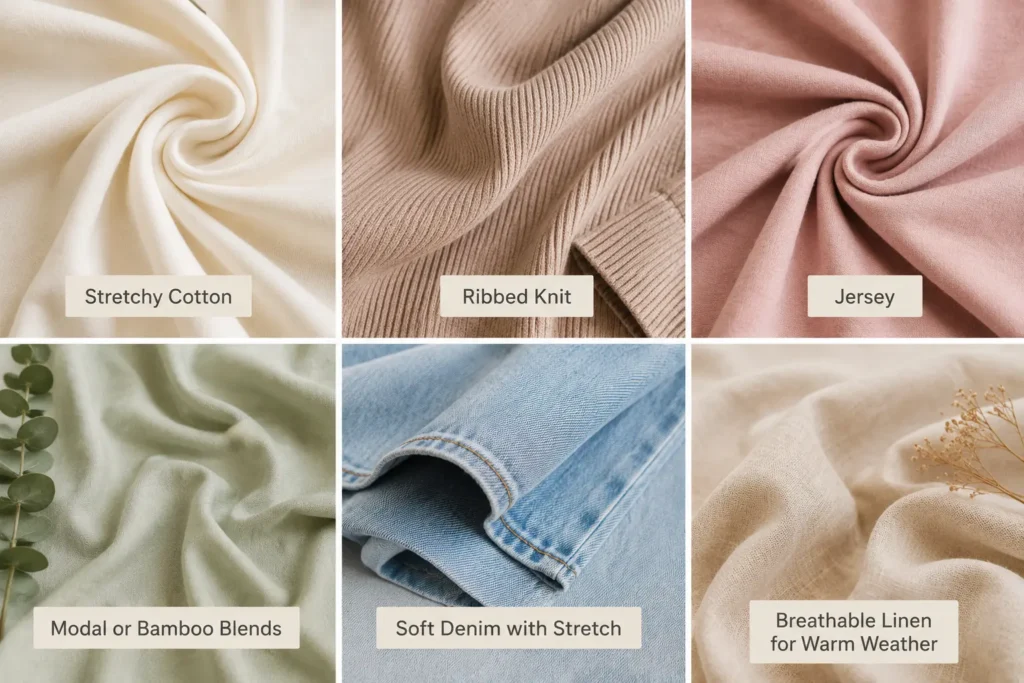
Recommended Fabrics
- Stretchy cotton
- Ribbed knit
- Jersey
- Modal or bamboo blends
- Soft denim with stretch
- Breathable linen for warm weather
Fabrics to Avoid During Pregnancy
Some fabrics may look stylish but become uncomfortable as pregnancy progresses. If a piece constantly feels tight, restrictive, or irritating, it is probably not the best choice for your maternity wardrobe.
- Stiff denim
- Scratchy wool
- Tight waistbands
- Non-breathable synthetics
Choosing comfortable fabrics can make a significant difference in how your clothes feel throughout pregnancy. Prioritize softness, stretch, and breathability to create a maternity wardrobe that supports your changing body every day.
Maternity Capsule Wardrobe Checklist: Quick Essentials
When building a maternity capsule wardrobe, focus on comfort, flexibility, and pieces that can adapt as your body changes. The goal is not to buy an entirely new closet. Instead, choose a small collection of essentials that work together, fit well throughout pregnancy, and can often be worn after the baby arrives.
If you want a complete wardrobe planning template, our Capsule Wardrobe Checklist can help you organize essentials by category and season.
Tops
Your tops should be comfortable, breathable, and easy to layer. Look for fabrics with stretch so they can grow with your bump without feeling restrictive.
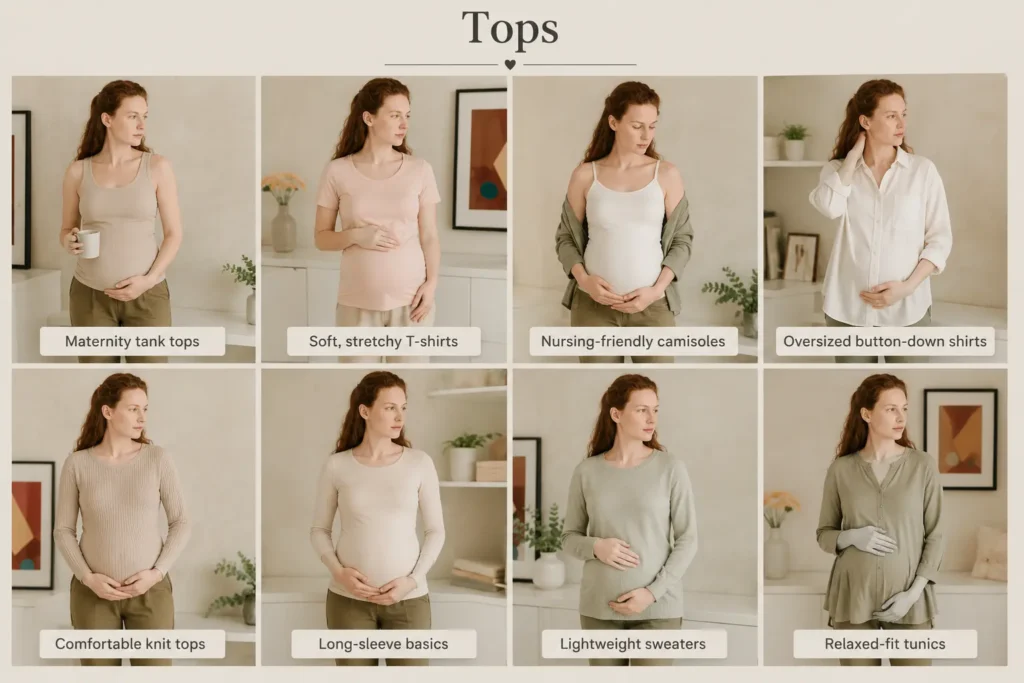
Essential maternity tops include:
- Maternity tank tops
- Soft, stretchy T-shirts
- Nursing-friendly camisoles
- Oversized button-down shirts
- Comfortable knit tops
- Long-sleeve basics
- Lightweight sweaters
- Relaxed-fit tunics
Helpful tip: Neutral colors such as white, black, beige, gray, and navy make outfit planning much easier because they pair well with almost everything in your wardrobe.
Bottoms
Most women find that comfortable bottoms become the foundation of their maternity wardrobe. Invest in a few high-quality pairs that you can wear repeatedly throughout the week.
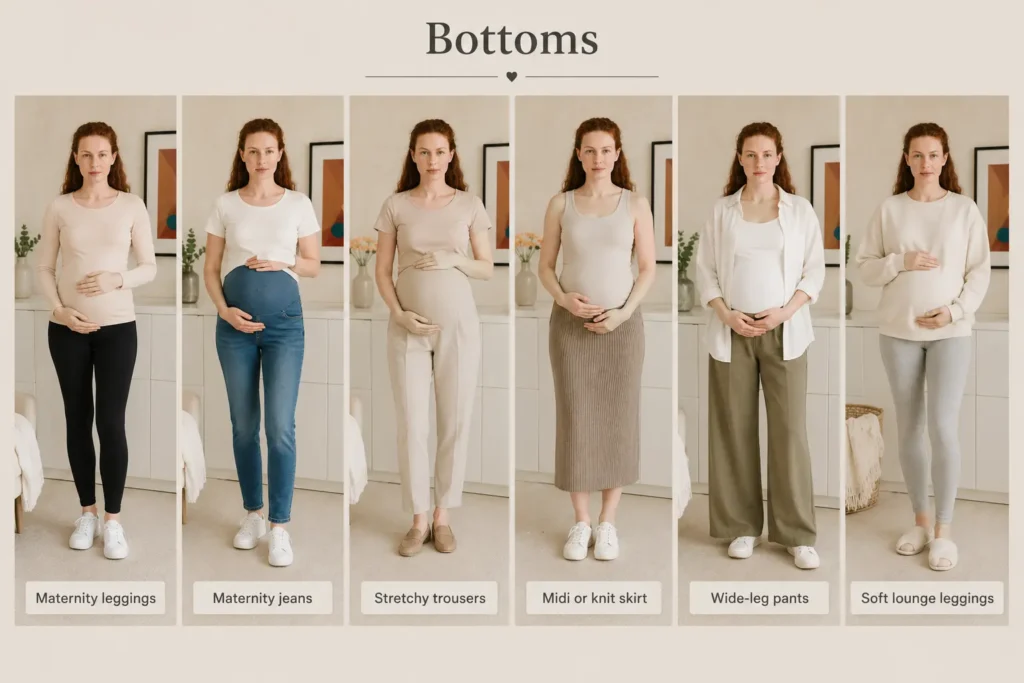
Essential maternity bottoms include:
- Maternity leggings
- Maternity jeans
- Stretchy trousers
- Midi or knit skirt
- Wide-leg pants
- Soft lounge leggings
Helpful tip: Many women can continue wearing their favorite pre-pregnancy tops for several months, but maternity bottoms are often the first pieces worth purchasing because they provide better support and comfort.
Dresses and Jumpsuits
Dresses are often the easiest maternity clothing option because they require minimal effort while still looking stylish. A few versatile dresses can cover casual outings, workdays, baby showers, and special occasions.
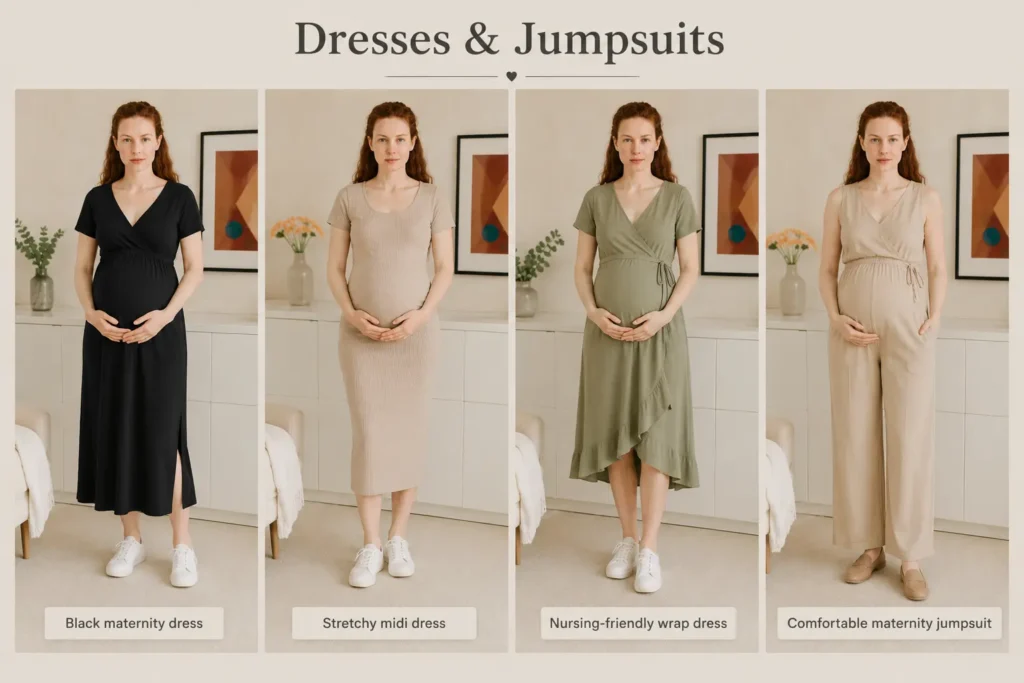
Essential pieces include:
- Black maternity dress
- Stretchy midi dress
- Nursing-friendly wrap dress
- Comfortable maternity jumpsuit
- Casual T-shirt dress
- Sweater dress for cooler months
Helpful tip: Wrap dresses and empire-waist dresses often continue to work during postpartum recovery and nursing, making them a smart long-term investment.
Layers and Outerwear
Layering pieces helps extend your wardrobe through changing seasons and fluctuating body temperatures, which many women experience during pregnancy.
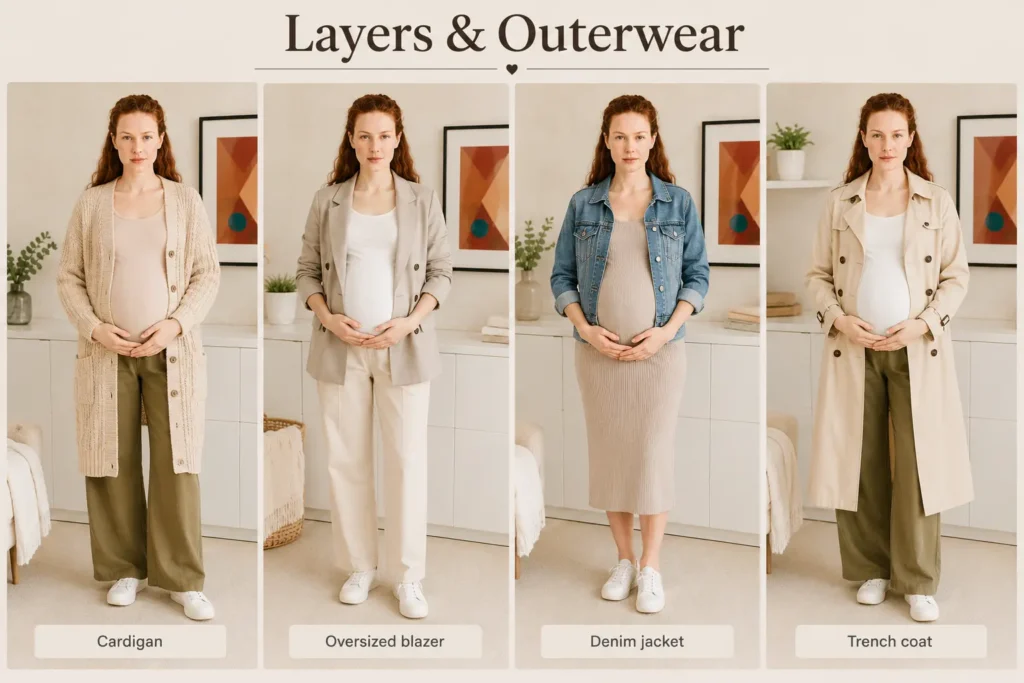
Key layering essentials include:
- Cardigan
- Oversized blazer
- Denim jacket
- Trench coat
- Long wool coat
- Puffer jacket for colder weather
- Lightweight shacket
Helpful tip: Instead of buying maternity-specific coats, many women size up in regular outerwear or choose open-front styles that comfortably fit throughout pregnancy.
Bras, Underwear, and Support Pieces
These are often the most overlooked maternity essentials, yet they can have the biggest impact on everyday comfort.
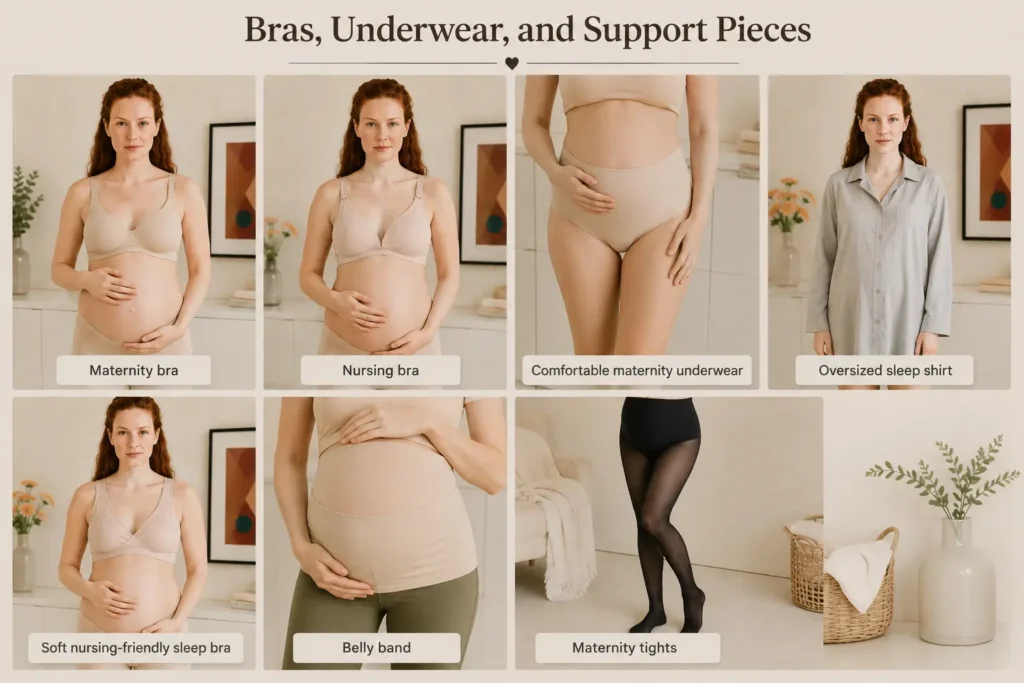
Must-have support pieces include:
- Maternity bra
- Nursing bra
- Comfortable maternity underwear
- Belly band
- Maternity tights
- Seamless bralettes
- Compression socks are recommended by your healthcare provider
Helpful tip: Your bra size may change multiple times during pregnancy. Avoid purchasing too many bras at once until you know what size feels most comfortable.
Sleepwear and Loungewear
As pregnancy progresses, comfortable sleepwear becomes increasingly important. Choose soft fabrics that allow easy movement and help regulate body temperature.
Recommended essentials include:
- Soft pajama set
- Nursing nightgown
- Lightweight robe
- Comfortable lounge pants
- Oversized sleep shirt
- Soft nursing-friendly sleep bra
Helpful tip: Many nursing pajamas can be worn both before and after birth, helping you get more value from your purchases.
Shoes and Accessories
Pregnancy can sometimes cause foot swelling and changes in foot size. Prioritize comfort over trends when choosing footwear.
Essential options include:
- Supportive sneakers
- Slip-on flats
- Low-heel boots
- Comfortable sandals
- Crossbody bag
- Lightweight scarf
- Simple jewelry
Helpful tip: Avoid shoes that feel tight, even if they fit before pregnancy. Supportive footwear can reduce discomfort and make daily activities much easier.
Focus on Quality Over Quantity
A practical Pregnancy capsule wardrobe usually contains 25 to 35 carefully chosen pieces rather than dozens of rarely worn items. By selecting versatile basics, comfortable fabrics, and timeless styles, you can create outfits for work, weekends, special occasions, and postpartum life without constantly buying new clothes.
The best maternity wardrobe is one that supports your changing body, simplifies daily dressing, and helps you feel comfortable and confident throughout every stage of pregnancy.
Trimester-by-Trimester Maternity Capsule Wardrobe Guide
Pregnancy style changes in stages.
What feels comfortable in the first trimester may not work in the third. What looks cute at 16 weeks may feel too tight by 34 weeks.
You do not need to buy everything at once. It is usually better to build slowly and add pieces when your body actually needs them.
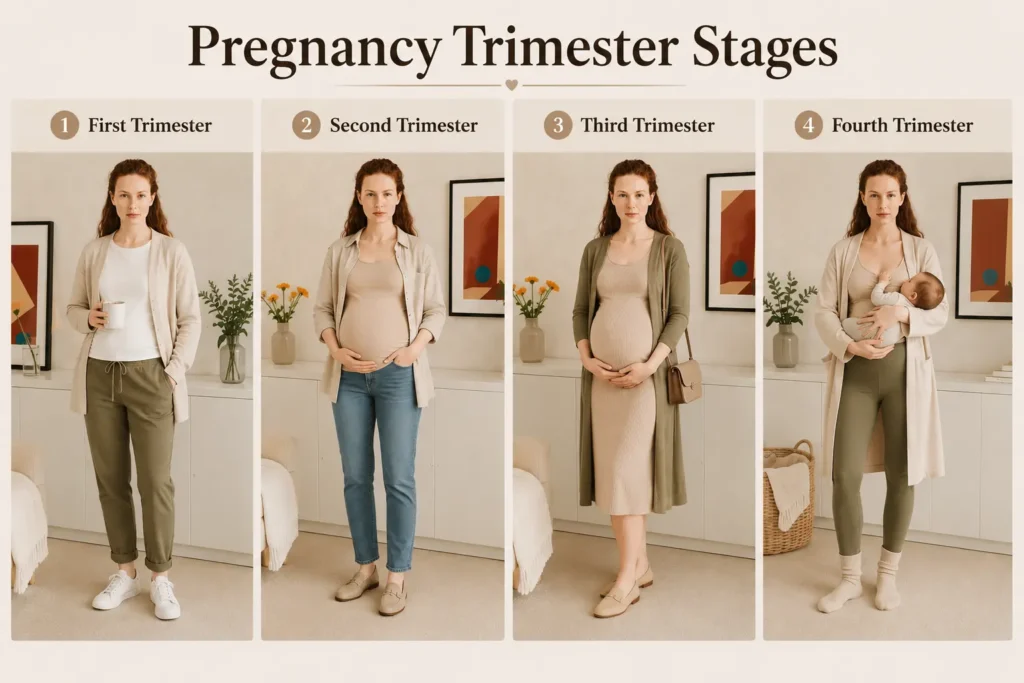
First Trimester: Comfort Without Looking Fully Maternity
In the first trimester, you may not look pregnant yet, but your clothes can still feel different.
Bloating, nausea, breast tenderness, and waistband sensitivity can make regular outfits uncomfortable. This is the stage where soft bras, stretchy waistbands, loose tops, and layering pieces become helpful.
You may not need maternity jeans right away. Instead, start with elastic-waist pants, leggings, relaxed dresses, oversized shirts, cardigans, and soft tees.
For a simple first-trimester outfit, try stretchy pants with a loose tee, an open cardigan, and sneakers. It looks normal and casual, but it gives your body more room.
Second Trimester: Build the Core Capsule
The second trimester is often the best time to build the main part of your maternity wardrobe.
Your bump may become more noticeable, and regular jeans or fitted tops may stop working. This is when maternity leggings, maternity jeans, bump-friendly dresses, and longer tops can make daily dressing easier.
Start with the pieces you will wear most often. For many people, that means one pair of maternity leggings, one pair of maternity jeans, a few soft tops, one or two dresses, and a good bra.
If you work outside the home, add stretch trousers, a blazer, and comfortable flats or loafers. If you work from home, focus more on soft layers, joggers, nursing tanks, and casual maternity outfits.
The second trimester is also a good time to think about your season. If colder weather is coming, add soft knits and layers. If warmer weather is coming, choose breathable dresses, linen shirts, and sandals.
Third Trimester: Prioritize Stretch, Support, and Easy Dressing
By the third trimester, comfort usually becomes the main priority.
Your bump is bigger, your body may feel heavier, and bending down can be harder. At this stage, the best clothes are easy to put on, soft on the skin, and flexible enough for sitting, walking, and resting.
Choose breathable fabrics, stretchy dresses, supportive bras, over-the-bump leggings, soft waistbands, and slip-on shoes. Low boots, sneakers, supportive sandals, and simple flats can make outfits feel finished without adding discomfort.
Avoid anything that digs in, rides up, or requires constant adjusting. This is not the time for stiff denim, tight waistbands, or complicated outfits.
A third-trimester outfit can be as simple as a ribbed midi dress, long cardigan, slip-on flats, and a crossbody bag. It feels easy but still polished.
Fourth Trimester: Postpartum and Nursing-Friendly Pieces
The fourth trimester deserves just as much planning as pregnancy.
After birth, your body still needs comfort, support, and softness. You may also need nursing access, loose waistbands, and clothes that feel gentle during recovery.
This is where pregnancy-to-postpartum pieces become valuable. Nursing tanks, button-down shirts, robes, stretchy leggings, loose dresses, soft pajama sets, cardigans, and nursing bras can all help.
Do not rush yourself back into regular clothes. Postpartum dressing is not about “bouncing back.” It is about feeling comfortable, cared for, and able to move through your day.
A simple postpartum home outfit could be a nursing tank, robe, high-waist leggings, and soft socks. It is practical, comfortable, and easy to feed or rest.
Pregnancy and Postpartum Capsule Wardrobe: Pieces That Work for Both
The best maternity purchases are often the pieces you can wear beyond pregnancy.
- Nursing-Friendly Tops
- Button-Down Shirts
- Wrap Dresses
- Stretchy Leggings
- Open Cardigans and Kimonos
- Comfortable Bras
- Robes and Pajama Sets
Seasonal Maternity Capsule Wardrobe Ideas
Your season matters more than you might think.
A Pregnancy capsule closet for summer will look very different from one built for winter. The goal is to choose pieces that match your weather, your trimester, and your comfort level.
You do not need a new wardrobe for every season. You just need the right layers, fabrics, and shoes for the months you will actually be pregnant.
Spring Maternity Capsule Wardrobe
Spring is all about light layers and breathable pieces.
A soft tee, a lightweight cardigan, a stretchy midi dress, a loose button-down shirt, and slip-on flats can carry you through many spring days. If the weather changes often, keep a trench coat or denim jacket nearby.
Looking for fresh seasonal outfit inspiration? Our Spring Capsule Wardrobe guide includes lightweight layers, versatile basics, and comfortable outfit combinations perfect for changing temperatures.
Spring is also a good season for neutral basics with soft accent colors. Think cream, beige, light denim, soft pink, sage, or pale blue.
A simple spring outfit could be a stretchy dress, an open cardigan, flats, and a crossbody bag. It feels comfortable but still polished.
Summer Maternity Capsule Wardrobe
Summer pregnancy dressing should be simple, light, and breathable.
Loose dresses, tank tops, linen shirts, bike shorts, maternity shorts, and supportive sandals can help you stay comfortable in warm weather. Choose fabrics that do not cling too much or trap heat.
If you want a complete warm-weather wardrobe plan, see our Summer Capsule Wardrobe guide for outfit ideas, lightweight fabrics, and seasonal essentials that work well during pregnancy.
A breezy dress is often the easiest summer maternity outfit because it does not press on the waist. You can wear it with sandals for errands or add simple jewelry for a lunch or a baby shower.
For very hot days, avoid heavy layers and tight synthetic fabrics. Breathable cotton, linen, modal, and bamboo blends usually feel better.
Fall Maternity Capsule Wardrobe
Fall is one of the easiest seasons for pregnancy style because layering does most of the work.
Soft knits, maternity leggings, denim jackets, ankle boots, long cardigans, and stretchy dresses can create comfortable pregnancy outfits without much effort. This is also a great season to use warm neutrals like camel, cream, brown, black, gray, and denim.
A fall outfit I always like is simple: maternity leggings, a long-sleeve tee, an oversized cardigan, low boots, and a scarf. It feels cozy, but it still looks intentional.
If your bump is growing during the fall, open layers are your best friend. A trench coat, cardigan, blazer, or denim jacket can make basic maternity clothes feel more stylish.
Winter Maternity Capsule Wardrobe
Winter maternity dressing is about warmth without too much bulk.
You may need warm leggings, maternity tights, soft sweaters, long coats, turtlenecks, puffer jackets, and comfortable boots. The trick is to layer without feeling squeezed.
For more cold-weather outfit ideas, explore our Winter Capsule Wardrobe guide, where we cover layering strategies, winter essentials, and practical ways to stay warm without adding unnecessary bulk.
A ribbed dress with maternity tights, knee-high boots, and a long coat can work well for appointments or dinners. For casual days, try leggings, a turtleneck tunic, sneakers, and a puffer jacket.
If you are pregnant in pregnancy during winter, do not buy too many coats unless you truly need them. A long open coat, oversized puffer, or borrowed maternity-friendly coat may be enough.
Maternity Capsule Wardrobe for Different Lifestyles
Every pregnancy is different, and so is every wardrobe. The best maternity capsule wardrobe is one that fits your daily routine, personal style, and comfort needs.
Whether you work in an office, stay at home, or prefer a minimalist closet, you can build a wardrobe that makes getting dressed easier throughout pregnancy.
Casual Everyday Maternity Capsule
If your days include errands, appointments, school runs, or casual outings, comfort should be your main priority. Focus on easy-to-wear pieces that mix and match without much effort.
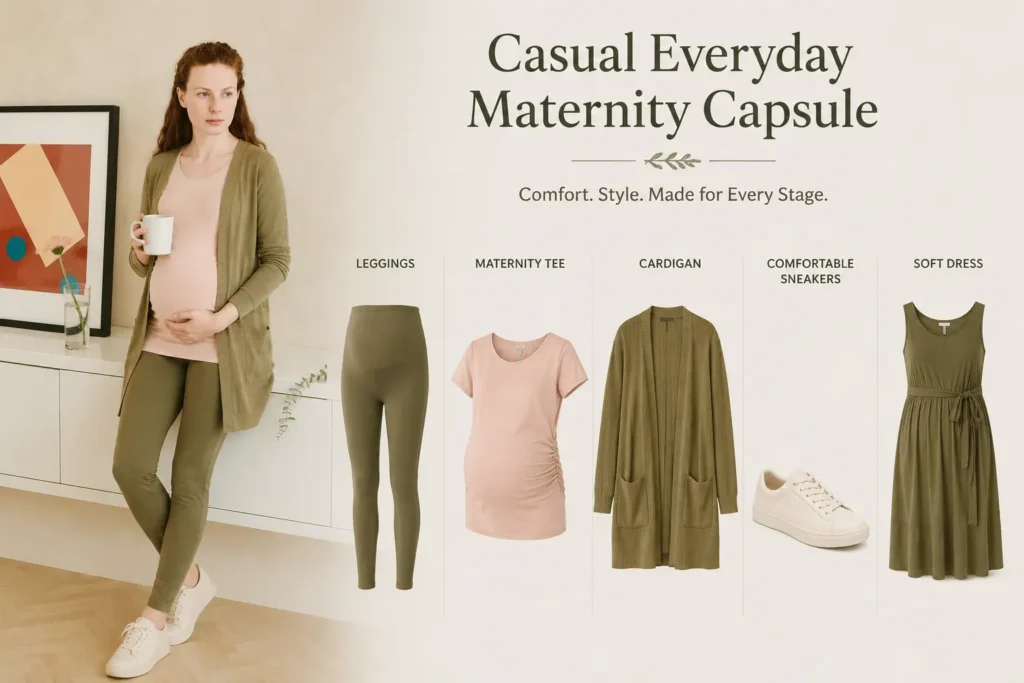
Key pieces include:
- Leggings
- Maternity tees
- Cardigans
- Comfortable sneakers
- Soft dresses
These basics can create dozens of simple outfits while keeping you comfortable throughout the day.
Work Maternity Capsule Wardrobe
For office environments or professional settings, choose pieces that look polished while still allowing room for your growing bump.
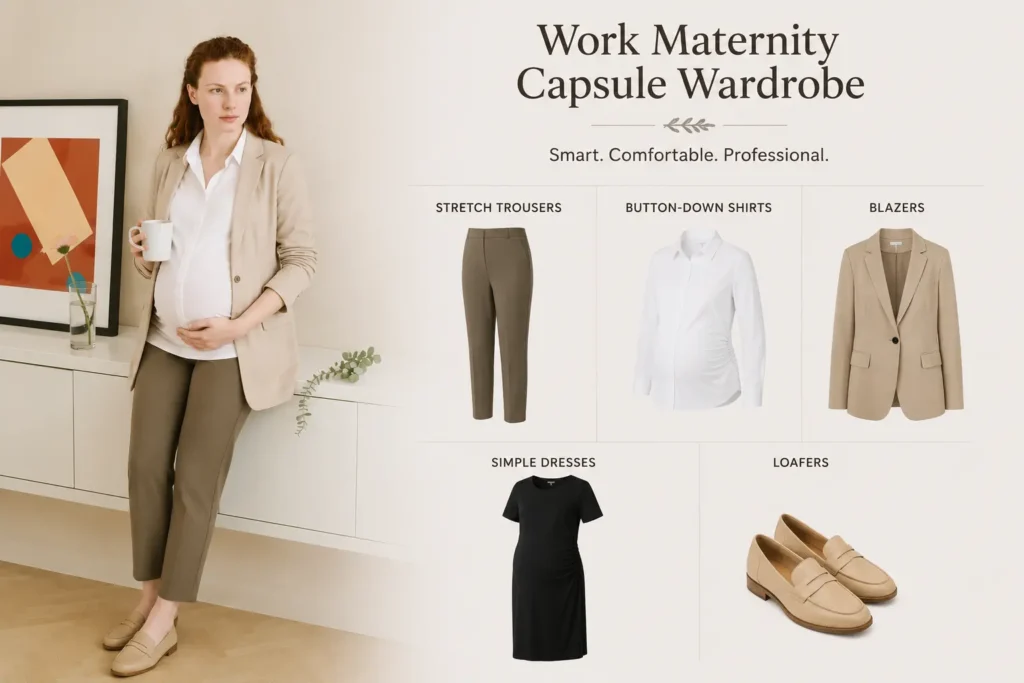
Essential workwear pieces include:
- Stretch trousers
- Button-down shirts
- Blazers
- Simple dresses
- Loafers
Neutral colors such as black, navy, beige, and gray make it easier to create professional outfits without needing a large wardrobe.
Stay-at-Home or Work-from-Home Capsule
If you spend most of your time at home, comfort becomes even more important. Choose soft fabrics and relaxed pieces that feel good throughout the day.
Helpful essentials include:
- Joggers
- Soft tanks
- Nursing bras
- Cardigans
- Lounge sets
These pieces provide comfort while still helping you feel put together for video calls, visitors, or quick trips outside.
Minimalist Maternity Capsule Wardrobe
A minimalist maternity wardrobe focuses on owning fewer pieces that work together effortlessly. Many women can comfortably manage with just 10 to 15 carefully selected items.
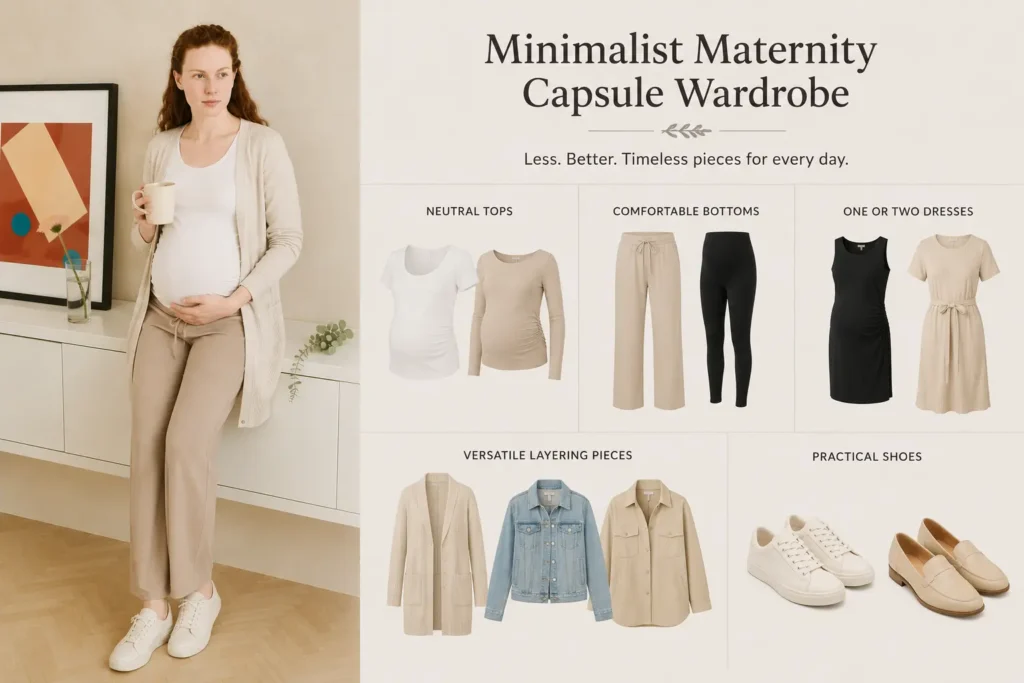
A minimalist capsule often includes:
- Neutral tops
- Comfortable bottoms
- One or two dresses
- Versatile layering pieces
- Practical shoes
Choosing a simple color palette allows every piece to mix and match easily.
Plus-Size Maternity Capsule Wardrobe
For plus-size maternity dressing, fit and comfort matter more than the number of clothes you own. Look for pieces that provide stretch, support, and freedom of movement.
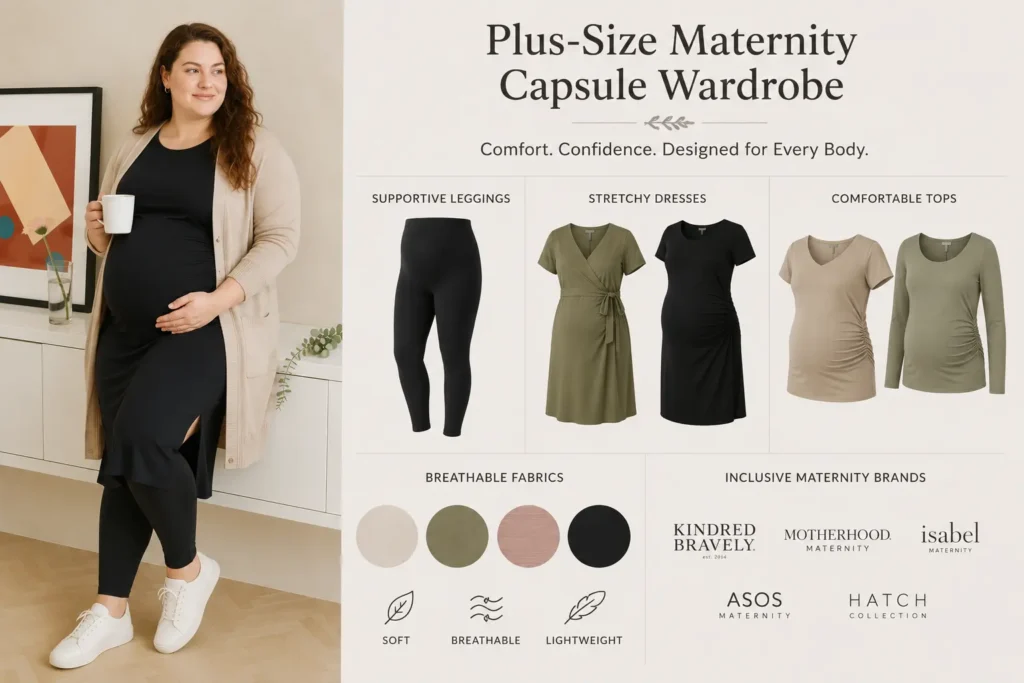
Focus on:
- Supportive leggings
- Stretchy dresses
- Comfortable tops
- Breathable fabrics
- Inclusive maternity brands
Well-fitting clothing can make a significant difference in both comfort and confidence during pregnancy.
Maternity Outfit Ideas Using Capsule Wardrobe Pieces
One of the biggest benefits of a maternity capsule wardrobe is that you do not need a lot of clothes to create practical and stylish outfits. A few versatile pieces can be mixed and matched for different occasions throughout your pregnancy and even after your baby arrives.
Baby Appointment Outfit
Doctor visits and checkups often involve a lot of walking and waiting, so choose an outfit that feels comfortable from start to finish.
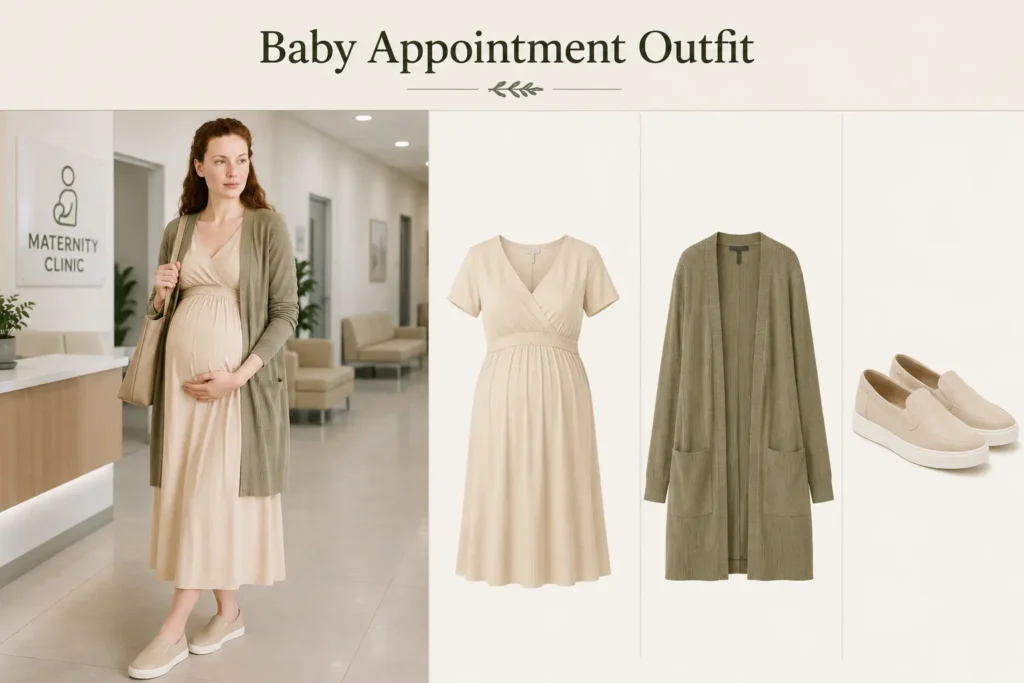
Try:
Soft dress + cardigan + slip-on shoes
This outfit is easy to wear, practical, and comfortable for appointments at any stage of pregnancy.
Baby Shower Outfit
A baby shower is the perfect occasion to wear something a little more special while still prioritizing comfort.
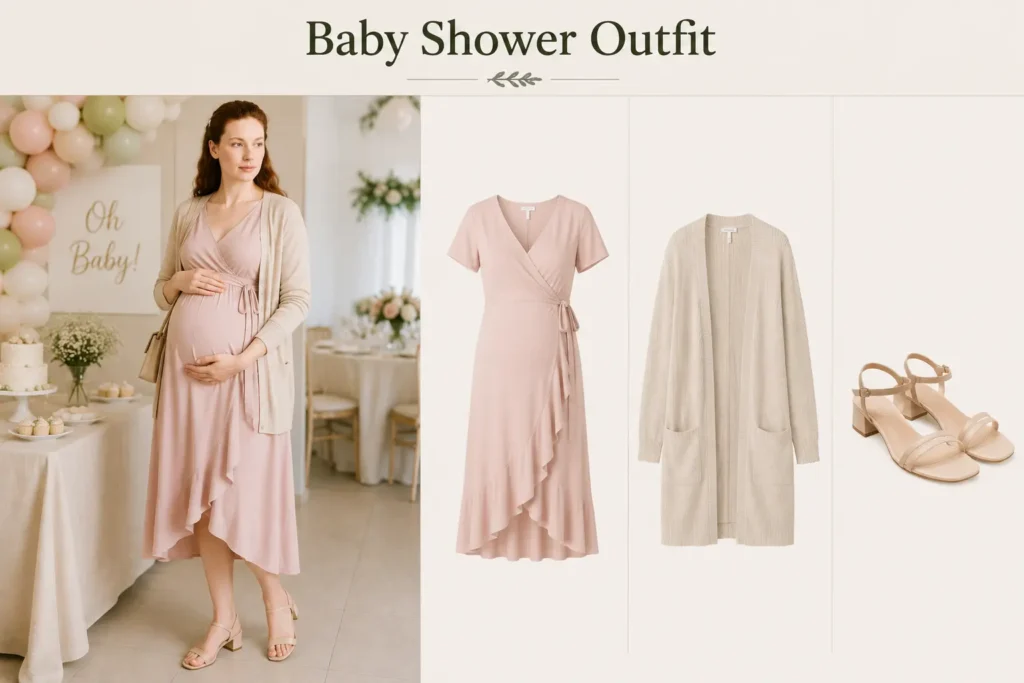
Try:
Wrap dress + comfortable sandals or flats
A wrap dress highlights your bump beautifully while giving you plenty of room to move comfortably.
Postpartum Home Outfit
After your baby arrives, comfort and convenience become even more important. Nursing-friendly pieces can make daily life much easier.
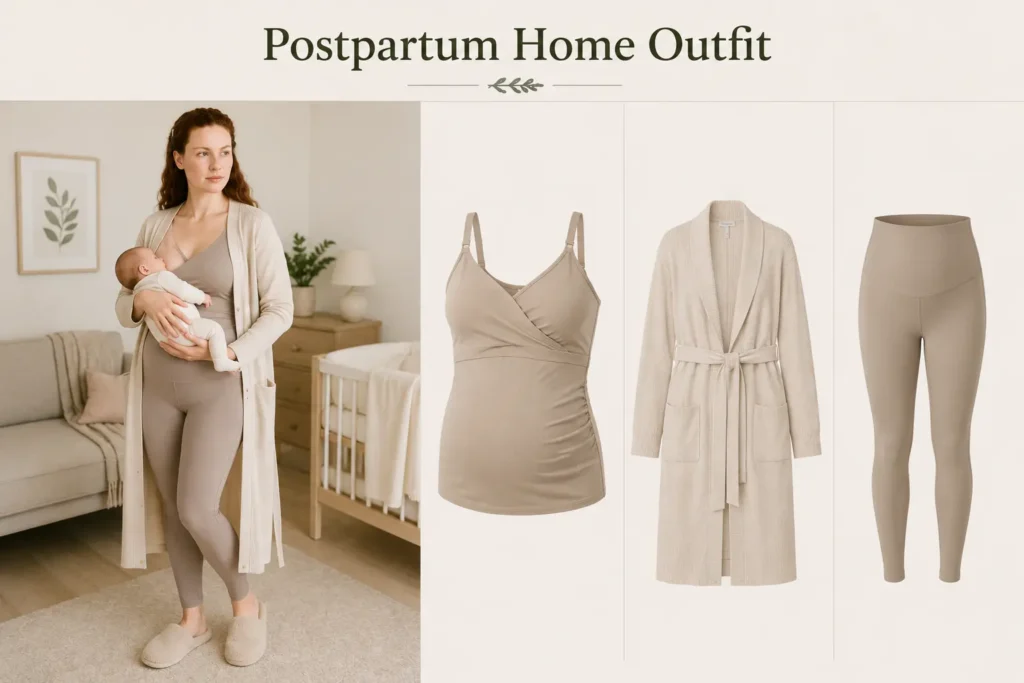
Try:
Nursing tank + robe + high-waist leggings
This simple combination is comfortable for relaxing at home, feeding your baby, and recovering during the postpartum period.
Sample Maternity Capsule Wardrobe List
A sample list can help you see how a capsule comes together.
You can adjust these lists based on your lifestyle, season, climate, work needs, and budget. A person who works in an office may need more polished pieces, while someone who works from home may need more loungewear and casual outfits.
15-Piece Starter Capsule
A 15-piece capsule is great if you want to keep things simple.
It works well for minimalists, early pregnancy, or anyone who wants to buy slowly instead of all at once.
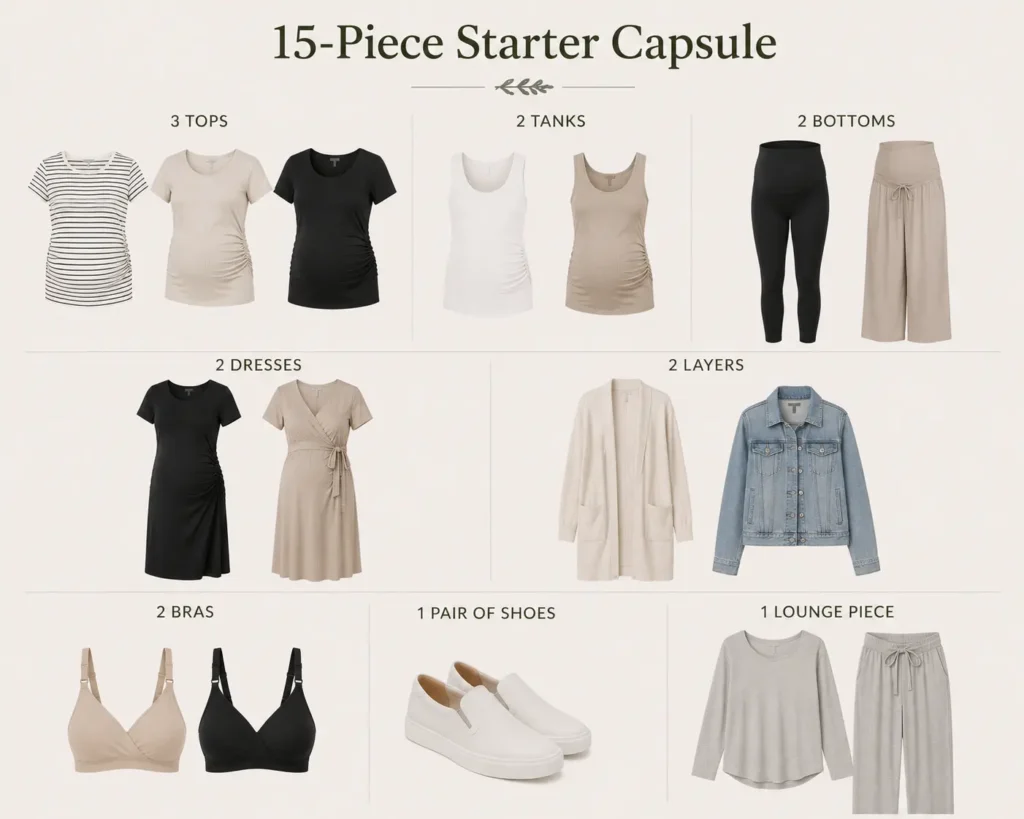
A basic starter capsule can include:
- 3 tops
- 2 tanks
- 2 bottoms
- 2 dresses
- 2 layers
- 2 bras
- 1 pair of shoes
- 1 lounge piece
This gives you enough variety for casual outfits, appointments, errands, and simple daily dressing.
For example, you could choose a white tee, long-sleeve tee, oversized button-down, two nursing tanks, maternity leggings, maternity jeans, black dress, wrap dress, cardigan, blazer, maternity bra, nursing bra, sneakers, and lounge pants.
25-Piece Complete Capsule
A 25-piece capsule gives you more flexibility.
This works well if you need outfits for work, weekends, events, travel, and postpartum. It is also helpful if your pregnancy covers more than one season.
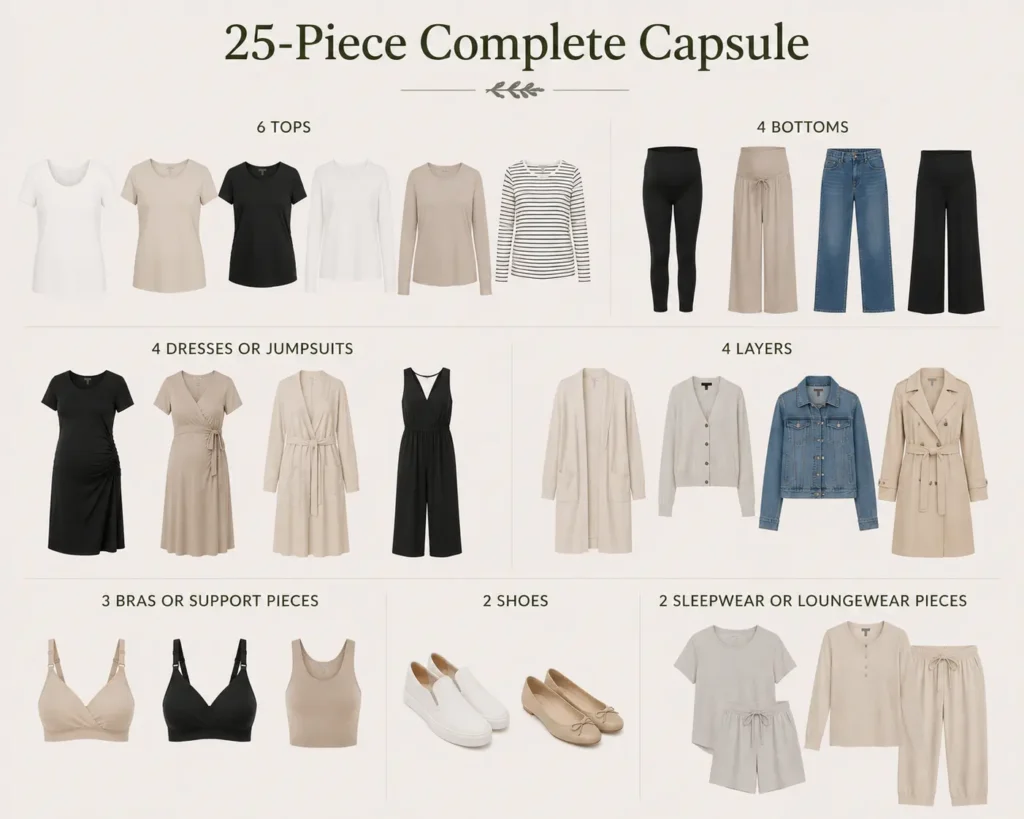
A complete capsule can include:
- 6 tops
- 4 bottoms
- 4 dresses or jumpsuits
- 4 layers
- 3 bras or support pieces
- 2 shoes
- 2 sleepwear or loungewear pieces
This capsule gives you more outfit options without becoming overwhelming.
For example, you might include maternity tees, nursing camisoles, a button-down shirt, leggings, jeans, stretch trousers, a knit skirt, a black dress, wrap dress, a ribbed midi dress, jumpsuit, cardigan, blazer, denim jacket, trench coat, maternity bra, nursing bra, belly band, sneakers, flats, pajamas, and robe.
Printable Checklist Section
A printable checklist is helpful for readers because it gives them a quick way to plan their wardrobe.
You can add this checklist near the end of your article:
Maternity Capsule Wardrobe Checklist
- Soft everyday tops
- Nursing-friendly camisoles
- Maternity leggings
- Maternity jeans
- Stretch trousers or joggers
- One everyday dress
- One dressy or occasion dress
- Cardigan
- Blazer or denim jacket
- Seasonal coat or trench
- Maternity bra
- Nursing bra
- Comfortable underwear
- Belly band
- Pajama set or nursing nightgown
- Robe
- Supportive sneakers
- Flats, sandals, or low boots
- Crossbody bag
- Simple accessories
This makes the guide more useful because readers can screenshot it, save it, or use it while shopping.
Common Maternity Capsule Wardrobe Mistakes to Avoid
- Buying a complete maternity wardrobe too early in pregnancy
- Ignoring postpartum and nursing needs when shopping
- Choosing style over comfort and fit
- Buying too many maternity-specific pieces
- Forgetting to invest in comfortable bras and underwear
- Not planning outfits around the season and due date
- Purchasing clothes that do not mix and match easily
- Buying trendy items that only work for one occasion
- Owning too many maternity jeans and duplicate pieces
- Choosing fabrics that feel restrictive or uncomfortable
- Overspending before knowing what your body needs
- Prioritizing quantity over quality
- Buying clothes with little or no use after pregnancy
- Creating a wardrobe with too many colors and patterns
- Skipping versatile basics that can be worn multiple ways
Build a Maternity Wardrobe That Works for You
There is no single maternity wardrobe that works for everyone. Your needs will depend on your lifestyle, climate, work schedule, and personal style preferences. The key is choosing pieces that make everyday life easier instead of adding more decisions to your day.
By focusing on versatile essentials and thoughtful purchases, you can create a wardrobe that supports you through pregnancy, postpartum recovery, and beyond. A few well-chosen pieces will always be more valuable than a closet full of clothes you rarely wear.
FAQs About Maternity Capsule Wardrobe
How many clothes do I need for a maternity capsule wardrobe?
Most people can start with 15 to 25 pieces.
A smaller capsule may include tops, tanks, bottoms, dresses, layers, bras, shoes, and loungewear. If you work in an office, attend events, or dress for multiple seasons, you may need closer to 25 pieces.
The goal is not a strict number. The goal is to have enough comfortable outfits for your real life.
When should I start buying maternity clothes?
You can start buying maternity clothes when your regular clothes feel uncomfortable.
For many people, this happens in the late first trimester or during the second trimester. You do not need to buy everything at once. Start with soft bras, stretchy waistbands, and a few flexible basics, then add more as your bump grows.
What maternity clothes are worth buying?
The most useful maternity clothes are usually the pieces you wear often.
Maternity leggings, maternity jeans, maternity bras, nursing bras, nursing tanks, comfortable underwear, and bump-friendly dresses are usually worth buying. These pieces support your body and make daily dressing easier.
Can I build a maternity capsule wardrobe on a budget?
Yes, you can build a budget maternity capsule wardrobe.
Start with your current closet, then buy only the essentials. Borrow special occasion pieces, shop secondhand, and choose clothes that work during pregnancy and postpartum.
Focus on cost per wear instead of buying many cheap pieces you may only wear once.
What should I wear in the first trimester?
In the first trimester, focus on comfort without buying too much.
Stretchy waistbands, loose tops, soft bras, relaxed dresses, cardigans, and leggings are helpful. You may not need many maternity-specific pieces yet, but you may want clothes that feel gentle around your waist and bust.
What should I wear in the third trimester?
In the third trimester, choose easy, soft, and supportive pieces.
Over-the-bump leggings, stretchy dresses, supportive bras, slip-on shoes, loose tops, and breathable fabrics usually work well. Avoid anything that digs in, rides up, or feels hard to put on.
Can I wear regular clothes during pregnancy?
Yes, many regular clothes can work during pregnancy.
Oversized shirts, cardigans, open blazers, loose dresses, stretchy skirts, coats, and jackets can stay in your wardrobe. You may still need maternity-specific pieces for jeans, leggings, bras, and some dresses.
A good maternity wardrobe usually includes both maternity and non-maternity clothes.
What pieces work for pregnancy and postpartum?
The best pregnancy-to-postpartum pieces include nursing tanks, button-down shirts, wrap dresses, cardigans, robes, stretchy leggings, loose dresses, soft pajama sets, and nursing bras.
These items work because they are comfortable, flexible, and often nursing-friendly.
Do I need nursing clothes before the baby arrives?
You do not need a full nursing wardrobe before the baby arrives, but a few nursing-friendly pieces can help.
One or two nursing bras, nursing tanks, button-down shirts, and a robe can make the early postpartum weeks easier. These pieces can also be worn during late pregnancy, so they are not wasted.
What is the best maternity outfit for work?
A simple work maternity outfit can include stretch trousers, a maternity tank, an open blazer, and flats or loafers.
You can also wear a ribbed midi dress with a blazer and low boots. The best maternity workwear looks polished but still feels comfortable enough for a full day.
Are maternity jeans or maternity leggings better?
It depends on your lifestyle.
Maternity leggings are usually more comfortable and flexible for daily wear, errands, travel, and lounging. Maternity jeans are better if you love denim or want more structured outfits.
If your budget allows, one good pair of each can give you more outfit options.
How do I make maternity outfits look stylish?
Start with simple basics, then add layers and accessories.
A cardigan, blazer, trench coat, denim jacket, scarf, earrings, crossbody bag, or low boots can make a basic outfit look more polished. Sticking to a simple color palette also helps your outfits look intentional.
Comfort and style can work together when the fit, fabric, and layers are right.
What should I avoid buying for a maternity wardrobe?
Avoid pieces that feel uncomfortable, only work for one outfit, or cannot be worn beyond a short stage.
Skip stiff denim, scratchy fabrics, tight waistbands, too many duplicate items, overly trendy pieces, and formal clothes you will only wear once. Borrow, rent, or thrift special occasion pieces when possible.
The best maternity wardrobe is practical, flexible, and comfortable.

Chloe Parker is a fashion expert with a passion for helping readers build stylish and practical wardrobes. She shares simple outfit ideas, capsule wardrobe tips, and fashion advice to make everyday dressing easier. Her goal is to help people create a timeless personal style with confidence.