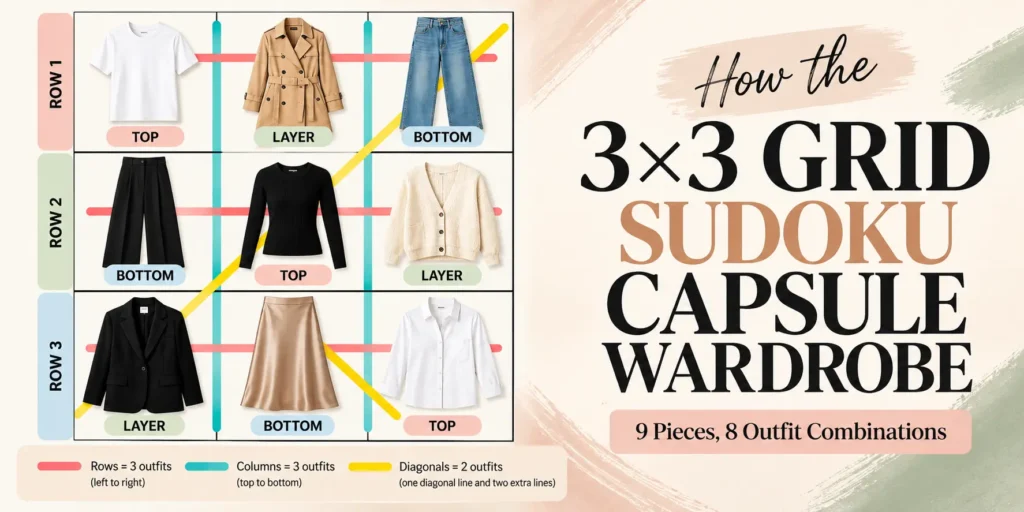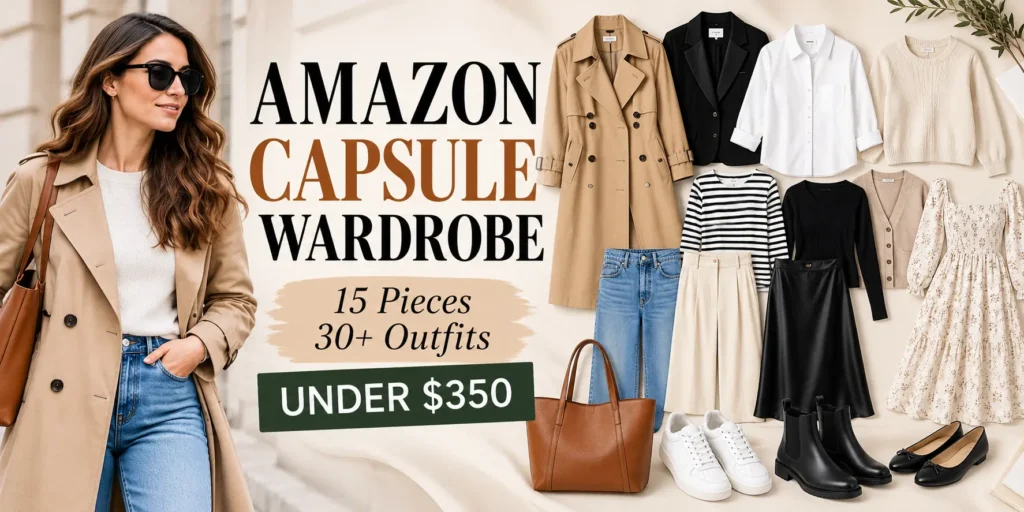
You open the closet. It’s genuinely full, maybe even overflowing, and somehow there is still nothing to wear.
Not nothing in the sense of empty hangers, but nothing that fits the way it used to, nothing that feels like you anymore, nothing you can put on without a small internal negotiation about arms, or waistbands, or whether that blouse is doing you any favors under office lighting.
If that sounds familiar, you’re not imagining it, and you’re definitely not alone.
Something does shift after 50, your body changes shape in ways that have nothing to do with weight, your lifestyle shifts (less commuting, more travel, different social calendars, maybe grandkids, maybe a second career), and the clothes that used to work quietly stop working.
Most capsule wardrobe advice online doesn’t actually address any of that. It just shows you a grid of beige basics and calls it a day.
This guide is different. Building a capsule wardrobe over 50 means accounting for what actually changes at this stage of life fit, fabric, temperature regulation, proportion, and confidence and it gives you an actual system, not just a vibe, for building a wardrobe you’ll reach for every single day.
If you’re completely new to the concept, it’s worth reading what a capsule wardrobe actually is first, but if you already know the basics, here’s exactly how to build a capsule wardrobe over 50 that actually works.
Why a Capsule Wardrobe Works Differently After 50
A capsule wardrobe, at its simplest, is a small, intentional collection of clothing where every piece works with several others. Fewer decisions in the morning, fewer “impulse buys that never get worn,” more actual outfits from fewer actual pieces.
That definition hasn’t changed. What’s changed is you, and that matters more than most capsule wardrobe guides admit.
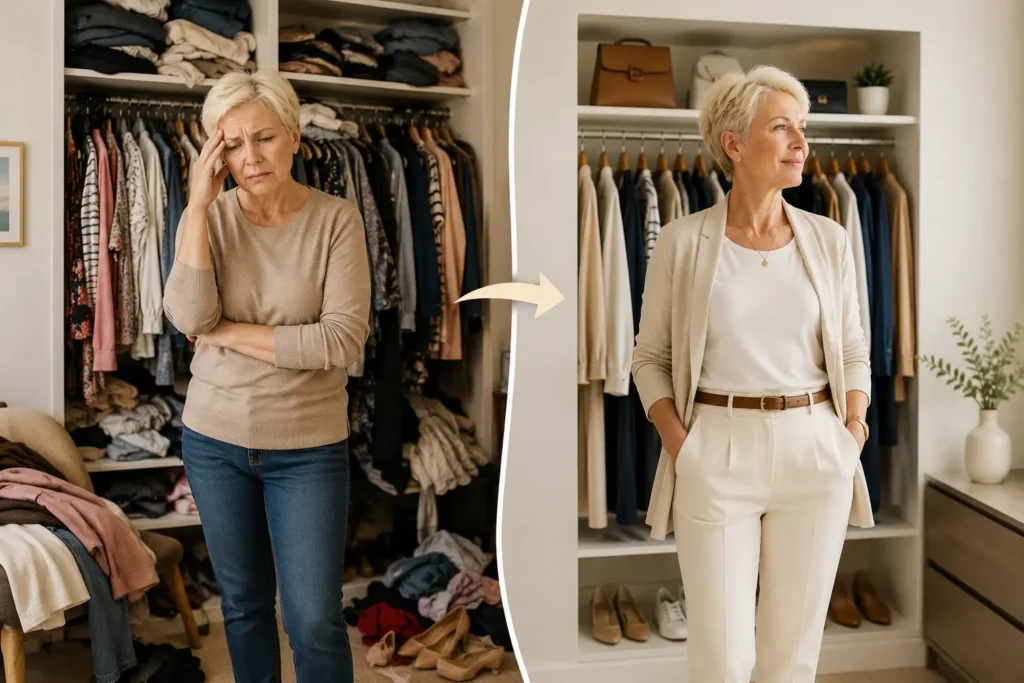
Your body has genuinely different needs now.
Waistlines shift. Skin loses some of its former elasticity, which changes how certain fabrics sit and drape. Many women notice changes to their arms, midsection, or overall proportions that have nothing to do with fitness level.
It’s simply what happens with hormonal changes and time. A wardrobe built for a 28-year-old’s proportions is not automatically going to feel good on a 55-year-old body, even if the size on the tag is identical.
Your temperature regulation is different, too.
If you’re perimenopausal, menopausal, or postmenopausal, you already know that your relationship with heat has changed.
A fabric that felt perfectly fine at 35 can feel unbearable at 55. This is one of the most overlooked factors in capsule wardrobe planning, and we’re going to give it the attention it deserves.
Your lifestyle has probably shifted, too.
Maybe you’re not commuting five days a week anymore. Maybe travel looks different, more leisurely, less rigid schedule.
Maybe your social calendar includes grandkids’ soccer games instead of after-work happy hours. A capsule wardrobe should reflect your actual week, not a generic template.
And your relationship with your own style has matured.
Many women in their 50s and 60s describe finally knowing what they like, after decades of dressing for other people’s expectations. There’s a real sense of “I know who I am now, and I want my closet to reflect that.”
A capsule wardrobe, done right, isn’t about disappearing into a uniform of navy and beige. It’s about building a set of pieces that are unmistakably you, every single time you get dressed.
The Mistake Most “Capsule Wardrobe Over 50” Advice Makes
Search this topic, and you’ll find the same formula over and over: navy, white, camel, grey, repeat. Buy a white button-down. Buy a trench coat. Buy a pair of black trousers. Done.
Here’s the problem, a wardrobe with zero personality isn’t a capsule. It’s a uniform. And a uniform, no matter how “flattering” in theory, tends to end up unworn in the back of the closet because it never felt like you to begin with.
The other common mistake is assuming a “flattering” capsule means the same thing for everybody. A crisp white fitted shirt is a classic capsule staple if you’re comfortable in fitted, structured pieces.
If you’re not, that same shirt becomes something you avoid wearing, not something you reach for. A truly useful capsule wardrobe after 50 is built around drape and proportion that suit your specific body, not a one-size-fits-all “capsule wardrobe checklist” photo you found on Pinterest.
So before we get into pieces, colors, and numbers, we’re going to start where every good capsule wardrobe actually starts: an honest look at what you already own. The steps below follow the same 7 step process we use for building any capsule wardrobe, adapted specifically for what changes after 50.
Step 1: The Honest Closet Audit
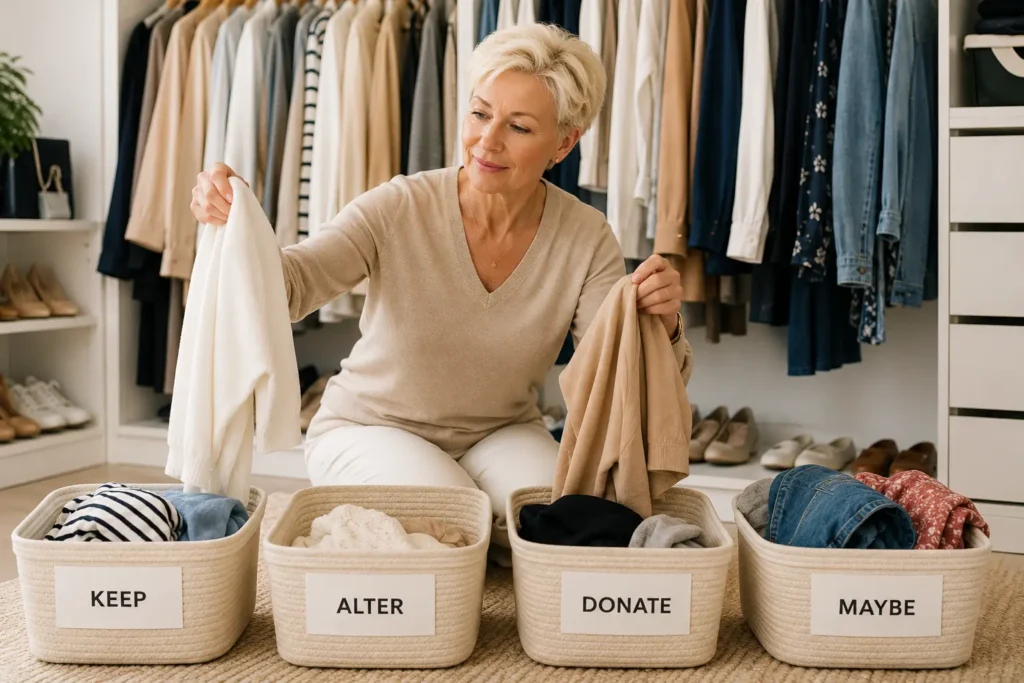
Before you buy a single new item, pull everything out. Every drawer, every hanger, every “maybe someday” bag at the back of the closet.
This step is uncomfortable, and it’s also the single most important part of the process. You cannot build a capsule wardrobe on top of clutter.
As you go through each piece, ask yourself:
- Have I worn this in the last 12 months? If not, be honest about why.
- Does it fit my body right now, not the body I had five years ago, not the body I hope to have, but today?
- Does the fabric feel good against my skin? Scratchy, stiff, or overly synthetic fabrics tend to get worn less, no matter how “classic” the cut.
- Can I move in it comfortably, sit, reach, walk, without adjusting or tugging?
- Would I buy this again today, at full price, knowing what I know now?
- Does it photograph and feel the way I want to feel, put-together, confident, like myself?
Sort everything into four piles: Keep, Alter (great piece, needs a tailor), Donate/Sell, and Maybe (revisit in 30 days, if you haven’t missed it, it goes).
This step alone usually reveals patterns. Most women discover they wear roughly 20% of their closet 80% of the time.
Everything else is quietly taking up space, creating decision fatigue every morning, and making the closet feel “full” while still leaving you with “nothing to wear.”
Once you’ve done the audit, you’ll have a much clearer picture of your actual gaps, which is exactly what the rest of this guide will help you fill intentionally, instead of impulsively.
Step 2: Choosing Your Color Palette (Without Losing Your Personality)
A cohesive color palette is what makes a capsule wardrobe actually function. It’s the reason a top from one week can suddenly pair with a bottom from three weeks ago without a second thought. But cohesive doesn’t have to mean boring.
Start with two to three neutral colors.
Navy, charcoal, camel, soft grey, cream, or black, pick the two or three that actually look best against your current skin tone, not the ones you’re “supposed” to wear.
Skin tone and hair color both shift with age, and a neutral that flattered you at 30 doesn’t automatically flatter you now.
If black has started to feel harsh or draining against your face, soft charcoal or deep navy might do the same job with more warmth.
Add one or two accent colors that feel like you.
This is the step most generic capsule guides skip entirely, and it’s the difference between a wardrobe that feels alive and one that feels like a uniform.
Maybe it’s a rich burgundy, a deep forest green, a warm rust, or a soft dusty blue, something you gravitate toward naturally, something that makes you feel like yourself the moment you put it on.
Consider your undertone.
If you have a warm undertone, camel, ivory, olive, and warm rust tend to be more flattering than stark white or icy grey.
If you’re cool-toned, navy, true white, soft grey, and jewel tones tend to do more for your complexion.
If you’re not sure, hold a warm-toned item and a cool-toned item up to your face in natural daylight, one will noticeably brighten you, the other will flatten you.
Keep prints minimal and intentional.
One or two prints that genuinely work with your neutral base are plenty, a subtle stripe, a soft floral, a classic houndstooth.
Anything louder risks becoming an orphan piece that doesn’t pair with anything else you own.
The goal isn’t to eliminate color or personality. It’s to make sure everything you own can actually talk to everything else.
Step 3: The Fabric Rules That Actually Matter After 50
This is the section most capsule wardrobe guides skip entirely, and it might be the most important one in this whole article.
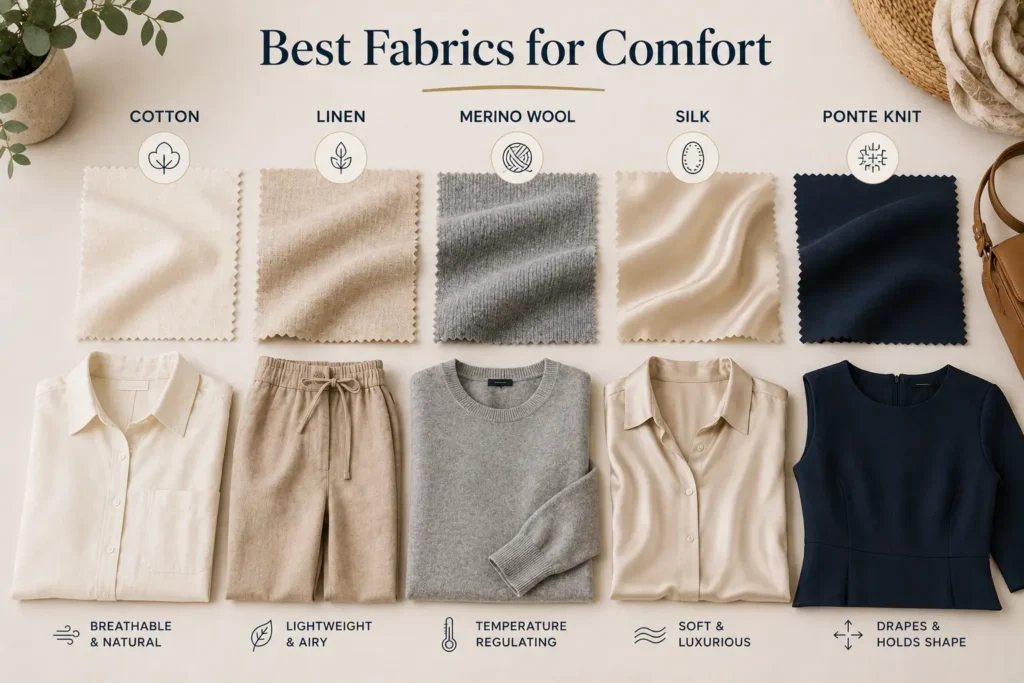
Prioritize breathable, natural fibers.
Cotton, linen, merino wool, and silk all regulate temperature far better than most synthetic blends. If hot flashes or night sweats are part of your reality, synthetic fabrics that trap heat can make an already uncomfortable moment worse. Merino wool in particular is worth knowing about; it’s naturally temperature-regulating, meaning it keeps you warm in cooler moments and doesn’t overheat you in warmer ones, and it resists odor far better than synthetic knits.
Look for a small percentage of stretch in structured pieces.
A trouser or blazer with 2–4% stretch (often labeled as a small amount of elastane or spandex blended into cotton or wool) will move with your body throughout the day without losing its shape. Fully rigid fabrics can feel restrictive by evening; fully stretch fabrics tend to lose structure and start looking tired within a few wears.
Choose drape over stiffness for tops.
A fabric that skims rather than clings tends to be more universally comfortable and flattering as our bodies change, think a soft ponte knit, a fluid viscose blend, or a lightweight modal, rather than a stiff poplin that holds a rigid shape regardless of how your body moves underneath it.
Pay attention to weight, not just fiber.
A midweight cotton or linen blend works across more of the year than an ultra-lightweight version, which tends to wrinkle more and offer less structure. If you’re building a genuinely capsule-sized wardrobe, midweight fabrics that transition between seasons with a simple layer added or removed will earn their keep far more than delicate, single-season fabrics.
Don’t underestimate quality basics.
A higher-quality cotton tee or a well-made merino sweater costs more upfront but tends to hold its shape, color, and softness through dozens more washes than a fast-fashion equivalent. Since a true capsule wardrobe relies on repeat-wearing the same pieces constantly, fabric durability isn’t a luxury, it’s functional.
| Fabric | Best For | Why It Works After 50 |
| Merino wool | Sweaters, base layers | Temperature-regulating, odor-resistant, warm without overheating |
| Linen | Tops, trousers, warm-weather layers | Breathable, natural fiber, softens with wear |
| Cotton (midweight) | Tees, button-downs | Breathable, durable, holds shape through washing |
| Silk | Blouses, elevated tops | Lightweight drape, temperature-neutral |
| Ponte knit | Structured tops, dresses | Drapes rather than clings, moves with the body |
| Fabric + 2–4% stretch | Trousers, blazers | Moves with you without losing structure |
Step 4: The Undergarment Layer Nobody Talks About
Here’s something almost no capsule wardrobe guide mentions, and it deserves a section of its own: the right undergarments are the foundation on which everything else is built.
A beautifully chosen top can look completely different depending on what’s underneath it. After 50, this matters more, not less. A few worth prioritizing:
- A properly fitted, supportive bra — bra sizing can shift meaningfully with hormonal changes, so it’s worth getting professionally measured every couple of years rather than assuming your size hasn’t changed.
- Seamless, breathable shapewear for pieces where you want a smoother line — not to change your body, but to help certain fabrics drape the way they’re designed to.
- Moisture-wicking base layers for warmer months or hot-flash-prone days, worn quietly under blouses to add a layer of comfort and confidence.
- A slip or camisole in a neutral tone, for any fabric that’s slightly sheer or clingy — a small addition that instantly makes more of your existing wardrobe wearable.
This layer rarely gets photographed for capsule wardrobe graphics, but it’s often the quiet difference between a piece that gets worn constantly and one that gets tried on, adjusted, and hung back up.
Step 5: The Actual Capsule Wardrobe Piece List
Now for the part you’ve been waiting for — the actual pieces. This list is built for a three-season core capsule (you’ll rotate in heavier layers for deep winter, covered in the seasonal section below), sized to roughly 30–34 pieces total, which is a workable range for most lifestyles.
Tops (7–8 Pieces)
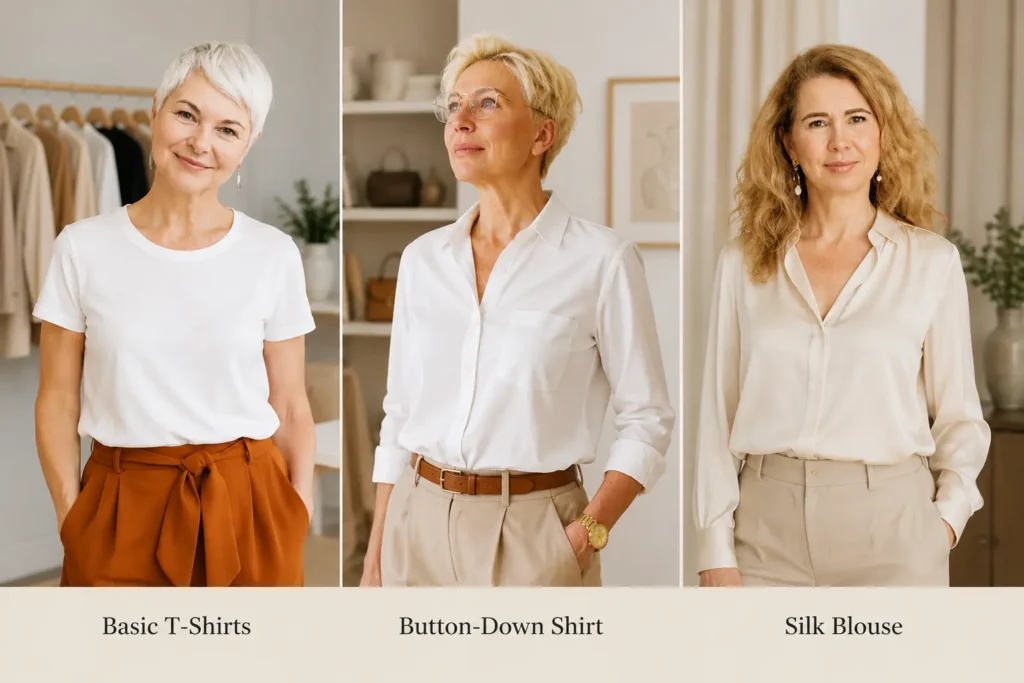
- 2 Basic T-Shirts
- 1 Button-Down Shirt
- 1 Silk Blouse
- 2 Knit Sweaters
- 1 Tunic Top
- 1 Accent Color Top
Bottoms (5–6 Pieces)
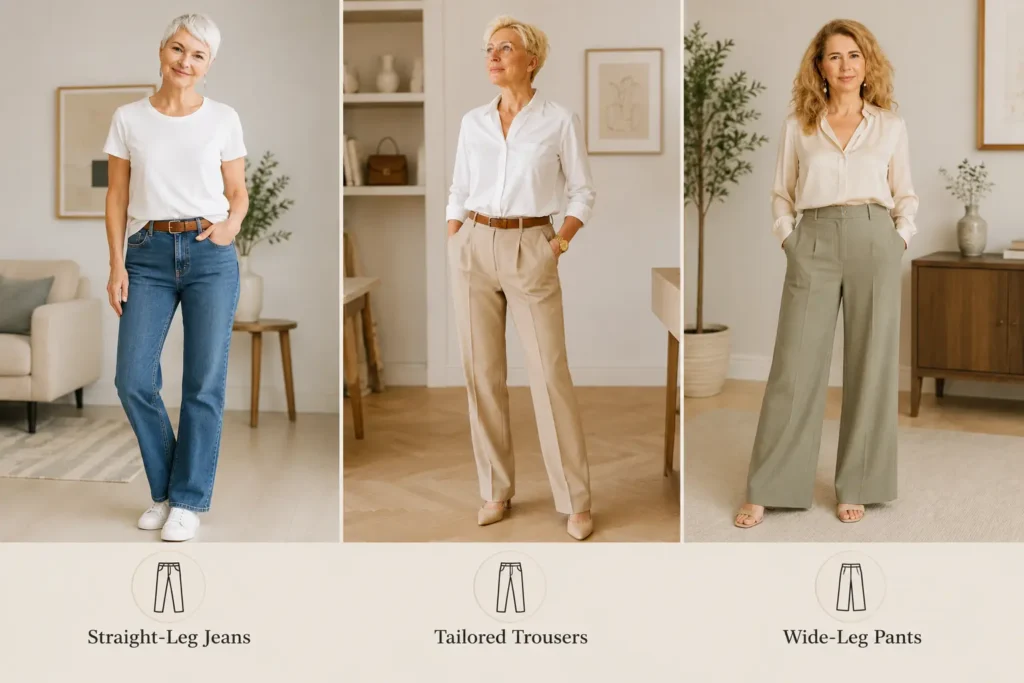
- 1 Straight-Leg Jeans
- 1 Tailored Trousers
- 1 Wide-Leg Pants
- 1 Midi Skirt
- 1 Cropped Pants or Shorts
Dresses (2–3 Pieces)
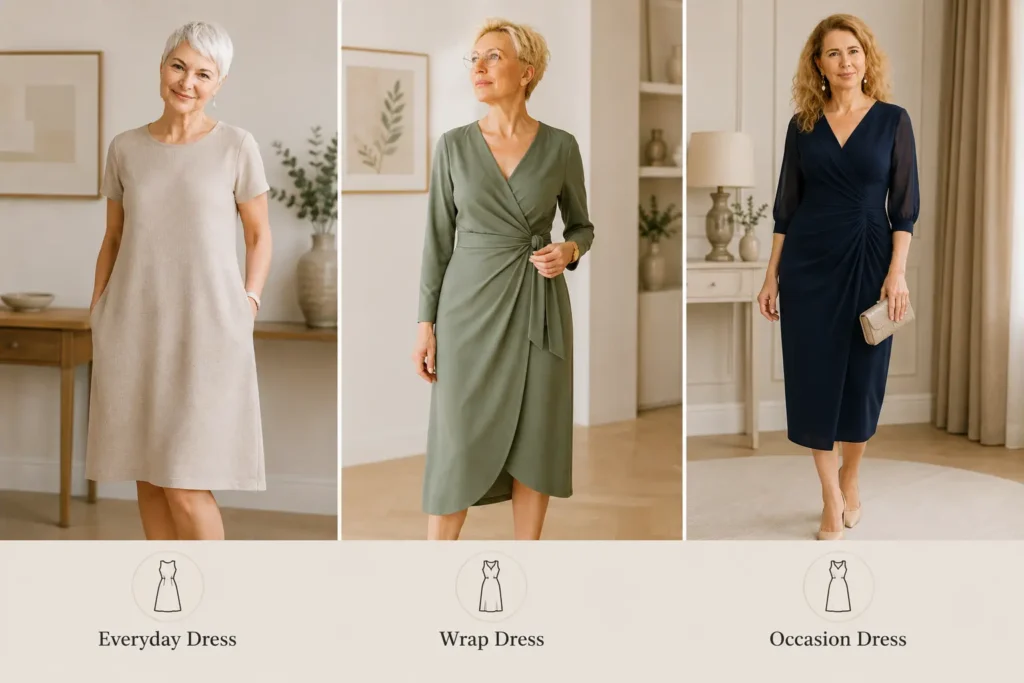
- 1 Everyday Dress
- 1 Wrap Dress
- 1 Occasion Dress
Outerwear & Layers (4–5 Pieces)
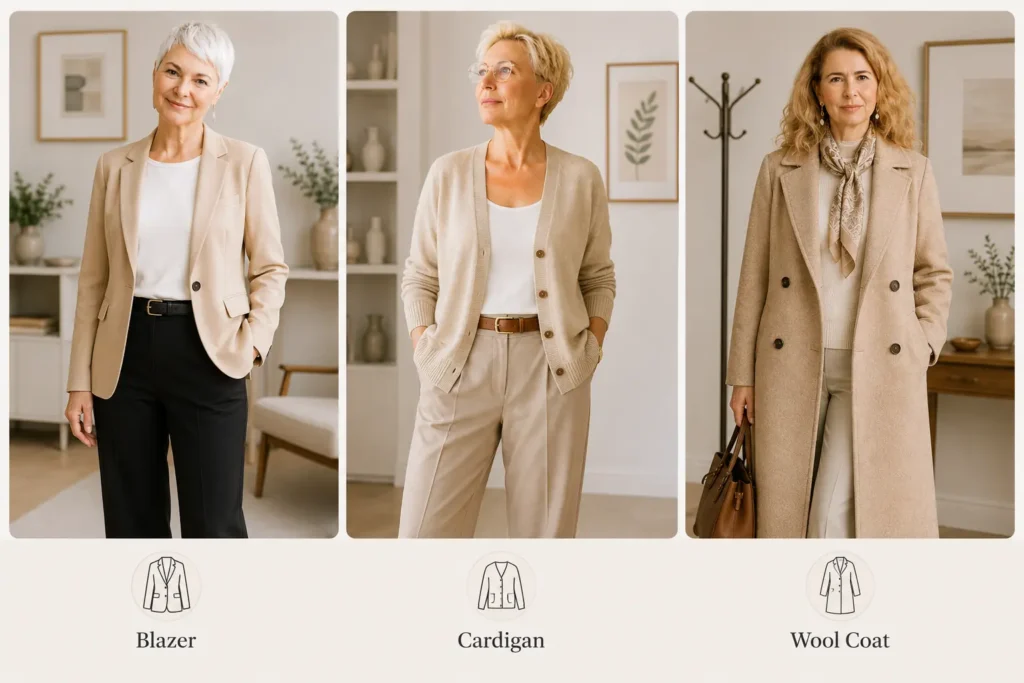
- 1 Blazer
- 1 Cardigan
- 1 Wool Coat
- 1 Trench Coat or Lightweight Jacket
- 1 Statement Jacket
Shoes (5–6 Pairs)
- 1 White Sneakers
- 1 Loafers or Ballet Flats
- 1 Ankle Boots
- 1 Block Heel Pumps
- 1 Sandals
- 1 Knee-High Boots
Accessories (5–6 Pieces)
- 2–3 Scarves
- 1 Tote Bag
- 1 Crossbody Bag
- 1 Everyday Jewelry Set
- 1 Statement Necklace or Earrings
The Wildcard Piece
Every well-built capsule wardrobe needs one piece that breaks the rules entirely, something that doesn’t necessarily “match” your neutral palette but makes you feel unmistakably like yourself.
This might be a leopard-print flat, a bold coat lining, a statement necklace, or a jewel-toned jacket. It’s the piece that keeps a capsule wardrobe from feeling like a uniform, and it deserves a place on this list as much as anything else.
Free Download: capsule-wardrobe-over-50-checklist
The Core Four Framework: How Many Pieces You Actually Need
There’s no single “correct” number for a capsule wardrobe; anyone who tells you it must be exactly 33 items or exactly 30 is oversimplifying. What matters more than the total count is how the pieces are distributed. Here’s a simple framework to think it through:
Foundations (Roughly 40% of Your Capsule)
Your core neutral tops, bottoms, and go-to dress are the pieces you’ll wear on repeat, week after week, without a second thought.
Layers (Roughly 25%)
Blazers, cardigans, coats, and jackets are the pieces that transform a foundation piece into three or four different outfits, depending on how you layer them.
Statements (Roughly 20%)
Your accent-color pieces, your wildcard item, your slightly bolder shoes or accessories, the pieces that keep the whole thing feeling like you instead of a template.
Extras (Roughly 15%)
Occasion-specific pieces, one elevated dress, one special-occasion shoe that you don’t need often, but genuinely need when the moment calls for it.
If you tally up your current closet against these four categories, you’ll likely find you’re overloaded in one area (usually Foundations, sometimes without much actual variety within it) and underserved in another (usually Layers or Statements).
That imbalance is often the real reason a full closet still feels like “nothing to wear”, not a lack of clothing, but a lack of balance across these four roles.
Building Outfits: Simple Formulas That Actually Work
A capsule wardrobe only succeeds if you actually know how to combine the pieces. Here are a few reliable formulas to fall back on:
The Effortless Everyday
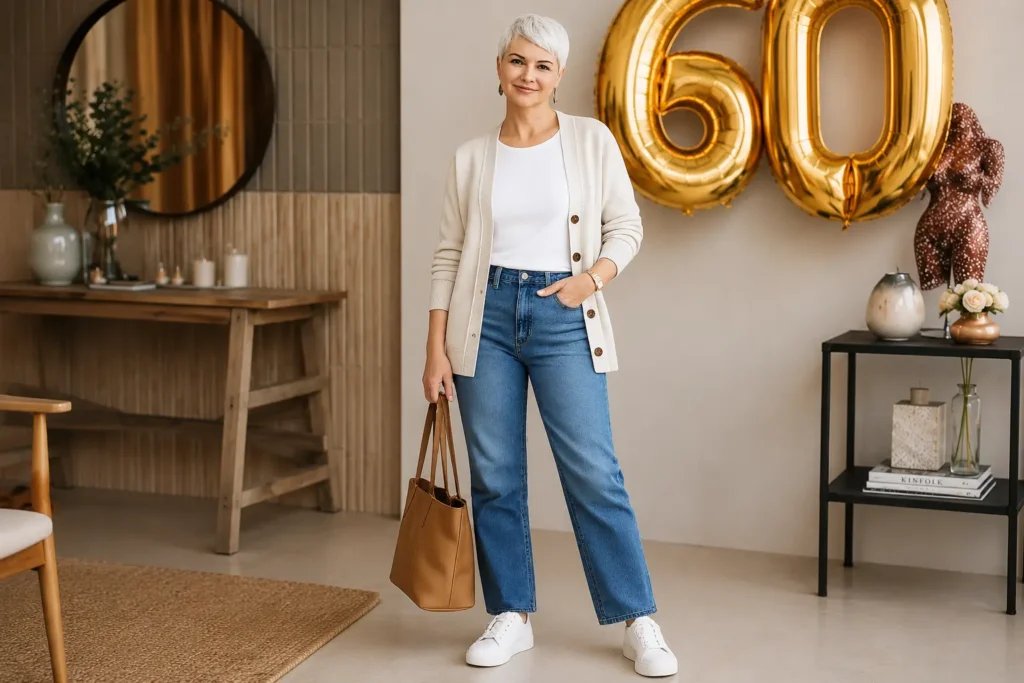
Tee + straight-leg jeans + cardigan + sneakers + everyday bag.
Swap the cardigan for a blazer and the sneakers for loafers, and the same tee-and-jeans base goes from weekend errands to lunch with friends.
The Elevated Basic
Silk blouse + tailored trousers + blazer + low block heel + statement earrings.
This formula works for anything from a work presentation to a nicer dinner out.
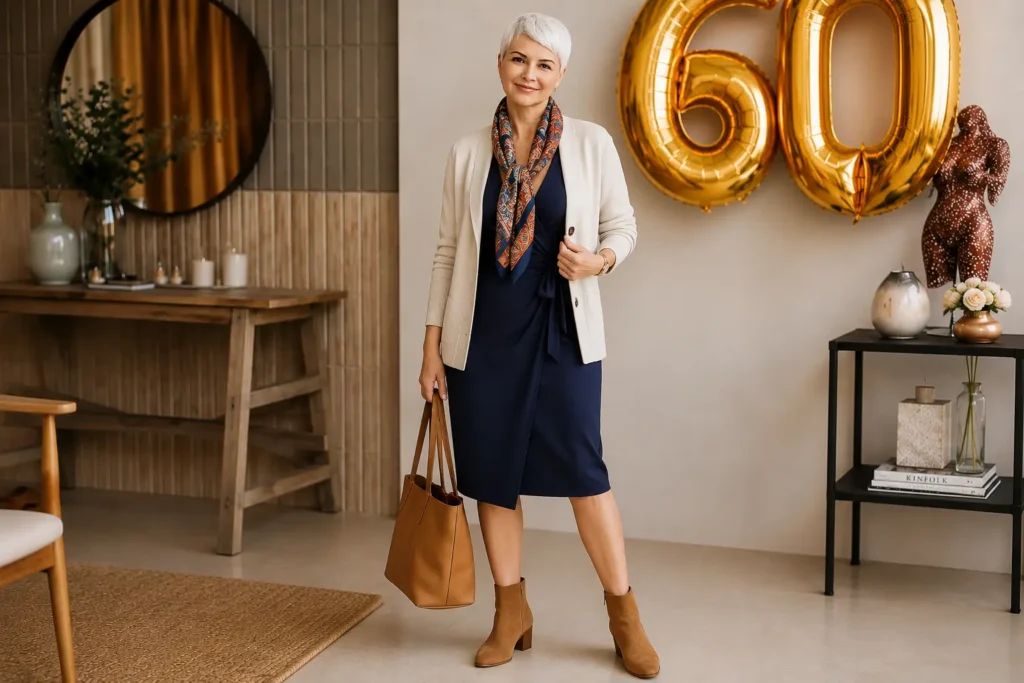
The Effortless Dress-Up
Wrap dress + cardigan or blazer + ankle boots + a scarf for color.
One dress, three completely different looks depending on the season and the layer.
The Travel Uniform
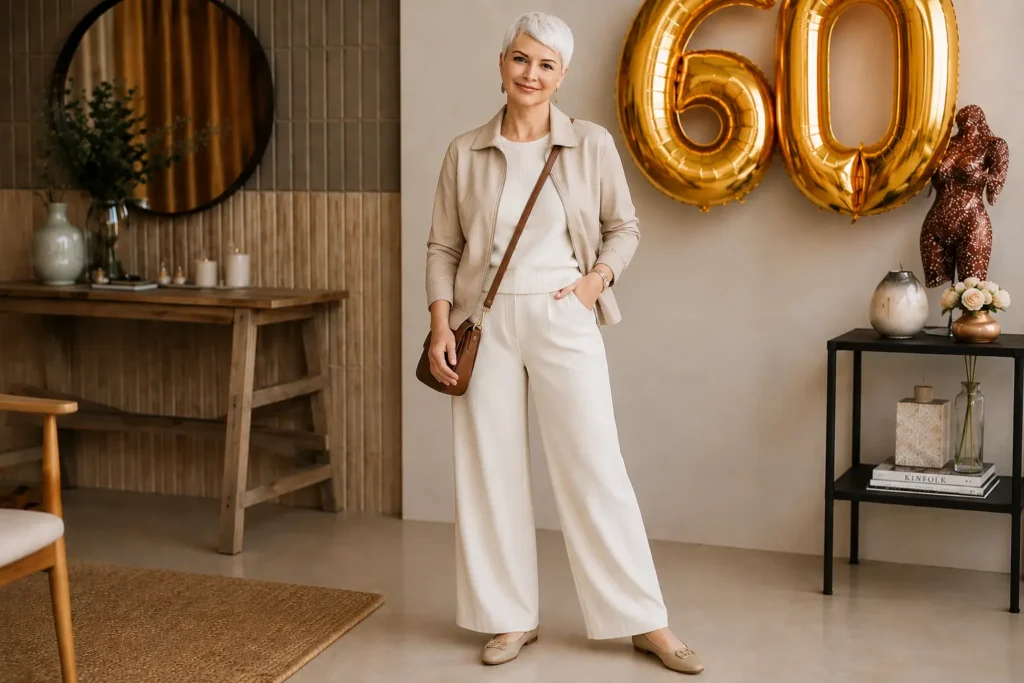
Wide-leg pants + fine-knit top + lightweight jacket + comfortable flats + crossbody bag.
Comfortable enough for a full day of movement, put-together enough for a nice dinner if the jacket comes off and the jewelry goes on.
The real test of a capsule wardrobe isn’t how good any single piece looks on its own, it’s how many different outfits you can build from a limited number of pieces without ever feeling repetitive.
Seasonal Adjustments to Your Capsule
Your core capsule doesn’t need to be rebuilt every season — it needs small, intentional swaps.
Moving into colder months:
Add a substantial wool coat, swap lightweight knits for heavier ones, bring in tall boots, and add a warmer scarf. If you want a deeper seasonal breakdown, our winter capsule wardrobe and fall capsule wardrobe guides walk through this in detail.
Moving into warmer months:
Rotate in linen and lightweight cotton, swap boots for sandals, and lean on breathable fabrics discussed above. Our summer capsule wardrobe and spring capsule wardrobe guides cover the specific fabric and color adjustments worth making.
Traveling:
A capsule wardrobe is, frankly, the single easiest way to pack. If travel is a regular part of your life after 50, our dedicated travel capsule wardrobe guide walks through building a smaller, more concentrated version of everything covered here.
Common Capsule Wardrobe Mistakes to Avoid After 50
- Buying based on trend rather than fit. A trend piece that doesn’t suit your current proportions will sit unworn regardless of how popular it is this season.
- Choosing fabric based on appearance in the store, not comfort by hour six. Always ask how a fabric will feel after a full day of wear, not just how it photographs on the hanger.
- Assuming your sizing hasn’t changed. Bodies shift. Buying based on a size you “used to be” rather than trying pieces on is one of the most common reasons closets fill up with things that don’t get worn.
- Skipping the wildcard. A capsule wardrobe with zero personality pieces tends to feel flat and gets abandoned faster than one with a bit of unexpected color or texture.
- Over-buying “just in case” pieces. A single occasion dress you might wear twice a year is fine. Five of them, “just in case,” defeat the entire purpose of a capsule.
Where to Spend and Where to Save
Not every piece in your capsule deserves the same budget, and knowing the difference is what keeps a capsule wardrobe sustainable rather than expensive.
Spend more on:
- Your blazer. This is the single hardest-working piece in most capsules over 50. It transforms jeans into a lunch outfit and a dress into a work outfit. A well-tailored blazer in quality wool or a wool blend will hold its structure for years, while a cheaper version tends to lose its shape within a season.
- Your everyday shoes. Comfort and support matter more with each passing year, and a well-made pair of shoes with genuine arch support will save your feet and your outfits over the long run. Cheap shoes tend to look tired fast and can genuinely affect how you move through your day.
- Your coat. A quality wool coat is worn dozens of times each winter for years on end. Cost-per-wear makes this one of the easiest places to justify spending more.
- Foundational bras and shapewear. As covered above, this layer affects how everything else fits and drapes. It’s worth the investment even though it’s invisible.
Save on:
- Trend pieces. Anything you suspect you’ll wear for one season doesn’t need a premium price tag.
- Basic tees. A well-made basic tee from a mid-range retailer performs almost as well as a designer version for a fraction of the cost, especially since tees naturally wear out faster than structured pieces.
- Seasonal accent pieces. A bold-colored scarf or statement accessory you’re testing out doesn’t need to be an investment piece. These are exactly the items to experiment with at a lower price point before committing further.
- Loungewear and at-home pieces. These see heavy wear but rarely need to hold a tailored shape, so mid-range quality is usually plenty.
A helpful rule of thumb: the more foundational and frequently worn a piece will be, the more it’s worth investing in. The more experimental or trend-driven a piece is, the more comfortable you can be buying it at a lower price point.
A 30-Day Capsule Wardrobe Challenge
If the idea of overhauling your entire closet at once feels overwhelming, you don’t have to do it all in a weekend. Try this instead:
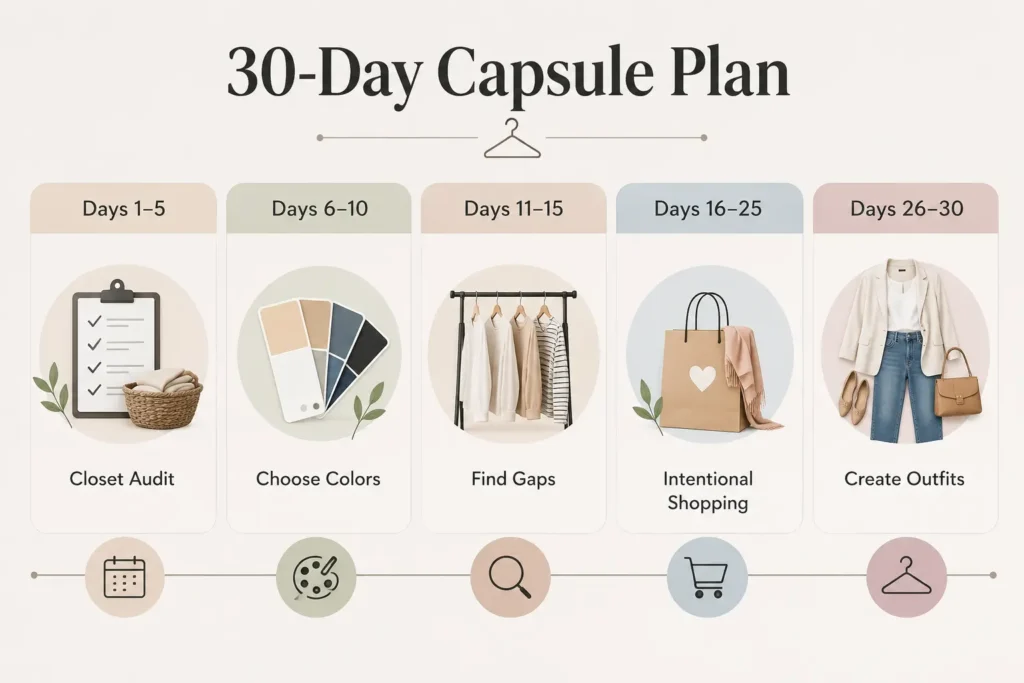
Days 1–5: Complete the full closet audit outlined above. No shopping yet, just sorting, trying things on, and being honest about what stays.
Days 6–10: Identify your color palette based on what you already own and love, plus what genuinely flatters your current skin tone. Photograph your “keep” pile laid out by color to spot gaps.
Days 11–15: List your gaps using the piece list and the Core Four framework above. Resist buying yet, just write the list.
Days 16–25: Shop intentionally, prioritizing the “spend more” categories first (blazer, shoes, coat, undergarment layer) before filling in lower-stakes pieces.
Days 26–30: Build and photograph five to seven complete outfits using only your new capsule. Having these “outfit formulas” ready removes the guesswork from your mornings going forward.
By the end of the month, you’ll have a genuinely functional capsule wardrobe built around your actual life, not a Pinterest board that looked good in theory.
Bringing It All Together
A capsule wardrobe after 50 isn’t about restriction, and it isn’t about disappearing into head-to-toe neutrals because some checklist told you to. It’s about building a closet full of pieces that actually fit your body as it is today, that feel good against your skin through a full day of wear, and that still feel unmistakably like you every time you get dressed.
Start with the honest audit. Build your palette around what actually flatters you now. Prioritize fabric and fit over trend. Leave room for the wildcard piece that has nothing to do with “versatility” and everything to do with joy.
Do that, and you’ll end up with something better than a smaller closet — you’ll end up with a closet where everything in it actually gets worn.
If you’re ready to go deeper, explore our related guides: the Capsule Wardrobe Checklist for a printable audit tool, or our Petite and Plus Size capsule wardrobe guides if either applies to your specific body type.
Frequently Asked Questions
How many pieces should a capsule wardrobe over 50 have?
There’s no universal number, but most workable capsules land between 30 and 40 pieces total, including shoes and outerwear. What matters more than the exact count is making sure your pieces are distributed across foundations, layers, statements, and occasion pieces rather than clustered entirely in one category.
What colors work best for a capsule wardrobe after 50?
Start with two to three neutrals that flatter your current skin tone (this can shift with age, so it’s worth reassessing) and add one or two accent colors you genuinely love. Avoid choosing colors purely because they’re “classic” if they don’t actually brighten your complexion.
What’s the biggest wardrobe mistake women make after 50?
Holding onto pieces based on the body or life stage they used to fit, rather than the one they’re dressing for today. A close second is building a wardrobe entirely from neutrals with no personality pieces, which tends to feel more like a uniform than a wardrobe you’re excited to wear.
Is a capsule wardrobe different for women over 50 compared to younger women?
The core principles are the same. Fewer, more versatile pieces that work together. However, the specifics differ. Fit and proportion need to change, temperature regulation becomes more relevant, and lifestyle factors (like less rigid work schedules or more travel) often shift the balance of pieces that actually get worn.
Should I follow trends when building a capsule wardrobe after 50?
Trends can absolutely be incorporated, but they work best as your “statement” pieces rather than your foundation. A trendy color or silhouette in a scarf, shoe, or accent top is a low-risk way to stay current without building your entire capsule around something that may feel dated in a year.
What fabrics are best for a capsule wardrobe after 50?
Natural, breathable fibers such as cotton, linen, merino wool, and silk tend to perform best for both comfort and temperature regulation. A small percentage of stretch (2–4%) in structured pieces like trousers and blazers helps them move with your body throughout the day without losing shape.

Emma studied fashion but could never get her own closet under control. Capsule wardrobes finally fixed that. Now she writes about what actually worked for her, in the hope it saves you a few frustrating mornings.