I used to think having more clothes would make getting dressed easier. It did the opposite.
My closet had enough pieces. Some were new. Some still had tags. A few were bought because they looked perfect online. But most mornings, I still reached for the same jeans, the same soft T-shirt, and the same shoes because those were the pieces that felt easy.
That is the part no one talks about enough.
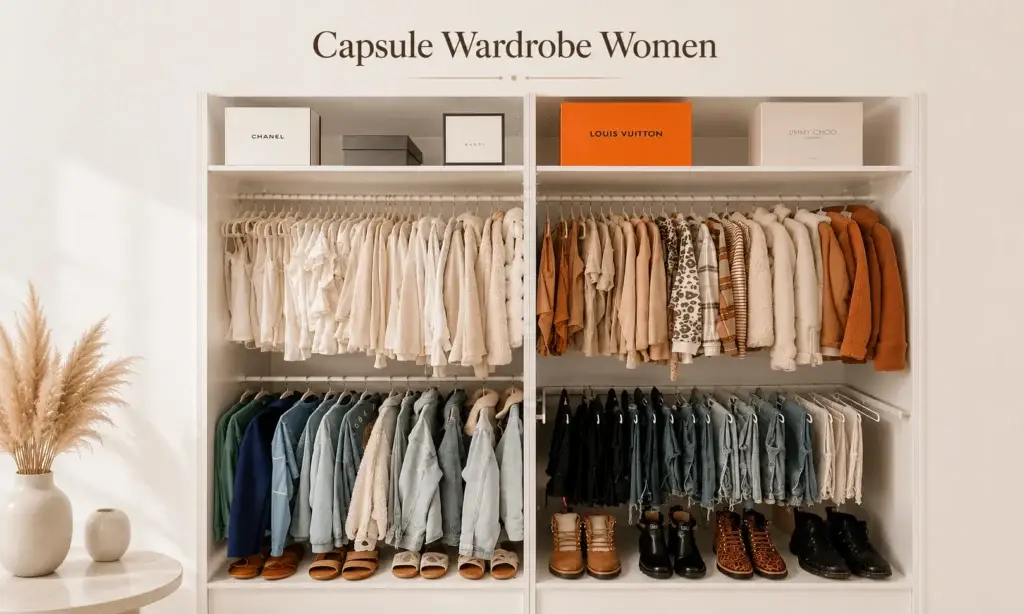
A capsule wardrobe for women does not need to look like a perfect beige closet on Pinterest. It does not need to follow a strict number. It also does not mean you have to dress plain, boring, or the same every day.
A good capsule works because it fits your real life.
It gives you clothes you can wear to work, school runs, errands, lunch plans, travel days, and quiet weekends at home. It makes your closet feel lighter without making your style feel smaller.
This guide focuses on the pieces, outfit ideas, and closet tips that help women build a wardrobe they can actually wear. Not a fantasy wardrobe. Not a shopping list full of things you may never use. Just a practical way to make your clothes work harder and make your mornings feel calmer.
What Makes a Capsule Wardrobe Work for Women?
A capsule wardrobe for women works best when it starts with lifestyle, not trends.
Some women need office outfits five days a week. Some work from home and only need polished pieces a few times a month. Some need clothes that handle school drop-offs, grocery runs, and weekend plans. Others want a wardrobe that packs well for travel.
The best capsule is not the one with the fewest clothes.
It is the one where most pieces go together.
A white T-shirt should work with jeans, trousers, a midi skirt, or under a blazer. A pair of straight-leg jeans should feel good with sneakers, loafers, ankle boots, and sandals. A blazer should not only sit in your closet waiting for meetings. It should also work with a simple tank, denim, and flats.
That is what makes a wardrobe feel useful.
The goal is not to remove personality. The goal is to remove the extra noise. You keep the clothes that fit well, feel comfortable, match your daily routine, and help you create outfits without too much thinking.
A women’s capsule wardrobe should feel personal
A lot of capsule wardrobe advice makes every woman sound the same.
White shirt. Black pants. Beige trench. Done.
But real closets do not work like that.
One woman may love black trousers and loafers. Another may live in wide-leg jeans and soft knitwear. Someone else may feel best in midi dresses, sandals, and simple gold jewelry.
Your capsule should match your taste, body, climate, and schedule.
If you hate button-down shirts, you do not need five of them. If jeans never feel comfortable, build around trousers, skirts, or dresses. If you love color, keep it. A capsule wardrobe women actually enjoy wearing should still feel like them.
The best test is simple: would you reach for this piece on a normal day?
If the answer is yes, it has a place.
Essential Pieces Every Women Should Consider

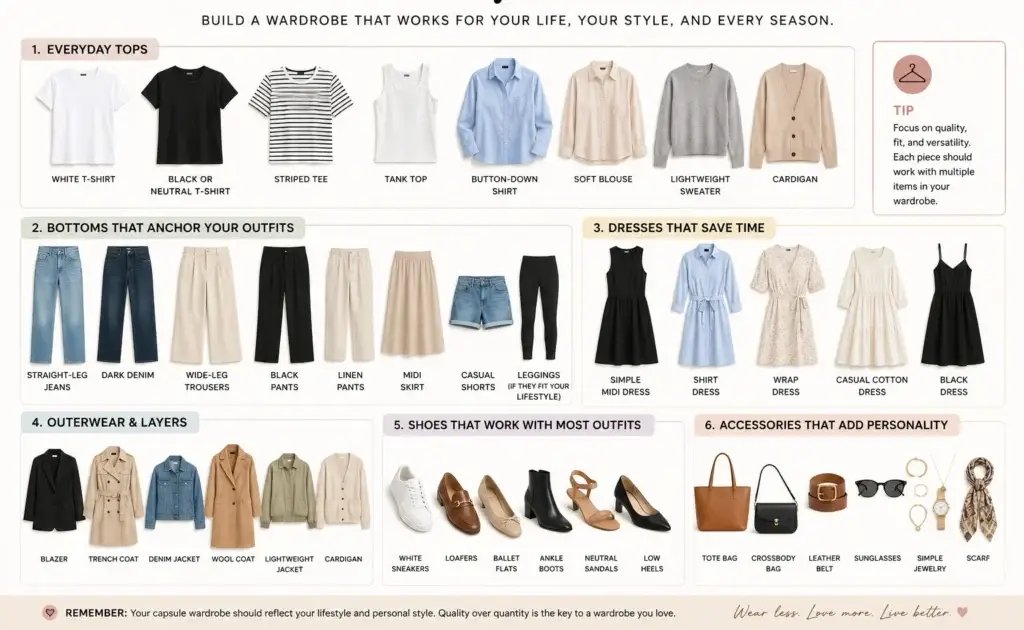
This section is not a rulebook.
Think of it as a starting point. You can adjust each category based on your lifestyle, weather, job, and personal style. A woman who works in a formal office will need different clothes from a stay-at-home mom, college student, or remote worker.
Still, most strong wardrobes have the same basic categories: tops, bottoms, dresses, outerwear, shoes, and accessories.
Everyday Tops
Tops do most of the work in a capsule wardrobe because people notice them first. They also change the mood of an outfit quickly.
A few reliable tops can make the same jeans or trousers feel casual, polished, or dressy.
Good options include:
- White T-shirt
- Black or neutral T-shirt
- Striped tee
- Tank top
- Button-down shirt
- Soft blouse
- Lightweight sweater
- Cardigan
A white T-shirt may sound too simple, but it earns its space. You can wear it with denim, under a blazer, tucked into trousers, or layered under a cardigan. The key is fit. If the neck, sleeves, or length annoy you, you will avoid it.
A button-down shirt also works well, but only if it matches your style. Some women like a crisp cotton shirt. Others prefer a relaxed linen shirt or a softer blouse. The piece should feel easy, not stiff.
For colder months, knitwear matters. A crewneck sweater, cardigan, or fine knit top can help you build layers without adding clutter.
Bottoms That Anchor Your Outfits
Bottoms set the base for your wardrobe.
If they fit badly, the whole outfit feels wrong. I would rather have three bottoms that feel great than ten pairs that I keep adjusting all day.
Useful options include:
- Straight-leg jeans
- Dark denim
- Wide-leg trousers
- Black pants
- Linen pants
- Midi skirt
- Casual shorts
- Leggings, if they fit your lifestyle
Straight-leg jeans are one of the easiest pieces to style because they work with sneakers, flats, boots, and sandals. Dark denim can look more polished, while light-wash denim feels relaxed.
Trousers also deserve space in a capsule wardrobe for women because they can move between work and casual outfits. Pair them with a T-shirt and sneakers for daytime. Wear them with a blouse and loafers when you need to look more put together.
A midi skirt can add variety if you enjoy a feminine style. It works with tanks, sweaters, button-downs, sandals, boots, and flats.
The biggest mistake is keeping bottoms that only work with one top or one pair of shoes. A strong bottom should give you several outfit options.
Dresses That Save Time
Dresses are optional, but they can make dressing much easier.
One dress can replace the mental work of choosing a top and bottom. That helps on busy mornings, warm days, or moments when you want to look finished without trying too hard.
Consider:
- Simple midi dress
- Shirt dress
- Wrap dress
- Casual cotton dress
- Black dress
A midi dress usually gives the most flexibility. You can wear it with sneakers during the day, sandals in summer, ankle boots in fall, or a blazer for work.
A shirt dress can feel polished without being too formal. A wrap dress works well for dinners, office days, or events. A casual cotton dress is useful when comfort matters most.
Do not add dresses just because a checklist says so. If you never wear them, skip them.
Outerwear and Layers
Layers help a small wardrobe stretch across different seasons and settings.
The right jacket can make a basic outfit look intentional. The wrong one can make everything feel off.
Strong layering pieces include:
- Blazer
- Trench coat
- Denim jacket
- Wool coat
- Lightweight jacket
- Cardigan
A blazer is one of the most useful pieces in a woman’s wardrobe. It can dress up jeans, sharpen a T-shirt, or make trousers feel complete. Look for one that fits your shoulders and leaves room for a thin layer underneath.
A trench coat works well in spring and fall. A denim jacket gives dresses and skirts a more casual feel. A wool coat helps colder outfits look clean and simple.
Outerwear should match most of your closet. If a jacket only works with one outfit, it may not earn its space.
Shoes That Work With Most Outfits
Shoes can make or break a small wardrobe.
A capsule does not need many pairs, but each pair should support your real life. Comfort matters here. If a pair hurts after ten minutes, it will not help your wardrobe.
Useful shoes include:
- White sneakers
- Loafers
- Ballet flats
- Ankle boots
- Neutral sandals
- Low heels
White sneakers work with jeans, trousers, skirts, and casual dresses. Loafers give outfits a polished look without feeling too formal. Ballet flats work well for simple, feminine outfits.
Ankle boots help in cooler months. Sandals cover warm weather. Low heels can work for dinners, events, or office outfits if you wear heels often.
Choose colors that repeat in your wardrobe. Black, brown, tan, cream, and white usually mix well.
Accessories That Add Personality
Accessories help a small wardrobe feel less repetitive.
You do not need many. A few good ones can change the feeling of an outfit without adding more clothes.
Think about:
- Tote bag
- Crossbody bag
- Leather belt
- Sunglasses
- Simple jewelry
- Scarf
A tote bag works for daily use. A crossbody bag feels practical for errands and travel. A belt can shape a dress, finish trousers, or make jeans look more stylish.
Simple jewelry also helps. Small hoops, a watch, a bracelet, or a necklace can make a plain outfit feel finished.
This is a good place to show personality. If your clothes are mostly neutral, accessories can bring in texture, color, or shine.
A Simple 30-Piece Capsule Wardrobe Example
A 30-piece wardrobe can work well for one season, especially if your lifestyle is fairly consistent.
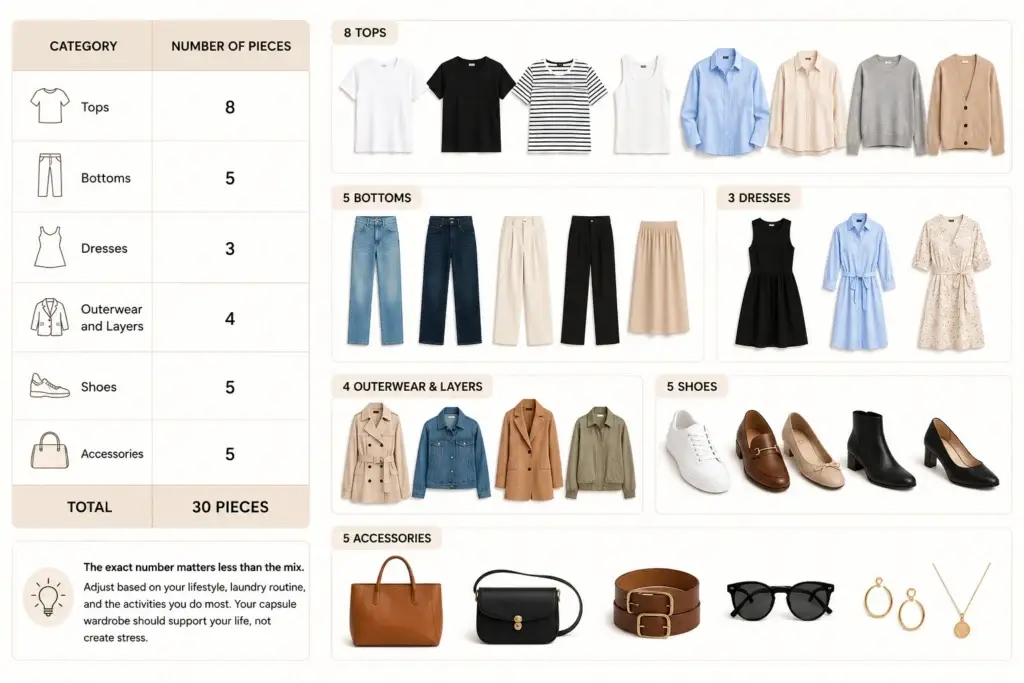
This gives you enough variety without making your closet feel crowded.
For example, your tops might include three T-shirts, two blouses, one button-down, one sweater, and one tank top. Your bottoms might include two pairs of jeans, one pair of trousers, one skirt, and one pair of relaxed pants.
The exact number matters less than the mix.
A capsule wardrobe for women should give you enough clothes for your week, your laundry routine, and your normal plans. If you do laundry once a week, you may need more tops. If you rarely wear dresses, use that space for another pair of pants or an extra layer.
A smaller wardrobe only works when it supports your life. It should not create stress.
Outfit Ideas Using a Women’s Capsule Wardrobe
Owning good clothes is helpful.
Knowing how to wear them together is what makes a capsule wardrobe useful.
A lot of women have enough pieces already. The challenge is turning those pieces into outfits they actually want to wear. Once you start creating outfit combinations ahead of time, getting dressed becomes much easier.
You spend less time standing in front of the closet and more time getting on with your day.
Casual Everyday Outfit


This is the outfit category most women wear more than anything else.
Think comfortable, simple, and practical.
Try:
- White T-shirt
- Straight-leg jeans
- White sneakers
- Crossbody bag
Or:
- Tank top
- Linen pants
- Sandals
- Sunglasses
The beauty of a capsule wardrobe is that small changes create a different look. Swap sneakers for loafers. Add a cardigan. Roll the sleeves. The outfit feels different without needing new clothes.
Business Casual Outfit
Office wardrobes do not have to be complicated.
Many women make the mistake of separating work clothes from everyday clothes. A better approach is choosing pieces that can do both.
Try:
- Button-down shirt
- Tailored trousers
- Loafers
- Structured tote bag
Or:
- Blouse
- Midi skirt
- Ballet flats
- Blazer
These outfits feel professional without feeling overly formal.
Weekend Outfit
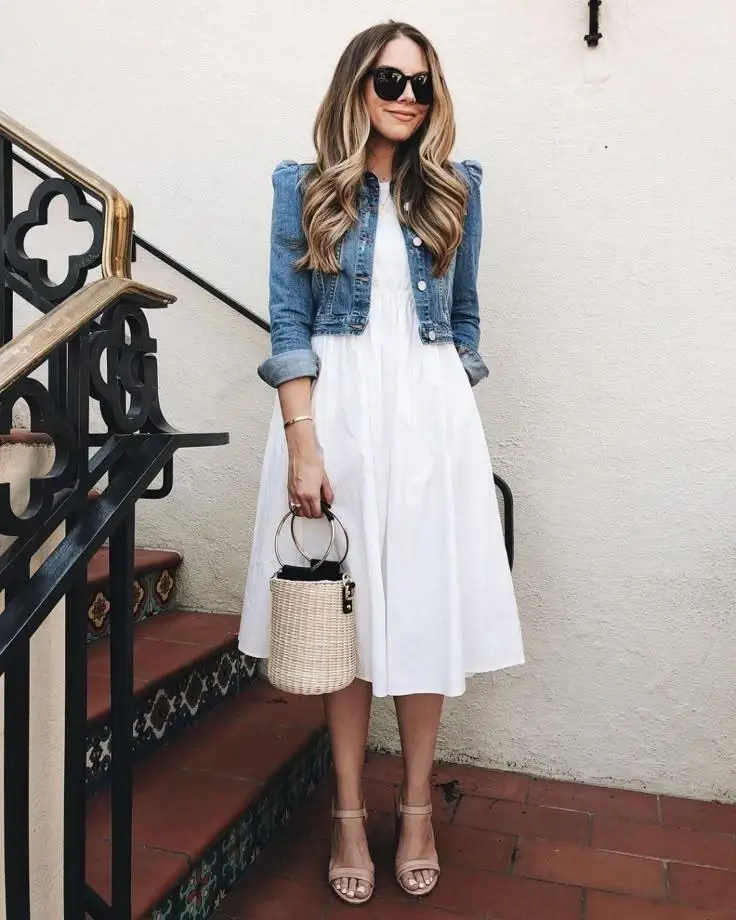
Weekends often require flexibility.
You may be meeting friends, running errands, grabbing coffee, or spending time with family.
Try:
- Relaxed sweater
- Jeans
- Sneakers
Or:
- Casual dress
- Denim jacket
- Sandals
Comfort matters here, but the outfit should still feel intentional.
Travel Outfit
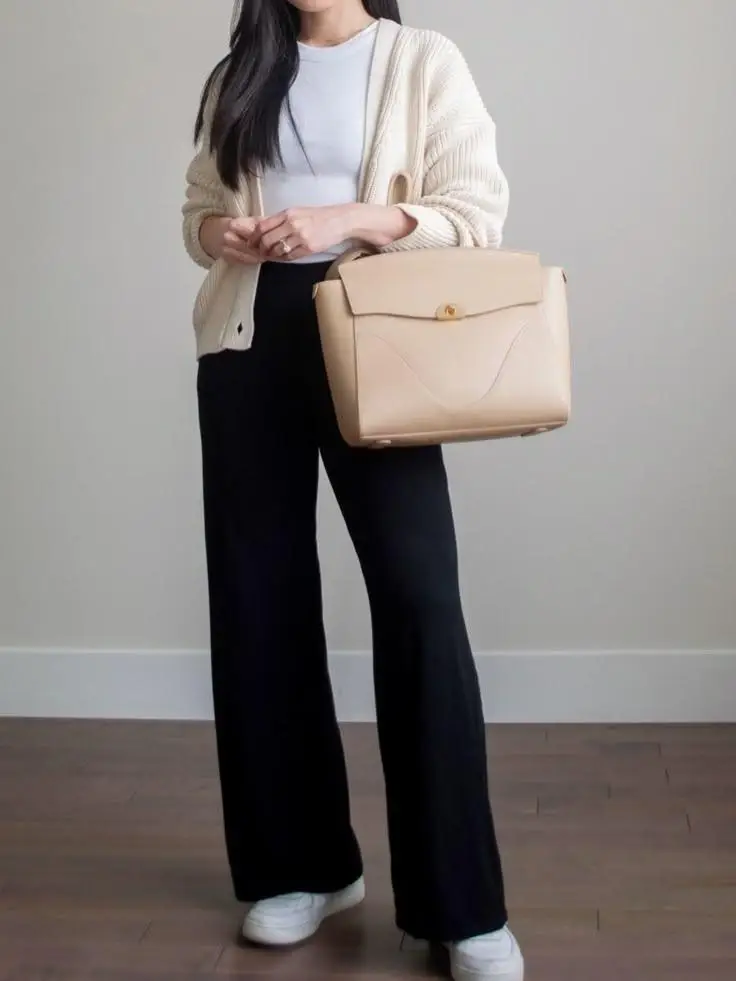
Travel wardrobes are one reason capsule wardrobes became so popular.
When every piece works together, packing becomes much easier.
A simple travel outfit could include:
- Black trousers
- White T-shirt
- Cardigan
- White sneakers
Everything layers easily. Everything mixes with other items in your suitcase.
That means fewer clothes and more outfit options.
Date Night Outfit
Date-night outfits do not need a separate wardrobe.
Most women can create them using capsule wardrobe staples.
Try:
- Wrap dress
- Ankle boots
- Simple jewelry
Or:
- Dark denim
- Silk blouse
- Low heels
The goal is to feel comfortable and confident rather than dramatically different from your everyday style.
Smart Casual Outfit
Smart casual sits between relaxed and polished.
A good example:
- Wide-leg trousers
- Fitted knit top
- Loafers
- Minimal jewelry
Another option:
- Dark jeans
- Blazer
- White T-shirt
- Ballet flats
These combinations work for lunch meetings, casual offices, dinners, and social events.
Capsule Wardrobe for Different Women’s Lifestyles

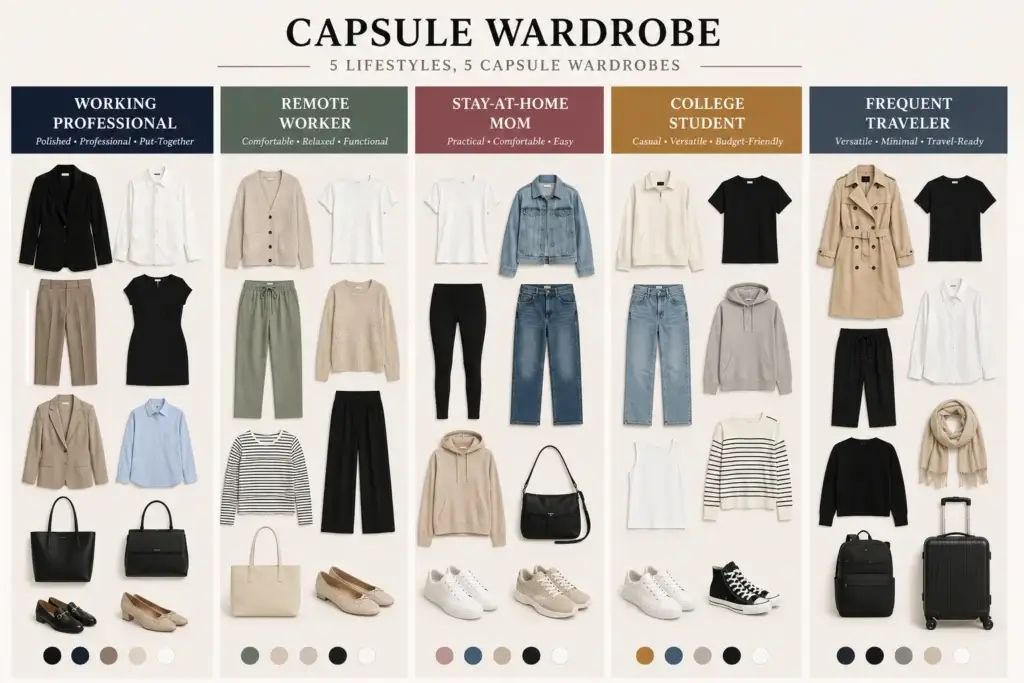
One reason capsule wardrobes fail is that people copy someone else’s closet.
A wardrobe that works for a fashion editor may not work for a teacher.
A wardrobe that works for a remote worker may not work for a nurse.
Lifestyle should always come first.
Working Professionals
Women who spend most of the week in an office usually need more polished pieces.
Helpful staples include:
- Tailored trousers
- Blazers
- Button-down shirts
- Midi dresses
- Loafers
These pieces can create multiple office outfits while remaining comfortable enough for long workdays.
Remote Workers
Working from home changes wardrobe priorities.
Comfort often becomes more important than formal dress codes.
Useful pieces include:
- Knit tops
- Relaxed trousers
- Cardigans
- Comfortable flats
- Simple dresses
You still want clothes that help you feel put together during meetings, but they should be comfortable enough for a full day at home.
Stay-at-Home Moms
Busy schedules require practical clothes.
Most moms need outfits that can handle school runs, errands, activities, and everyday life.
Useful staples include:
- Straight-leg jeans
- Leggings
- Soft T-shirts
- Lightweight jackets
- Sneakers
The focus should be on comfort, durability, and easy outfit combinations. The same mix-and-match approach works just as well for building out a kids capsule wardrobe, especially once school mornings start feeling just as rushed as your own.
College Students
Students often need versatile wardrobes on limited budgets.
A strong capsule wardrobe can reduce unnecessary spending while providing enough outfit variety.
Helpful pieces include:
- Denim
- Basic tops
- Cardigans
- Sneakers
- Casual dresses
Many outfits can be created simply by mixing these categories.
Plus Size
Fit matters more than size number when building a capsule that actually works.
Helpful staples include:
- Structured blazers
- High-waisted bottoms
- Wrap dresses
- A-line skirts
- Supportive undergarments
A plus size capsule wardrobe focuses on well-fitting basics and structured layers that flatter rather than hide, which changes the whole feel of getting dressed.
Frequent Travelers
Frequent travelers benefit from versatile pieces more than almost anyone.
Look for clothing that:
- Layers easily
- Resists wrinkles
- Works in multiple settings
- Coordinates with everything else
Neutral colors usually help because they create more combinations.
Expecting Mothers
Pregnancy changes what a wardrobe needs to do almost month by month.
Comfort and adaptability matter more here than anywhere else on this list.
Useful staples include:
- Stretch-waist trousers
- Wrap tops
- Flowy dresses
- Soft leggings
- Supportive flats
A maternity capsule wardrobe usually works best when pieces can flex across all three trimesters instead of being replaced each stage.
Petite Frames
Proportion matters more than category here, since the same piece can look completely different depending on fit.
Helpful staples include:
- High-waisted bottoms
- Cropped jackets
- Tailored hems
- Fitted silhouettes
- Pointed-toe shoes
A petite capsule wardrobe leans on tailoring and proportion more than trend, which is what actually creates a balanced, elongated look.
Choosing the Right Color Palette
Many women think a capsule wardrobe means wearing only black, white, and beige.
That is not true.
A capsule wardrobe should reflect your personal style.
The goal is coordination, not boredom.
Start With Foundation Colors
Most successful capsule wardrobes include a few foundation colors.
Examples include:
- Black
- Navy
- White
- Cream
- Gray
- Camel
- Brown
These colors pair well together and make outfit planning easier.
Add Accent Colors
Accent colors bring personality into the wardrobe.
Examples:
- Burgundy
- Olive green
- Dusty blue
- Soft pink
- Rust
- Forest green
Choose colors you already enjoy wearing.
There is no benefit in selecting trendy shades if they sit untouched in your closet.
Repeat Colors Throughout the Wardrobe
One simple trick is repeating colors.
For example:
If you own a camel cardigan, a camel belt, and a camel handbag, outfits automatically feel more coordinated.
The same principle works for navy, black, olive, or burgundy.
Small color connections make a wardrobe feel intentional.
Create More Outfits With Fewer Pieces
The easiest way to increase outfit combinations is by keeping your palette consistent.
A white T-shirt that works with five bottoms creates more value than a bright top that only matches one pair of pants.
This does not mean every item should be neutral.
It simply means pieces should work together.
The more combinations you can create, the stronger your capsule wardrobe becomes.
Capsule Wardrobe Styles for Women
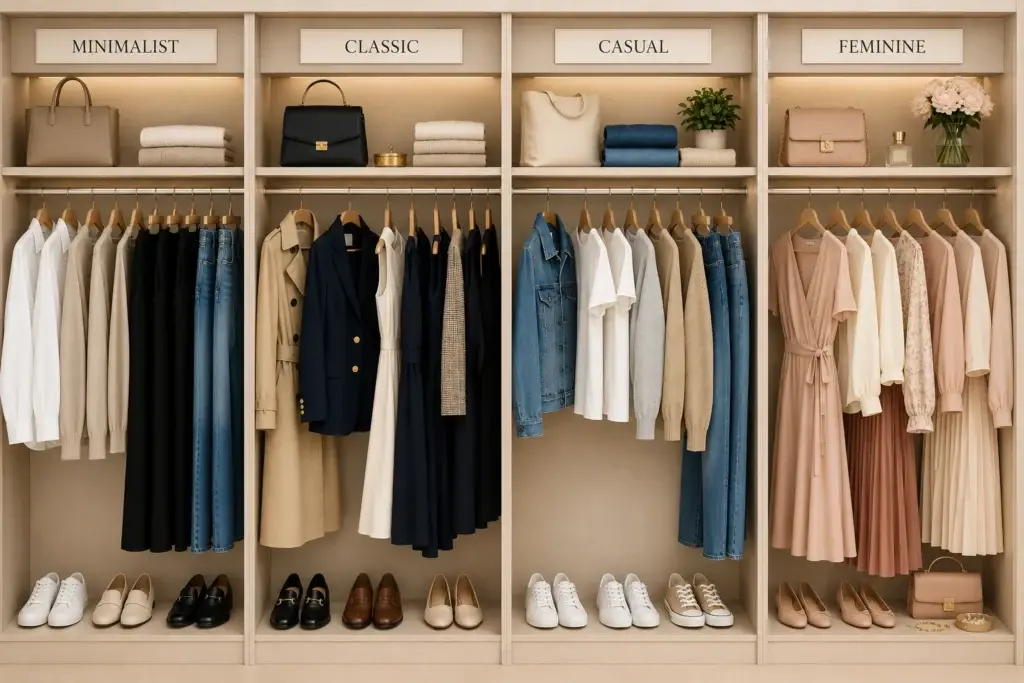
Not every woman wants the same look.
That is why copying someone else’s capsule wardrobe often leads to frustration.
Your capsule should support your preferred style rather than replace it.
Minimalist Style
Minimalist wardrobes focus on clean lines and simple shapes.
Common pieces include:
- Neutral colors
- Straight-leg jeans
- Tailored trousers
- White shirts
- Simple knitwear
The emphasis stays on quality and simplicity.
Classic Style
Classic wardrobes prioritize timeless pieces.
Examples include:
- Trench coats
- Blazers
- Loafers
- Midi dresses
- Structured handbags
These pieces rarely feel dated and can stay in a wardrobe for years.
Casual Style
Casual wardrobes focus on comfort and ease.
Common items include:
- T-shirts
- Denim
- Sneakers
- Cardigans
- Relaxed jackets
Many women naturally lean toward this style because it fits daily life.
Feminine Style
Feminine wardrobes often include:
- Wrap dresses
- Skirts
- Ballet flats
- Soft fabrics
- Delicate jewelry
A feminine capsule wardrobe can remain practical and versatile.
The goal is not to choose one style forever.
Many women combine elements from several styles to create a wardrobe that feels authentic.
Capsule Wardrobe Ideas for Every Season
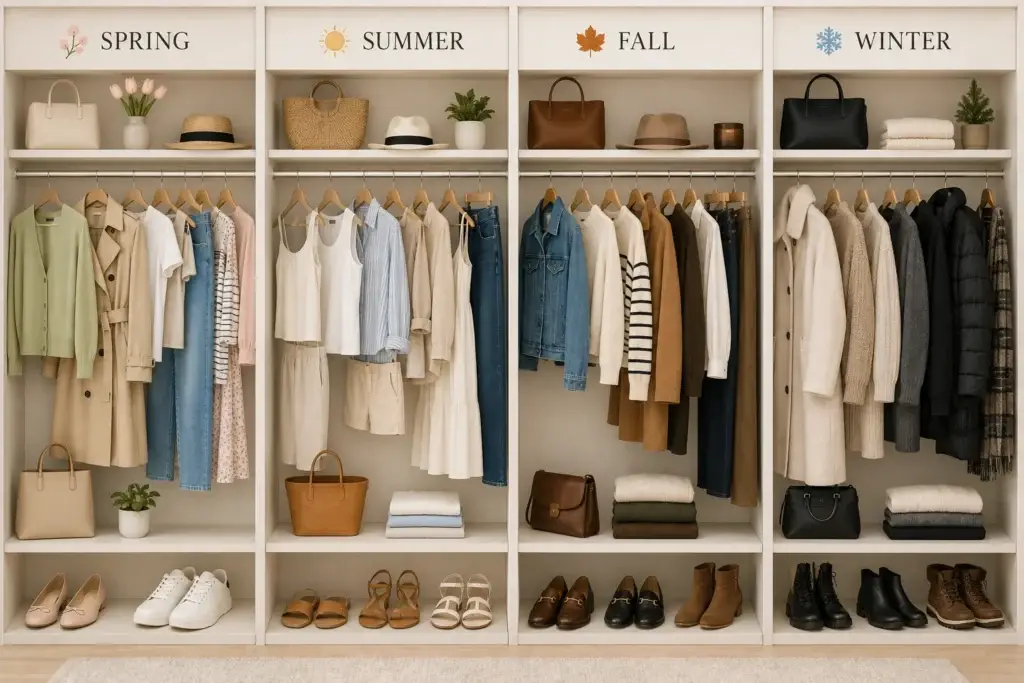
One thing that surprised me when I first started paying attention to my wardrobe was how often I tried to make the same clothes work all year.
Some pieces can do that.
Most cannot.
A better approach is to keep your core wardrobe consistent while adjusting a few items each season.
Your favorite jeans may stay all year. Your footwear, outerwear, and fabrics will probably change.
Spring Capsule Wardrobe
Spring wardrobe usually calls for lighter layers.
Temperatures can shift throughout the day, so flexibility matters.
Helpful pieces include:
- Lightweight cardigan
- Trench coat
- Straight-leg jeans
- Cotton T-shirts
- Midi skirt
- Ballet flats
- White sneakers
Spring is also a good time to introduce softer colors.
Cream, light blue, olive, and soft pink often work well alongside neutral basics.
Summer Capsule Wardrobe
Summer wardrobes should focus on breathable fabrics and comfort.
Look for:
- Linen pants
- Tank tops
- Cotton dresses
- Relaxed shorts
- Sandals
- Lightweight shirts
Natural fabrics often feel better during hot weather than heavy synthetic materials.
The goal is staying comfortable while still having enough outfit variety.
Fall Capsule Wardrobe
Fall is often the easiest season for capsule dressing.
Layers become useful again, and many wardrobe staples work naturally together.
Helpful pieces include:
- Denim jacket
- Lightweight sweater
- Dark denim
- Wide-leg trousers
- Loafers
- Ankle boots
This season also works well for deeper colors such as olive, camel, burgundy, and brown.
Winter Capsule Wardrobe
Winter wardrobes rely heavily on layering.
A smaller wardrobe can still feel varied if you combine layers effectively.
Useful pieces include:
- Wool coat
- Knit sweaters
- Cardigans
- Boots
- Thermal basics
- Scarves
The trick is choosing layers that work with most of your wardrobe rather than only one or two outfits.
Closet Tips That Make a Capsule Wardrobe Easier
A capsule wardrobe is not only about buying fewer clothes.
How you organize your closet matters, too.
A crowded closet makes it difficult to see what you own.
Many women end up wearing the same five outfits simply because those are the pieces they can find quickly.
Keep Your Most-Worn Pieces Visible
The clothes you wear weekly should be easy to reach.
Place frequently used items in the most accessible areas of your closet.
If you constantly have to dig through clothing to find something, you are less likely to wear it.
Group Similar Items Together
Organizing by category works well.
For example:
- Tops together
- Bottoms together
- Dresses together
- Outerwear together
This makes outfit planning much faster.
You can immediately see what options you have available.
Rotate Seasonal Clothing
Winter sweaters do not need to sit beside linen shorts all year.
Store off-season pieces separately when possible.
This creates more space and makes your wardrobe feel less overwhelming.
Many women discover they wear more of their clothes once their closet becomes easier to navigate.
Review Your Wardrobe Regularly
A capsule wardrobe is not something you create once and never touch again.
Every few months, take a look at what you are actually wearing.
Ask yourself:
- What do I wear most?
- What never leaves the hanger?
- What feels uncomfortable?
- What no longer fits my lifestyle?
The answers often reveal what should stay and what should leave.
Shopping Habits That Support a Capsule Wardrobe
A capsule wardrobe works best when shopping becomes more intentional.
That does not mean never buying clothes.
It simply means buying with a purpose.
Pause Before Purchasing
Many purchases happen because something looks good in the moment.
A better question is:
Can I create at least three outfits with this piece using clothes I already own?
If the answer is no, it may not belong in your wardrobe.
Focus on Versatility
Versatile pieces usually earn their place quickly.
For example:
A blazer that works with jeans, trousers, skirts, and dresses provides more value than a trendy jacket that only works with one outfit.
The same idea applies to shoes, bags, and accessories.
Think About Cost Per Wear
An item worn twice is often more expensive than an item worn fifty times.
A quality sweater that becomes part of your weekly rotation may offer more value than several cheaper sweaters that rarely leave the closet.
This mindset often helps reduce impulse purchases.
Shop for Gaps, Not Excitement
Most wardrobes already contain enough exciting pieces.
What they often lack are practical pieces that connect everything together.
Before shopping, identify specific gaps.
Maybe you need:
- Comfortable loafers
- A cardigan
- Better layering tops
- A neutral handbag
Shopping becomes easier when you know exactly what your wardrobe needs.
Common Capsule Wardrobe Mistakes Women Make
Everyone makes mistakes while building a capsule wardrobe.
That is completely normal.
The goal is learning from them rather than chasing perfection.
Buying Too Many Basics
Basics are useful.
Too many basics create a wardrobe that feels repetitive.
Balance matters.
A wardrobe full of plain T-shirts can feel just as limiting as a wardrobe full of trendy items.
Ignoring Lifestyle Needs
Many women build wardrobes for the person they hope to become rather than the person they are today.
If most of your week is casual, your wardrobe should reflect that reality.
A closet full of office wear will not help if you rarely wear it.
Keeping Uncomfortable Clothing
Comfort influences what gets worn.
A beautiful item that feels restrictive often stays in the closet.
Pay attention to what you actually enjoy wearing.
That information is valuable.
Following Every Trend
Trends can be fun.
Problems start when trends replace personal style.
A capsule wardrobe becomes stronger when built around timeless pieces with a few trend-driven additions rather than the other way around.
Forgetting About Layers
Many wardrobes have enough tops and bottoms but lack useful layering pieces.
Cardigans, blazers, jackets, and lightweight sweaters often create far more outfit combinations than another pair of jeans.
Signs Your Capsule Wardrobe Needs an Update
Even a great wardrobe eventually needs adjustments.
Life changes.
Careers change.
Personal style changes.
The key is updating intentionally rather than starting over.
A few signs include:
- You consistently avoid certain items.
- Your lifestyle has changed.
- Pieces are worn out.
- Your climate needs are different.
- You repeatedly feel like something is missing.
A capsule wardrobe should evolve with you.
It should not stay frozen in time.
The strongest wardrobes are usually the result of small adjustments made over months and years rather than dramatic closet clean-outs.
When Should You Refresh Your Capsule Wardrobe?
A capsule wardrobe is not a one-time project.
It changes as your life changes.
The clothes that worked for you two years ago may not make sense today. Your job may be different. Your schedule may look different. Even your personal style can shift over time.
Refreshing your wardrobe does not mean replacing everything.
Most of the time, small adjustments are enough.
At the Start of a New Season
Seasonal changes are the easiest time to review your wardrobe.
As you rotate clothes, pay attention to what you actually wore during the previous season.
Ask yourself:
- Which pieces did I wear the most?
- Which items stayed untouched?
- What felt comfortable?
- What felt unnecessary?
Patterns appear quickly when you start paying attention.
When Your Lifestyle Changes
A new job.
Working from home.
College graduation.
Motherhood.
More travel.
Less travel.
These changes affect clothing needs.
A capsule wardrobe for women should support daily life, not fight against it. If your routine changes, your wardrobe should adapt too.
When Pieces Wear Out
The most-worn pieces eventually show it.
A favorite white T-shirt may lose its shape. Sneakers may wear down. A cardigan may start looking tired.
Replacing heavily used staples is part of maintaining a healthy wardrobe.
Many women find that they buy less overall because they are only replacing pieces they genuinely use.
How to Maintain a Capsule Wardrobe Long-Term
Building a capsule wardrobe is one thing.
Keeping it useful is another.
The good news is that maintenance becomes easier over time.
Keep a Running Wish List
Whenever you notice a gap, write it down.
Avoid shopping immediately.
Maybe you realize you need:
- Better loafers
- A lightweight cardigan
- A black belt
- A pair of trousers
Adding it to a list gives you time to think before buying.
Quite often, the urge disappears after a few days.
Pay Attention to Repeat Outfits
Repeat outfits tell you a lot.
If you keep reaching for the same jeans, sweater, and sneakers combination, there is a reason.
You clearly enjoy wearing it.
Those favorite outfits can guide future purchases.
Look for pieces that work with what you already love.
Avoid Buying for Fantasy Situations
This is one of the biggest wardrobe traps.
Many women own clothing for events that rarely happen.
Fancy dinners.
Vacation outfits.
Special occasions.
Future versions of themselves.
Meanwhile, the clothes they wear every week receive far less attention.
Build your wardrobe around real life first.
Everything else comes second.
Accept That Outfit Repetition Is Normal
A capsule wardrobe works because pieces get worn often.
That means outfit repetition will happen.
And honestly, most people are not paying attention.
People tend to notice confidence far more than they notice repeated outfits.
If an outfit looks good, feels comfortable, and fits your lifestyle, there is nothing wrong with wearing it regularly.
Capsule Wardrobe Women Checklist: 30 Essential Pieces Every Woman Should Own
Downloadable free Checklist from now
Final Thoughts
For a long time, I assumed getting dressed would become easier if I owned more clothes.
That never happened.
The turning point came when I stopped focusing on quantity and started paying attention to what I actually wore.
Most women already know their favorite pieces. They know which jeans feel right. They know which sweater gets worn every week. They know which shoes they reach for without thinking.
A capsule wardrobe simply builds around those pieces.
It removes some of the clutter, reduces unnecessary decisions, and makes everyday dressing feel more manageable.
The goal is not perfection.
The goal is opening your closet and seeing clothes you genuinely want to wear.
If your wardrobe helps you do that, it is already doing its job.
Frequently Asked Questions
How many clothes should a women’s capsule wardrobe have?
There is no perfect number.
Some women are comfortable with 30 pieces. Others prefer 40 or 50.
The right number depends on your lifestyle, climate, laundry routine, and personal preferences.
Can a capsule wardrobe still be fashionable?
Absolutely.
A capsule wardrobe focuses on intentional choices, not boring clothing.
You can still wear color, prints, trends, and statement pieces if they fit your style.
Do capsule wardrobes save money?
Many women find they spend less over time.
A smaller wardrobe often leads to fewer impulse purchases and more thoughtful shopping decisions.
Can I include trendy pieces?
Yes.
The foundation of your wardrobe should remain practical and timeless, but there is no reason you cannot include a few trend-driven pieces you genuinely enjoy wearing.
What colors work best in a capsule wardrobe?
Most women start with neutral colors such as black, white, navy, gray, cream, camel, or brown.
From there, accent colors can add personality and variety.
Do I need separate wardrobes for work and casual wear?
Not necessarily.
Many capsule wardrobe pieces can work in both situations.
A blazer, trousers, blouse, cardigan, loafers, and simple dresses often transition easily between work and everyday life.
Is a capsule wardrobe suitable for every age?
Yes.
The idea works for women in their twenties, thirties, forties, fifties, and beyond.
The specific pieces may change, but the principle stays the same: fewer clothes, more outfit combinations, and a wardrobe that supports your life.
Emma studied fashion but could never get her own closet under control. Capsule wardrobes finally fixed that. Now she writes about what actually worked for her, in the hope it saves you a few frustrating mornings.