Be honest: how many pairs of shoes do you own, and how many did you actually wear this month?
For most of us, the gap is huge. There’s the pair you bought for one wedding, the trendy sneakers that pinched after an hour, the boots you keep meaning to break in. And then there are the two or three pairs you grab every single morning without thinking.
A shoe capsule wardrobe is built around those reliable pairs. Instead of owning a little bit of everything, you keep a small set of versatile shoes where every pair has a clear job and works with most of the clothes already in your closet. Fewer pairs, more outfits, and far less time standing at the door wondering what goes with what.
In this guide, I’ll cover how many pairs you really need, the seven essentials worth owning, how to pick colors and materials, how to adjust the capsule for your lifestyle and climate, and the mistakes that quietly ruin a good one.
Quick answer: A shoe capsule wardrobe is a small, curated collection of versatile shoes, usually 5 to 7 pairs, that covers everyday wear, work, dressier occasions and the weather where you live. The seven core pairs are white sneakers, loafers, ballet flats, ankle boots, a low heel, flat sandals and one weather boot. Most people need fewer.
What Is a Shoe Capsule Wardrobe?
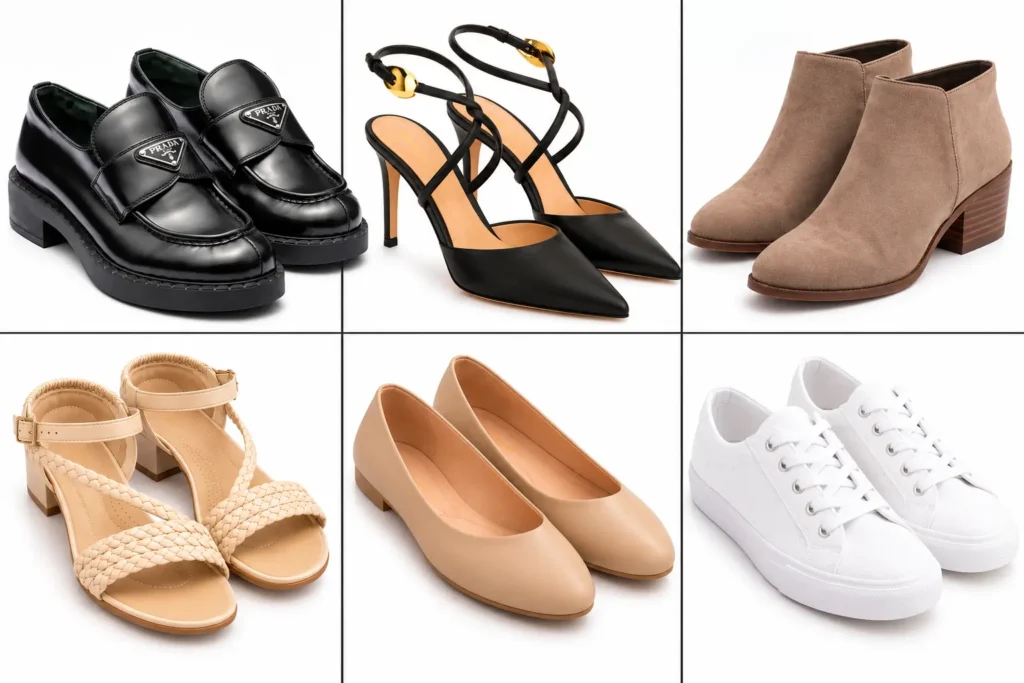
A capsule wardrobe is a limited set of timeless pieces that mix and match easily. (New to the concept? Start with our guide to what a capsule wardrobe is.)
A shoe capsule applies the same thinking to footwear. Rather than collecting shoes by trend or impulse, you choose pairs by the role they play:
- one pair for everyday errands and weekends
- one that makes an outfit look finished without a heel
- one dressier option
- one for warm weather and one for cold
When every role is covered, you stop buying “just in case” shoes. That’s where the real benefits come from:
- Less decision fatigue. With five or six pairs that all go with your clothes, getting dressed takes seconds.
- Lower cost per wear. A well-made pair you wear 200 times is cheaper in the long run than a cheap pair you wear twice.
- Less clutter and waste. Buying less fast fashion is better for your closet and the planet.
- Better quality. When you’re buying fewer pairs, you can afford to spend a little more on genuine leather, good soles, and proper fit.
How Many Pairs of Shoes Do You Need in a Capsule Wardrobe?
For most people, 5 to 7 pairs is the sweet spot. That’s enough to cover casual days, work, a dressier evening, and seasonal weather without anything sitting unworn.
The right number depends on your life, not a rule. Use this as a starting point:
| Capsule size | Number of pairs | Best for |
|---|---|---|
| Minimalist | 3–4 | Warm climates, travel, very simple routines |
| Standard | 5–7 | Most people with a mix of work, weekends, and occasional events |
| Four-season | 7–9 | Cold winters, rainy cities, or an office job plus an active life |
A few things usually sit outside the count: gym trainers, house slippers, and specialist gear like hiking boots or snow boots you only wear for one activity. If you wear rain boots every day for half the year, though, they belong in the capsule.
Think of these numbers as a ceiling, not a shopping list. If one pair already does two jobs well, you don’t need to fill the extra slot.
The 7 Essential Shoes for a Capsule Wardrobe
Each pair below has one job. Read through them, check which roles your current shoes already cover, and only shop for the gaps.
1. Low-Profile White Sneakers
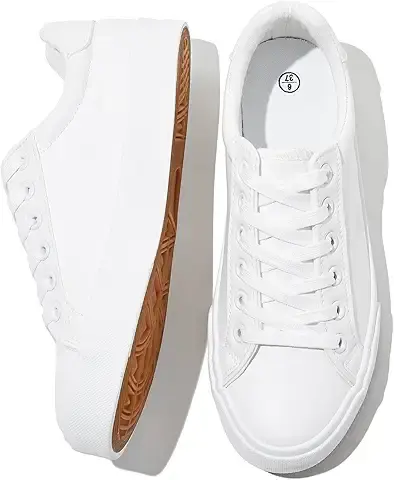
The role: your everyday default.
If you buy only one pair, make it a clean, low-profile sneaker. Slim, flat silhouettes (think of the Adidas Samba or a plain white leather tennis shoe) look more like everyday shoes than gym shoes, so they sit neatly under straight-leg jeans, tailored trousers, and even a midi skirt.
What to look for: white or off-white leather, a slim sole rather than a chunky one, a cushioned insole, and a removable footbed if you use orthotics.
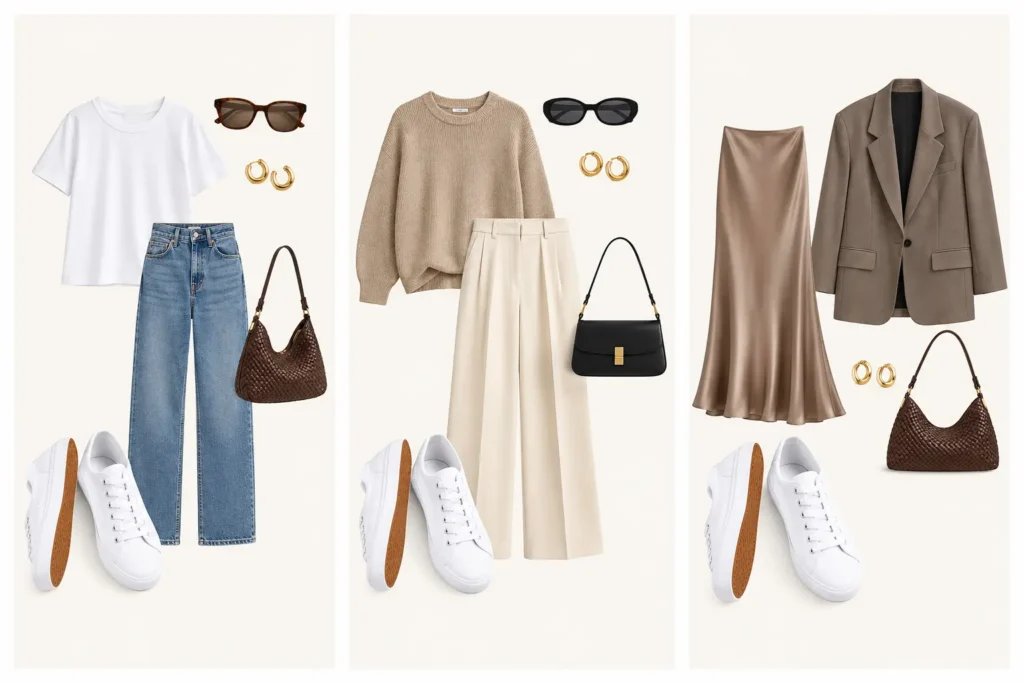
Wear it with: straight-leg jeans and a white T-shirt; wide-leg trousers and a knit; a slip skirt and an oversized blazer.
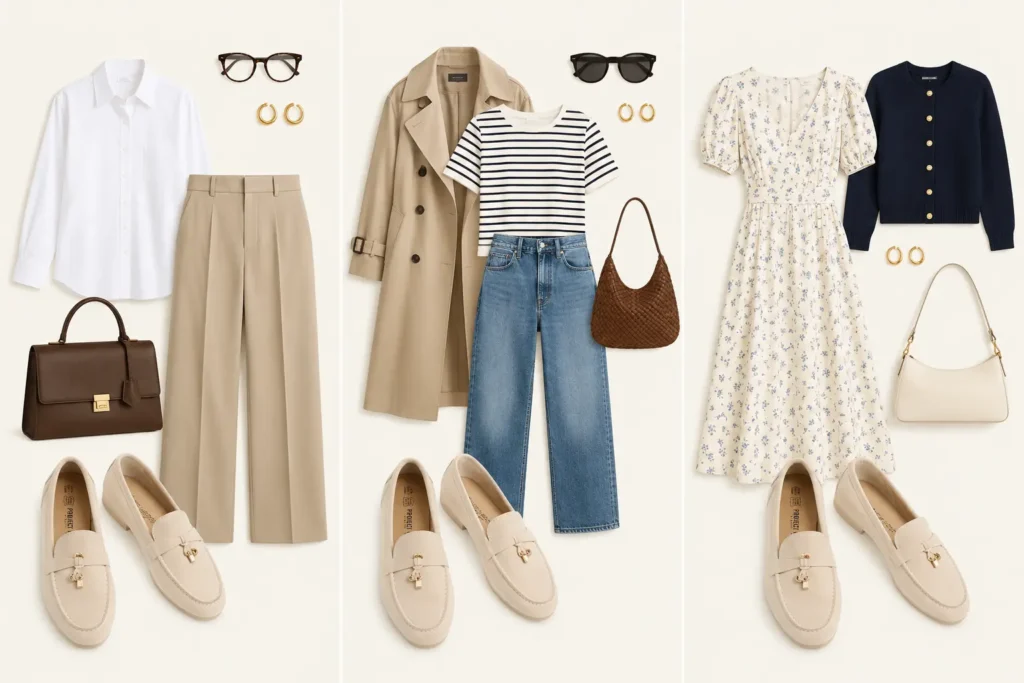
2. Leather or Suede Loafers
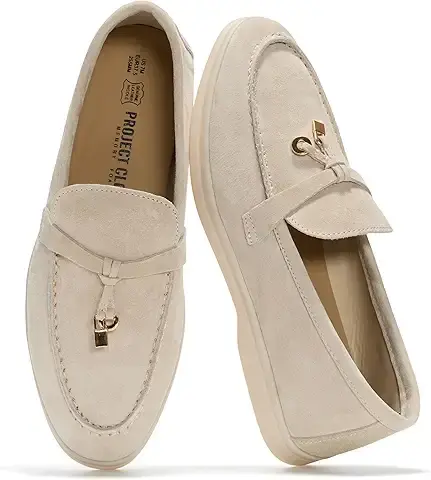
The role: the step up from sneakers, without a heel.
Loafers anchor most capsule wardrobes for a reason. They make jeans look intentional and make trousers look office-ready. A penny loafer in black or dark brown leather is the most versatile; Italian suede in tan or chocolate feels softer and a little more relaxed.
What to look for: a slim shape (skip very chunky lug soles if you wear a lot of tailoring), a padded footbed, and leather that will mould to your foot over time.
Wear it with: trousers and a crisp shirt for work; cropped jeans and a trench coat on weekends; a midi dress for a slightly preppy look.
3. Ballet Flats
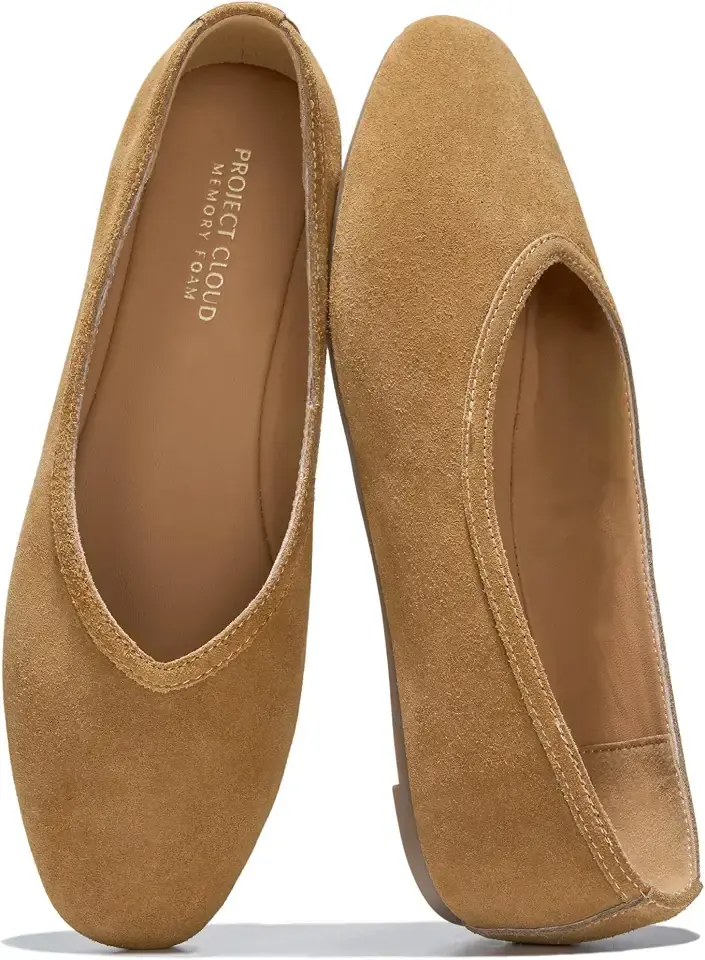
The role: the softer flat.
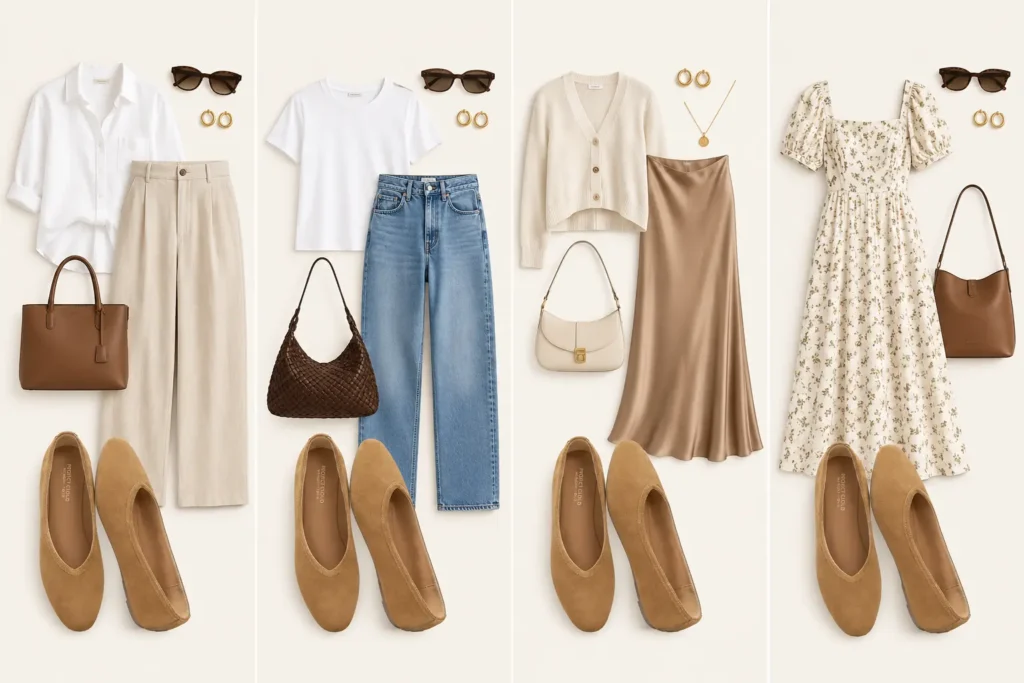
A loafer can feel heavy with linen, floaty skirts, and summer dresses. That’s where ballet flats come in. A nude or beige pair almost disappears on the foot and goes with everything; black is the classic alternative. Mary Janes, with their single strap, do the same job if you want something a little more secure.
What to look for: some cushioning under the ball of the foot (many ballet flats are paper-thin), a rounded or almond toe, and leather or satin that won’t rub at the heel.
Wear it with: linen trousers, relaxed denim, slip skirts, and simple dresses.
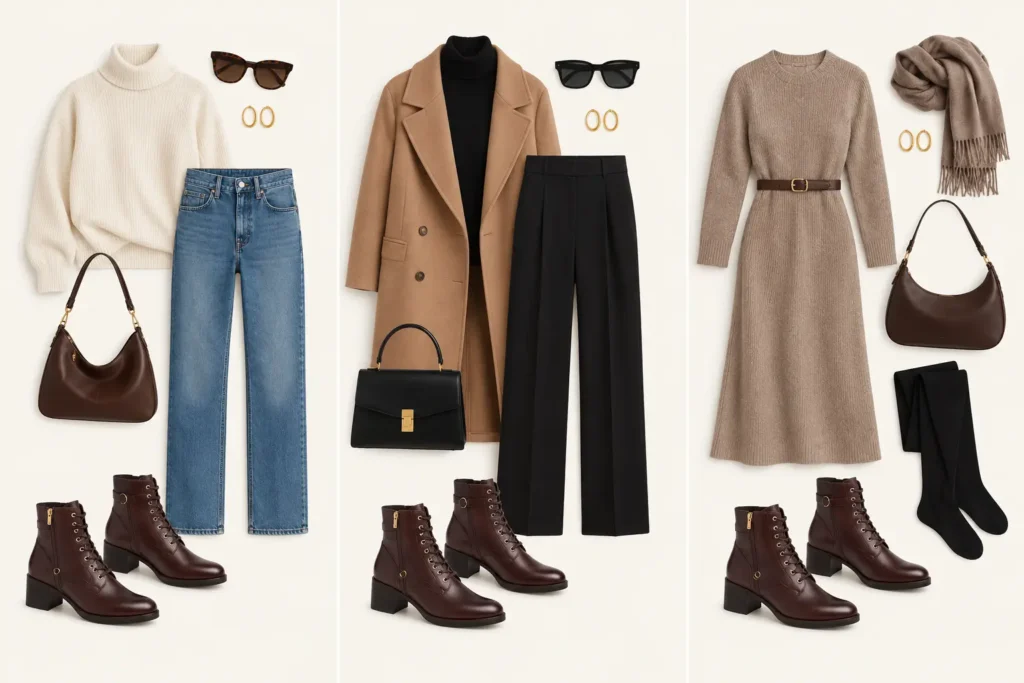
4. Ankle Boots
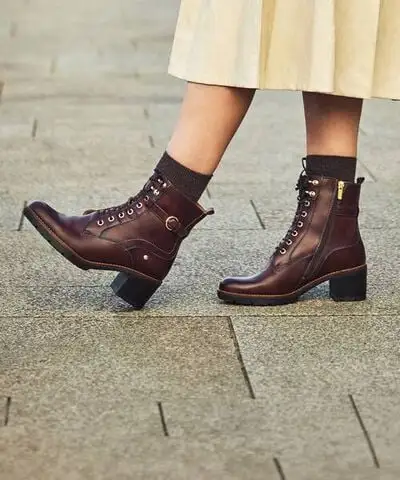
The role: your cold-weather workhorse.
When it’s too cold for sneakers and flats, an ankle boot keeps your everyday outfits working. A black or brown leather Chelsea boot with a low heel is the safest bet. It slides under jeans and trousers and still looks right with a knee-length skirt and tights.
What to look for: a slim shaft that sits cleanly under trousers, a stacked or block heel under two inches, side zips or elastic panels for easy wear, and a rubber sole with some grip.
Wear it with: straight jeans and a turtleneck; black trousers and a wool coat; a knit dress and opaque tights.
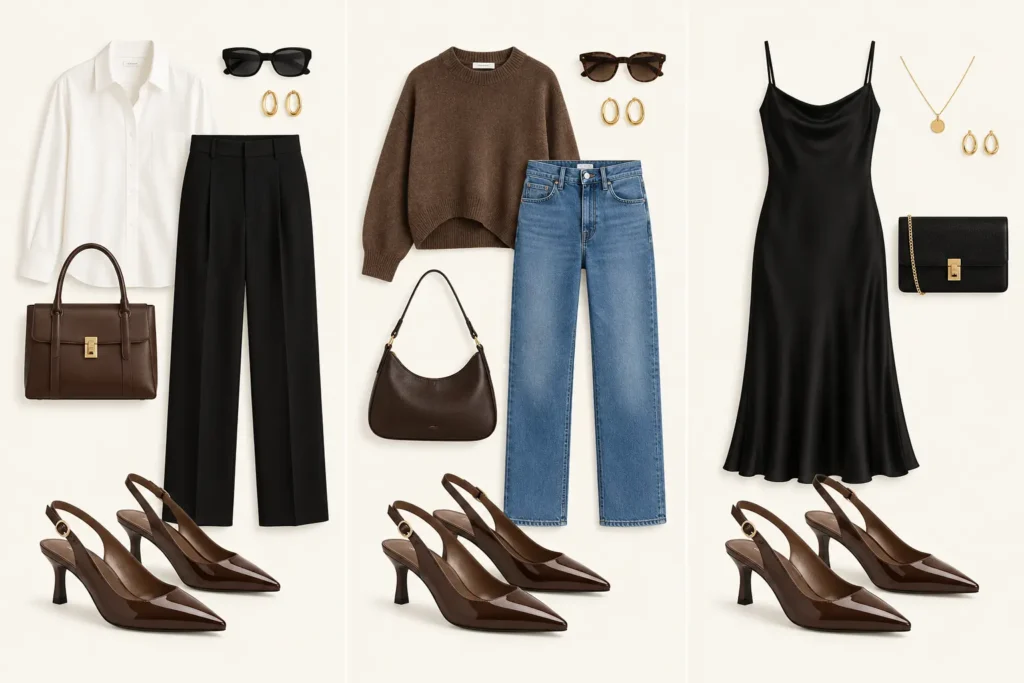
5. A Low Heel: Slingbacks, Kitten Heels or Block Heels
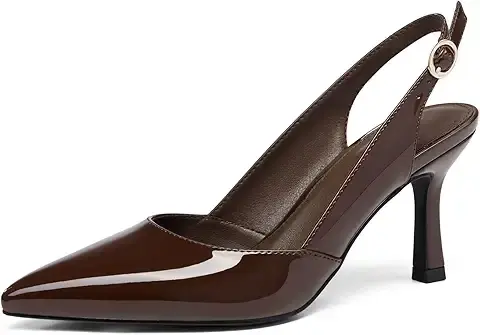
The role: your one dressier pair.
Instead of collecting occasion shoes, keep one heel that handles dinners, weddings, interviews, and important meetings. Slingback kitten heels are the most flexible option right now: the pointed toe dresses up jeans, and the low heel is easy to walk in. Block-heel pumps are better if you stand a lot; pointed-toe pumps are the most formal.
What to look for: a heel around 1.5 to 2.5 inches, black or nude leather, and a strap or slingback that doesn’t slip.
Wear it with: black trousers for work, straight-leg jeans for dinner, a black dress for anything formal.
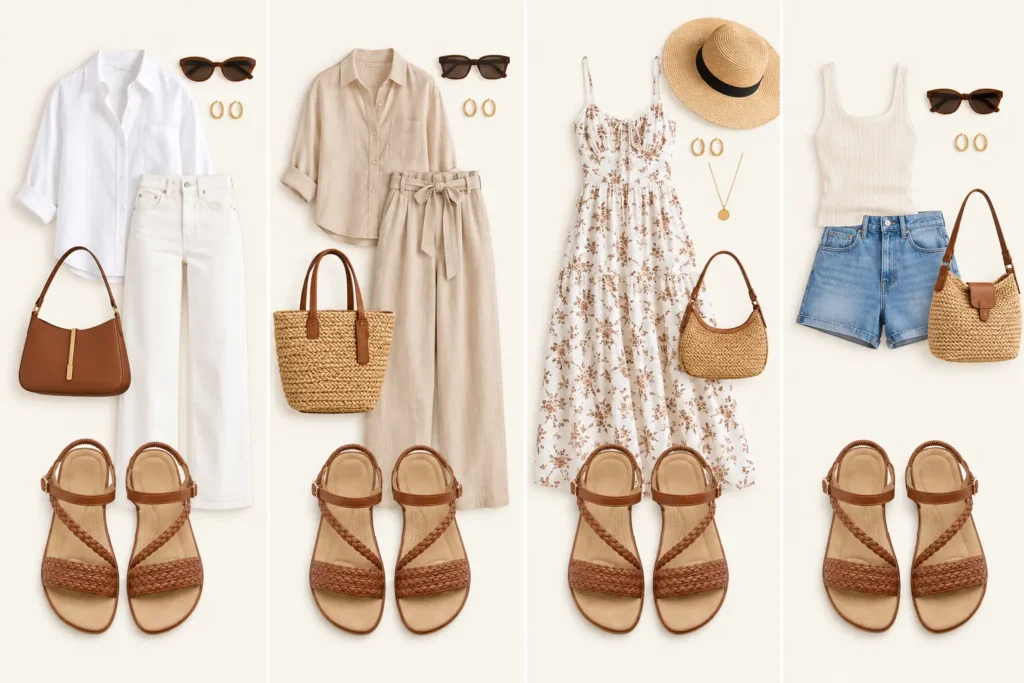
6. Flat Leather Sandals
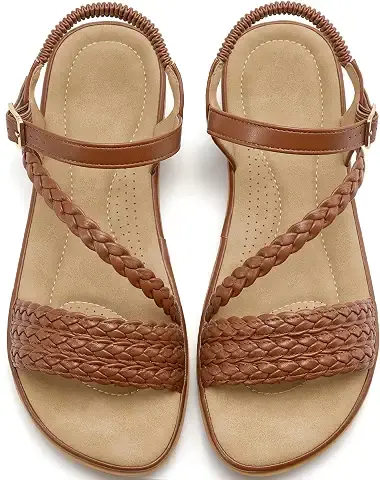
The role: your warm-weather swap.
When closed shoes start to feel too heavy, a simple flat sandal takes over. Slides, thin-strap sandals, and thong sandals in tan, saddle brown, or black all work. The point is that your existing outfits carry on into summer, so you don’t need a second set of clothes to match.
What to look for: a cushioned or contoured footbed, adjustable straps, and leather that won’t crack in the heat. Skip flimsy flip-flops; they don’t last and offer no support.
Wear it with: white jeans, linen trousers, maxi dresses, and denim shorts.
7. A Weather Boot (Knee-High or Waterproof)
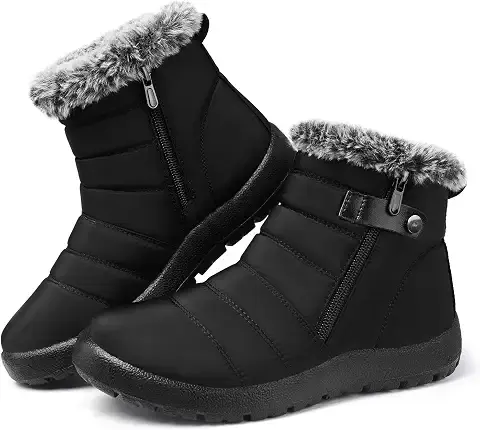
The role: whatever your climate demands.
This is the flexible slot. In cold cities, a knee-high leather boot covers both warmth and polish, and it’s the easiest way to keep wearing skirts and dresses through winter. In wet climates, a waterproof boot with a lug sole saves your good shoes from ruin. In hot climates, you may not need this slot at all, so use it for a second pair of sandals or espadrilles instead.
What to look for: real weather protection (a waterproof membrane and sealed seams), a grippy outsole, and a neutral color that works with your coats.
Price Guide: What to Spend on Each Pair
Prices vary by brand and season, so treat these as rough US ranges and check current prices before you buy:
| Shoe | Budget | Mid-range | Investment |
|---|---|---|---|
| White sneakers | Under $80 | $80–$150 | $150+ |
| Loafers | Under $90 | $90–$200 | $250+ |
| Ballet flats | Under $70 | $70–$180 | $250+ |
| Ankle boots | Under $100 | $100–$250 | $300+ |
| Low heel | Under $80 | $80–$180 | $250+ |
| Flat sandals | Under $60 | $60–$150 | $200+ |
| Weather boots | Under $100 | $100–$250 | $300+ |
If your budget is tight, spend most of it on the pairs you’ll wear most: sneakers, loafers, and ankle boots. Save on the dressier heel, which you’ll wear far less often.
Shoe Capsule by Lifestyle
The seven essentials are a template. Your daily routine decides which pairs matter most. Here’s how the capsule shifts for different lives:
| Lifestyle | Everyday | Polished | Dressy | Weather |
|---|---|---|---|---|
| Office worker | Loafers | Block-heel pumps | Pointed-toe pumps | Ankle boots |
| Working mom | White sneakers | Ballet flats | Low block heel | Waterproof boots |
| College student | Low-top sneakers | Mary Janes | Kitten heels | Chelsea boots |
| Frequent traveler | Slip-on sneakers | Ballet flats | Heeled ankle boots | Packable sandals |
| Work from home | Clean sneakers | Loafers | Slingbacks | Slides |
| Women over 50 | Cushioned sneakers | Loafers | Low block heel | Ankle boots with grip |
If work sets your dress code, our work capsule wardrobe guide shows how these shoes fit with office outfits. For dressing after 50, see our capsule wardrobe over 50.
Shoe Capsule by Season and Climate
Where you live matters more than most guides admit.
Four-season climate. You’ll likely need the full seven. Rotate twice a year: sandals and ballet flats come out in spring and summer, while ankle boots and knee-high boots take over in fall and winter. Sneakers and loafers stay all year. Pair this with our winter capsule wardrobe and summer capsule wardrobe guides.
Warm climate (southern US, Middle East, South Asia). You can drop heavy boots almost entirely. Build around sneakers, loafers, ballet flats, and two pairs of sandals, one flat and one slightly dressy. A breathable leather or woven upper beats suede in humid heat.
Rainy climate. Swap suede for smooth or treated leather, and make the weather slot a waterproof Chelsea boot. Rubber soles with real grip are worth more than any trend.
Best Colors for a Shoe Capsule Wardrobe
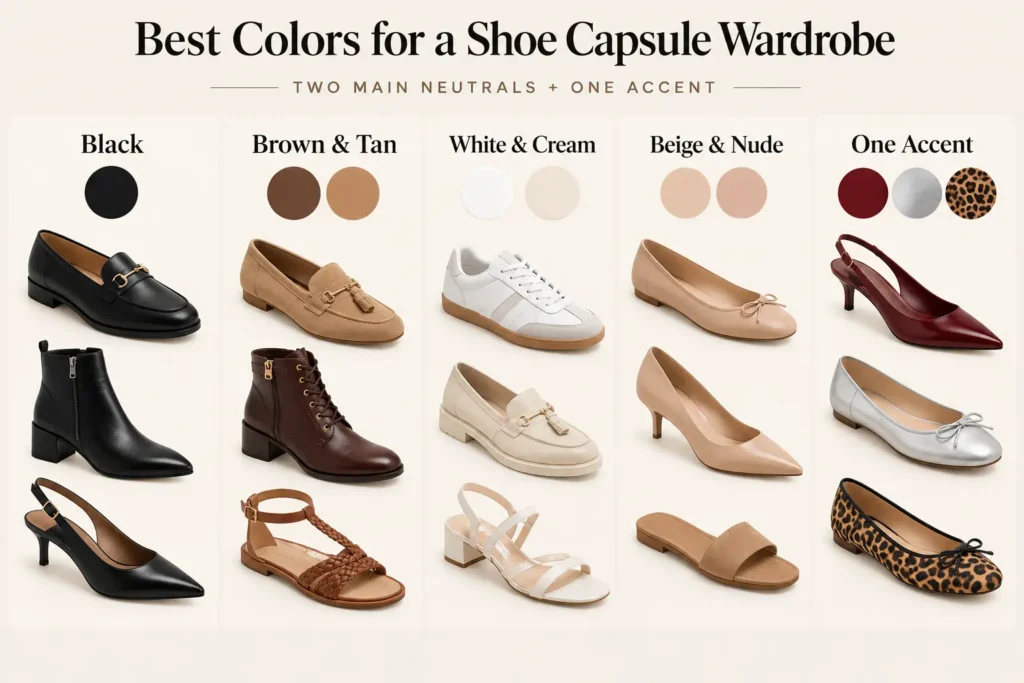
Neutral shoes do most of the work in a capsule. A simple formula:
Two main neutrals + one accent.
- Black is the easiest to keep clean and hides scuffs. It works with almost everything and instantly makes an outfit look sharper.
- Brown and tan feel warmer and more relaxed. Brown loafers and boots ground both casual and dressy outfits, and they look great with denim.
- White and cream keep summer outfits light. They need more cleaning, so save them for sneakers.
- Beige and nude are the closest thing to an invisible shoe. They lengthen the leg and suit ballet flats and heels especially well.
- One accent (metallic silver, burgundy, leopard print, or a soft red) adds personality without breaking the capsule.
Match your shoe colors to your clothes, not the other way around. If your wardrobe leans black, navy, and grey, start with black. If it’s camel, cream, and olive, start with brown and tan. Our capsule wardrobe color palette guide walks you through building that palette, and the neutral capsule wardrobe shows it in action.
How to Build Your Shoe Capsule in 6 Steps
1. Track what you actually wear. For 30 days, turn each pair around in your closet after you wear it. At the end of the month, you’ll see exactly which shoes earn their place.
2. Declutter. Anything you haven’t worn in a year, anything that hurts, and anything that only goes with one outfit should be donated, resold, or recycled.
3. Map your roles. Write down the seven roles (everyday, polished flat, soft flat, cold weather, dressy, warm weather, weather boot) and match the shoes you kept to each one. Some roles will already be filled.
4. Fill gaps in order. Buy the pair that covers the most days first. For most people, that’s sneakers or loafers. The dressy heel almost always comes last.
5. Set a budget per pair. Use the price table above. One great loafer beats two average ones.
6. Review once a year. Your job, city, or body may change, and your capsule should change with you. Replace worn-out pairs in the same role, not with a random new style.
Want the clothes side done too? Our capsule wardrobe checklist covers everything from tops to outerwear.
Cost Per Wear: Why Fewer, Better Shoes Save Money
Cost per wear is the price of a shoe divided by the number of times you wear it. It’s the clearest way to see why a capsule saves money:
| Shoe | Price | Times worn | Cost per wear |
|---|---|---|---|
| Trendy platform sandals | $60 | 4 | $15.00 |
| Budget white sneakers | $70 | 150 | $0.47 |
| Mid-range leather loafers | $150 | 200 | $0.75 |
| Investment ankle boots | $300 | 250 | $1.20 |
The cheapest shoe on the receipt is often the most expensive one in your closet. Quality leather that a cobbler can resole or re-heel stretches cost per wear even further.
Shoe-to-Outfit Pairing Chart
Use this to see how many outfits each pair can handle:
| Shoe | Jeans | Tailored trousers | Midi skirt | Dress | Shorts |
|---|---|---|---|---|---|
| White sneakers | ✓ | ✓ | ✓ | ✓ | ✓ |
| Loafers | ✓ | ✓ | ✓ | ✓ | – |
| Ballet flats | ✓ | ✓ | ✓ | ✓ | ✓ |
| Ankle boots | ✓ | ✓ | ✓ | ✓ | – |
| Low heel | ✓ | ✓ | ✓ | ✓ | – |
| Flat sandals | ✓ | ✓ | ✓ | ✓ | ✓ |
| Knee-high boots | – | – | ✓ | ✓ | – |
If a shoe you’re considering only works in one column, it probably doesn’t belong in a capsule.
Men’s Shoe Capsule Wardrobe (5 Pairs)
Men can cover almost everything with five pairs:
- Minimal white leather sneakers for weekends and smart casual.
- Brown suede or leather loafers for summer and business casual.
- Brown Chelsea or chukka boots for fall and winter.
- Black or dark brown Oxford or Derby shoes for formal events and interviews.
- Leather sandals or slides for warm weather.
Stick to brown and black leather, and match your belt to your shoes. Our full capsule wardrobe for men covers the clothing side.
Travel Shoe Capsule: The 3-Shoe Rule
Shoes take up the most space in a suitcase, so the classic travel rule is three pairs: one to wear on the plane and two to pack.
- Wear: your bulkiest pair, usually sneakers or ankle boots.
- Pack: one polished flat (loafers or ballet flats) and one climate-specific pair (sandals for a beach trip, a low heel for a city break with dinners).
Every outfit you pack should work with at least two of the three. For more, read our travel capsule wardrobe and carry-on capsule wardrobe guides.
Comfort and Fit: Don’t Skip This
A shoe you can’t walk in will never make it into your rotation, no matter how good it looks.
- Shop in the afternoon, when feet are slightly swollen, so the fit is realistic.
- Look for arch support and a cushioned insole, especially in flats. If you have flat feet or high arches, a removable footbed lets you add your own orthotics.
- Check the width. If you have wide feet or bunions, look for wide-fit sizes rather than sizing up in length.
- Keep everyday heels low. Many podiatrists suggest keeping heels you wear daily around 2 inches or lower to reduce pressure on the ball of the foot.
- Look for the APMA Seal of Acceptance. The American Podiatric Medical Association gives it to shoes that support healthy feet, and it’s a useful shortcut when shopping.
Small fixes help too: heel grips stop slipping, and a thin ball-of-foot cushion makes thin-soled ballet flats far more wearable.
How to Care for and Store Your Shoe Capsule
When you own only a handful of shoes, you wear each pair a lot. A little care keeps them going for years.
- Rotate. Try not to wear the same leather pair two days in a row, so it can dry out between wears.
- Use shoe trees in leather loafers and boots. Cedar trees absorb moisture and hold the shape.
- Clean gently. Brush off dirt, wipe with a damp cloth and mild soap, and air dry away from direct sunlight or heaters.
- Protect suede. Use a protector spray before the first wear and a suede brush afterward.
- Store off-season shoes properly. Clean and dry them first, stuff them with tissue paper, and keep them in dust bags or ventilated boxes in a cool, dark place.
- Find a good cobbler. Re-heeling and resoling cost far less than replacing a quality pair.
7 Shoe Capsule Mistakes to Avoid
- Buying a full set at once. Fill one gap at a time and see what you actually wear.
- Choosing trends over roles. A trendy shoe that only works with one outfit isn’t a capsule piece.
- Ignoring your climate. Suede boots in a rainy city or knee-high boots in a hot one will sit unworn.
- Sacrificing comfort. If it hurts in the store, it won’t get better at home.
- Too many black shoes. Three black pairs often do the same job. Mix in brown, tan or nude.
- Skipping the dressy pair. Without one, you’ll panic-buy shoes before every wedding.
- Forgetting maintenance. A capsule only works if the shoes last.
Printable Shoe Capsule Checklist
Tick off what you already own, then shop only for the gaps:
- Low-profile white sneakers
- Leather or suede loafers
- Ballet flats or Mary Janes
- Ankle boots
- Low heel (slingback, kitten or block)
- Flat sandals
- Weather boot (knee-high or waterproof)
Optional extras: gym trainers, house slippers, one accent pair.
The Bottom Line
A good shoe capsule isn’t about owning as few shoes as possible. It’s about owning the right ones. Start with the role your closet is missing (for most people that’s a great everyday sneaker or a pair of loafers), and add the next pair only when you notice a real gap.
Get the colors right, choose comfort over hype, and look after what you buy. Do that, and five or six pairs will carry you through every season more easily than a closet full of shoes ever did.
Frequently Asked Questions
How many pairs of shoes should be in a capsule wardrobe?
Most people need 5 to 7 pairs. Minimalists and people in warm climates can manage with 3 or 4, while people with cold winters may need 7 to 9.
What are the 5 essential shoes every woman needs?
White sneakers, loafers, ankle boots, a low heel, and flat sandals. Ballet flats make a good sixth pair if you wear a lot of skirts and dresses.
What color shoes go with everything?
Black, brown, tan and nude go with almost every outfit. White works best for sneakers, and beige or nude is the most versatile shade for flats and heels.
Are sneakers okay in a capsule wardrobe?
Yes. A clean, low-profile sneaker is one of the most worn pairs in most capsules. Choose a minimal design over a chunky athletic one.
What is the 3-shoe rule for travel?
Pack no more than three pairs: wear the bulkiest on the plane and pack two that cover your plans, usually one flat and one climate-specific pair.
Loafers or ballet flats: which is better for a capsule?
Loafers are more structured and suit trousers and jeans. Ballet flats suit softer pieces like linen and skirts. If you can only choose one, pick the one that matches most of your outfits.
How often should you replace capsule shoes?
There’s no fixed timeline. Replace a pair when the sole, heel, or upper can’t be repaired. A good cobbler can add years to quality leather shoes.
How do I build a shoe capsule on a budget?
Start with what you already own, fill one role at a time, and spend more on the pairs you wear most, like sneakers and loafers. Save on the dressy heel you’ll wear least.

Emma studied fashion but could never get her own closet under control. Capsule wardrobes finally fixed that. Now she writes about what actually worked for her, in the hope it saves you a few frustrating mornings.